
 Email:
  Tel:+86-13486478562
 Language
  Español
 Português
Coating Technology — Process Diagnostics
The Anatomy of Orange Peel
Why Spray Coatings Refuse to Flow Smooth
Orange peel is rarely a single mistake. It is four systems quietly disagreeing with one another — material, atomization, airflow, and surface — and the texture left behind is simply the record of that disagreement.
The Direct Cause of Orange Peel Texture
Orange peel texture in spray coating machines is caused by uneven flow-out of the coating film before it dries or cures. When atomized droplets land on a surface, they need enough time and enough fluidity to merge into a smooth, level film. If the coating skins over too quickly, if the viscosity is too high, if atomization is poor, or if the spray gun is held at the wrong distance or angle, the individual droplets partially retain their round shape instead of leveling out. The result is a dimpled, uneven surface that resembles the skin of an orange — hence the name.
In practical terms, orange peel is almost never caused by a single factor. It is usually a combination of material rheology, atomization quality, application technique, and drying conditions working against each other. Understanding which of these four categories is dominant in a specific production line is the fastest way to fix the defect, and the sections below break each one down with concrete numbers and troubleshooting guidance.
Coating Viscosity and Formulation Problems
Viscosity that is too high is the single most common contributor to orange peel. When paint or coating fluid is thicker than the spray gun's design specification, droplets leave the nozzle larger and less atomized. These larger droplets do not have enough surface tension relaxation time to spread and merge before the solvent flashes off. Most industrial spray coatings are designed to run between 18 and 25 seconds on a standard viscosity cup at application temperature. Running material even 3 to 5 seconds above this range noticeably increases orange peel severity.
coating machines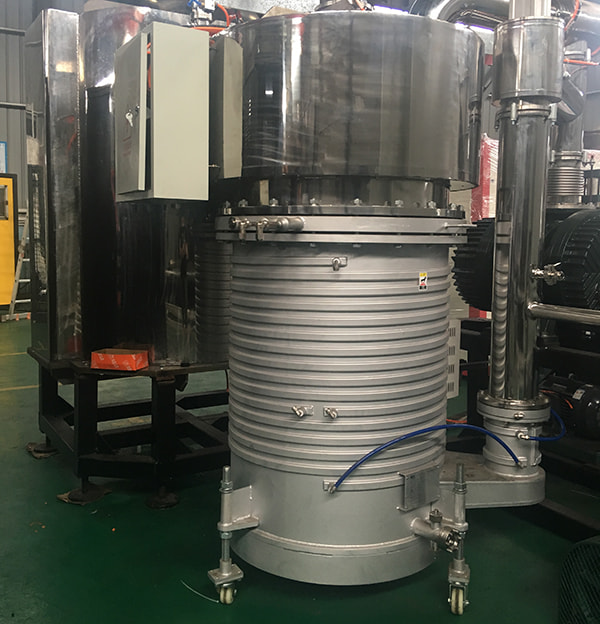
A defect that looks mechanical is often chemical in origin — the machine was never wrong, the fluid simply arrived too thick to spread.
Common Formulation Triggers
- Excess pigment or filler loading, which raises internal viscosity and reduces flow
- Fast-evaporating solvent blends that skin the film before leveling occurs
- Insufficient leveling additives or flow modifiers in the base formulation
- Material stored at low temperature and applied without proper warm-up
Adjusting the solvent or thinner ratio, or switching to a slower-evaporating blend, often reduces orange peel without any changes to the machine itself. Corrections should always be made in small, measured increments while re-testing on a sample panel.
Spray Equipment and Atomization Settings
Poor atomization is the second major cause. Atomization quality depends on air pressure, fluid pressure, nozzle size, and the distance between the gun and the workpiece. If air pressure is too low, droplets stay large and clumpy; if it is too high, the spray can dry-atomize in mid-air, arriving at the surface as semi-dry particles that cannot flow together at all.
Typical Parameter Ranges That Reduce Orange Peel
| Parameter | Recommended Range | Effect if Out of Range |
|---|---|---|
| Atomizing air pressure | 0.2–0.4 MPa | Too low: coarse droplets; too high: dry spray |
| Gun-to-surface distance | 150–250 mm | Too far: droplets dry before landing |
| Gun travel speed | 300–600 mm/s | Too fast: thin, uneven film buildup |
| Fluid output | Matched to nozzle size | Mismatch causes uneven wet film thickness |
Worn nozzles are frequently overlooked. A nozzle orifice that has eroded even slightly out of round will distort the spray pattern, producing inconsistent droplet size across the fan width. Nozzles in high-volume production typically need replacement every 500 to 800 operating hours.
Drying, Curing, and Airflow Conditions
Even with correct viscosity and atomization, a coating can still develop orange peel if the drying environment removes solvent too quickly. Booth airflow, ambient temperature, and flash-off time before entering an oven all affect how long the film has to level out.
Environmental Factors to Monitor
- Booth air velocity — excessive exhaust draw pulls solvent out of the film prematurely
- Ambient shop temperature above 30°C, which speeds solvent flash-off unpredictably
- Insufficient flash-off time before curing, especially on multi-coat systems
- Oven ramp-up rate that is too aggressive, locking in surface texture before leveling completes
A well-run line typically allows 60 to 120 seconds of flash-off time between coats. Reducing booth exhaust speed by even 10 to 15 percent has been shown on many production lines to noticeably improve flow-out without affecting cycle time significantly.
Substrate Surface and Preparation Issues
Surface texture and cleanliness also play a role. A substrate with residual roughness, poor primer sanding, or contamination will interfere with even wetting, which can look like or worsen orange peel even when the spray process itself is correct. Surfaces with a profile rougher than the recommended Ra 1.0–2.5 μm for most topcoats tend to show exaggerated texture because the coating cannot fully level over the underlying irregularities.
Static charge buildup on plastic or composite substrates can also disrupt even droplet landing, causing localized thick and thin zones that read as texture defects. Ionizing bars or grounding fixtures ahead of the spray station reduce this risk considerably.
How Orange Peel Differs From Defects in Vacuum-Based Coating Processes
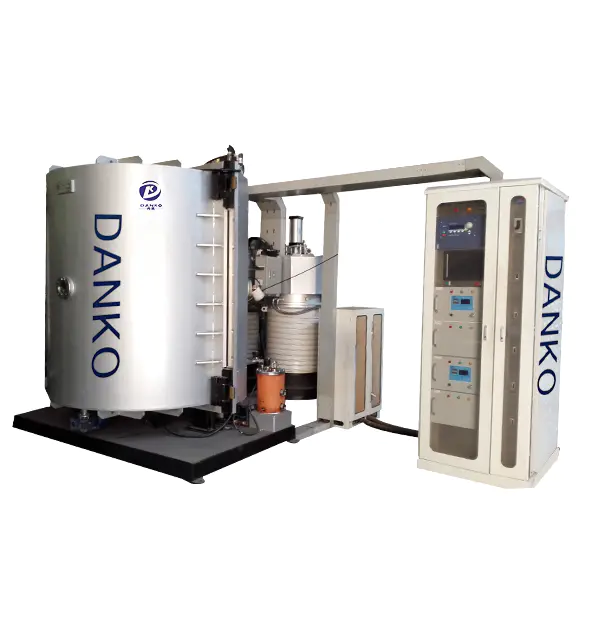
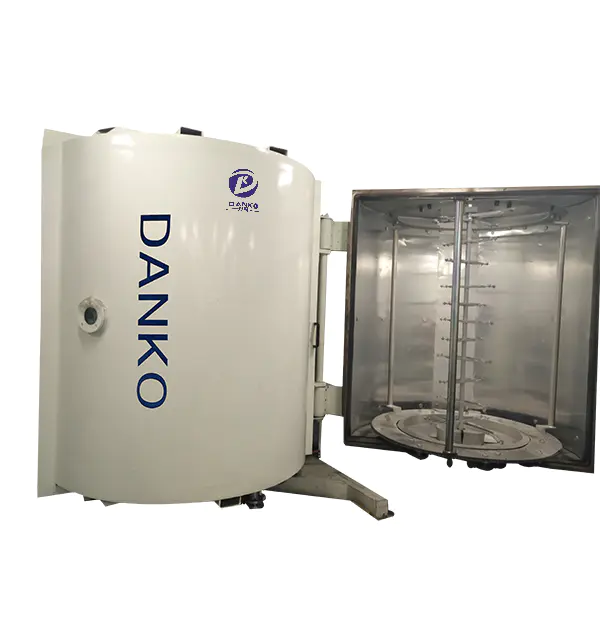
It is worth distinguishing spray-related orange peel from surface defects seen on vacuum coating equipment, since the two processes fail for different physical reasons. Spray coating orange peel is a fluid dynamics problem involving liquid droplets and leveling time. By contrast, a vacuum metalizing machine deposits material through vapor condensation inside a vacuum chamber, so there is no wet-film flow-out stage at all. Defects on vacuum-deposited films — such as haze, pinholes, or non-uniform reflectivity — stem from chamber pressure instability, uneven substrate rotation, or contamination on the target surface rather than from viscosity or atomization.
Facilities running both wet spray lines and vacuum coating equipment often make a costly mistake: applying spray-defect logic to a vacuum metalizing machine problem. The two troubleshooting approaches do not transfer, and confusing them can waste significant diagnostic time.
A Practical Troubleshooting Sequence
When orange peel appears on a production run, working through causes in order of likelihood saves the most time. The sequence below reflects how most coating technicians diagnose the defect on the shop floor.
- Check viscosity with a cup reading and compare against the material data sheet
- Inspect the spray pattern on a test panel for uniform fan shape and droplet size
- Verify gun distance, angle, and travel speed against the standard operating procedure
- Confirm booth temperature, humidity, and airflow are within the process window
- Examine the substrate surface profile and cleanliness before the next application
Most orange peel cases are resolved within the first two steps of this sequence, since viscosity and atomization together account for the majority of reported cases in industrial finishing operations.
Preventive Maintenance That Reduces Recurrence
Once a root cause is corrected, preventing recurrence depends on consistent maintenance discipline rather than one-time fixes. Coating fluid should be checked for viscosity drift at the start of every shift, since temperature swings in the storage area can shift readings by several seconds even overnight. Spray nozzles and fluid tips should be logged and replaced on a fixed schedule rather than waiting for visible wear, since atomization quality degrades gradually and is easy to miss until a defect appears on finished parts.
Booth airflow sensors and temperature controls also benefit from quarterly calibration checks. A booth that reads correctly on a display panel but is actually running 2–3°C off calibration can cause intermittent orange peel that appears difficult to diagnose because the visible settings look correct. Keeping a maintenance log that cross-references defect reports with recent parameter changes is one of the most effective long-term tools for reducing repeat occurrences.
Orange peel is a symptom, not a diagnosis. It points to a mismatch somewhere between fluid, air, and time — and every one of those variables is measurable, adjustable, and, with a disciplined maintenance rhythm, preventable.

 Tel: +86-13486478562
 FAX: +86-574-62496601
 Email:
  Address: No. 79 West Jinniu Road, Yuyao, Ningbo City, Zhejiang Provice, China