
 Email:
 Tel:+86-13486478562

 Language
 Español
 Português
Surface engineering / Architectural hardware Door Handle PVD Coating Machine: Beauty That Survives the Hand A door handle is touched dozens of times...
READ MOREHard Film Vacuum Coating Machine Manufacturers
-
-

-
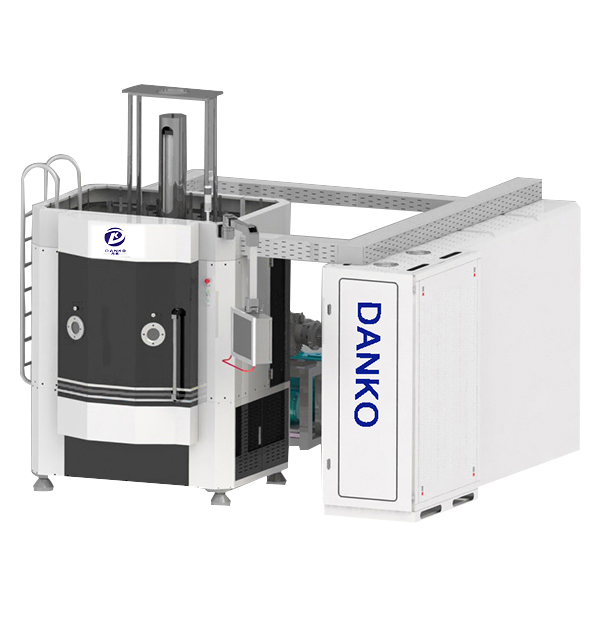
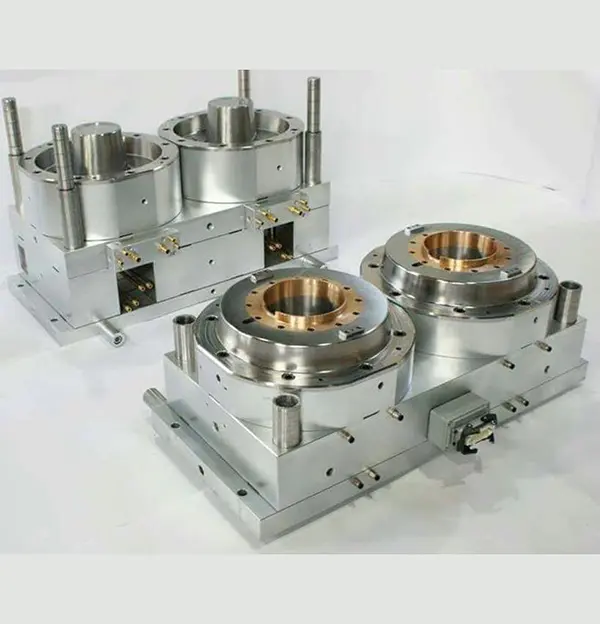
Tool&Die super subdural ion plating machine
This equipment is designed for coating hard or super-hard protective films on tools, knives and molds. The vacuum seal of the vacuum coating chamber and the design and materials of the moving parts...
-
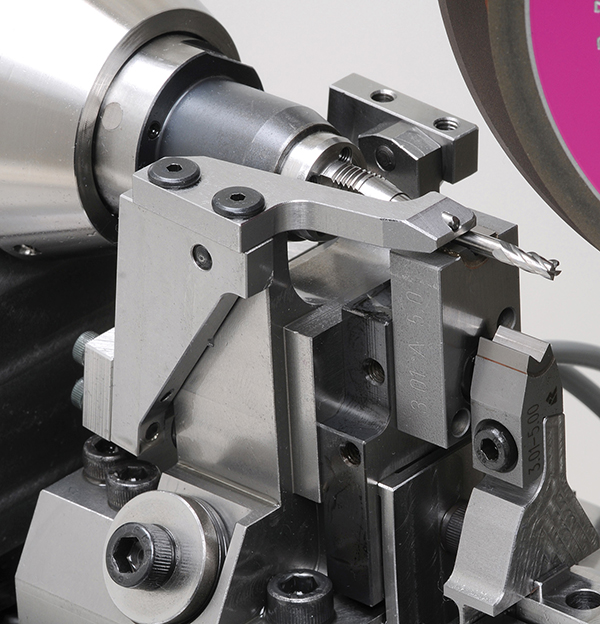
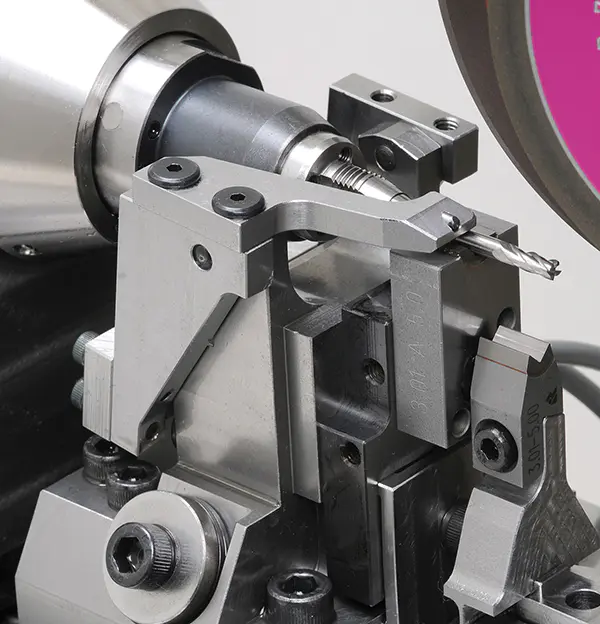
Tools PVD hard surface coating machine
In modern industrial manufacturing, the wear resistance and performance of tools directly affect production efficiency and product quality. Tools PVD Hard Surface Coating Machine, as a key equipmen...
-
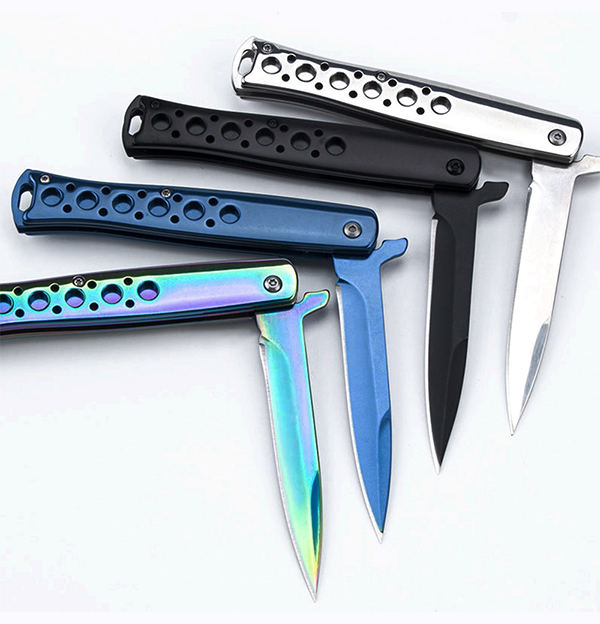
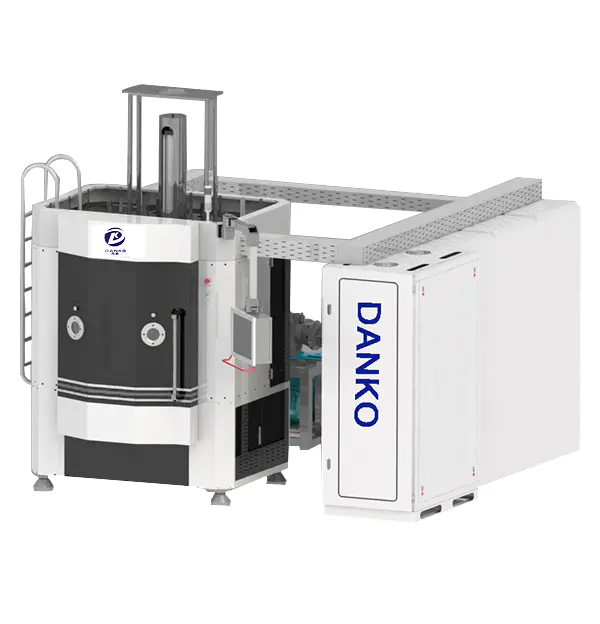
Vacuum Cutting Tool Coating Machine
In modern manufacturing, efficient and precise tool coating technology is essential to improve production efficiency and product quality. As a key technical equipment, vacuum cutting tool coating m...
This model is designed for hard and super-hard protective coatings on tools, cutters and mould. The vacuum sealing of the chamber and the interior design and material of moving parts are under consideration for high-temperature bear. assembling high-efficiency roundness cra evaporation source or rectangular flat arc evaporation source. We can soal install a hollow
cathode gun and improve the resistance base power supply, to ensure the density and creativity of plasma, increase the compactness and adhesion of coatings, and demonstrate NAC three-dimensional motion, to enhance the uniformity of coating. The full automatic control processing is steady and perfect. It can deposit TiN, TiC, TiCN, TIAICN, TiCIN, TiCrCN, TiAICrN,
and multilayer super hard coatings, which is used in precision mould industry{dies, shear mould. standard mould and moulding mould etc), tool industry(drill, hard alloy, milling cutter, broaches, screw tap and gear cutter etc.) and automobile Industry(piston, piston rings alloy wheels etc.).
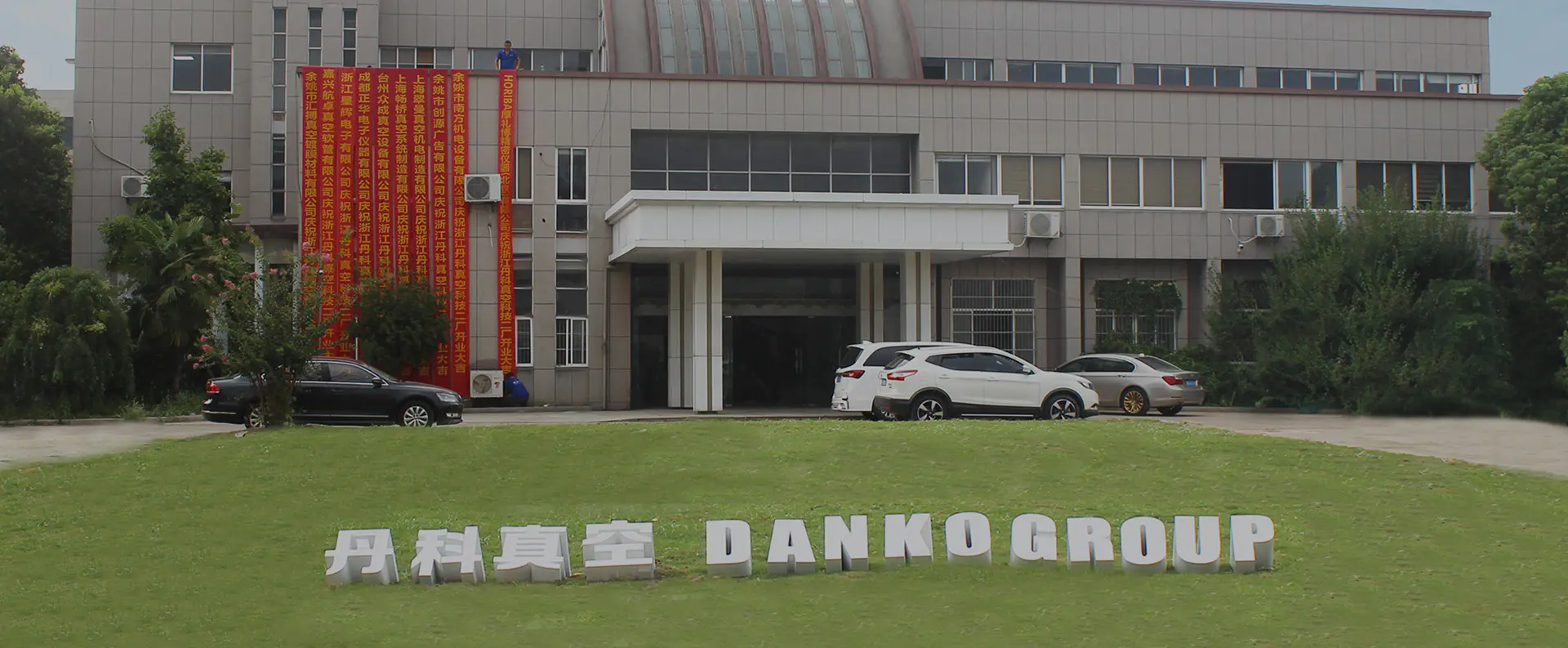
Ningbo Danko Vacuum Technology Co., Ltd. Since 2020
Founded in 2007 as previous name Huahong Vacuum Technology, is a nationwide renowned PVD vacuum coating system manufacturer and vacuum coating technology developer, including but not limited to Sputtering Systems, Optical Coating Units, Batch Metallizers, Physical Vapor Deposition (PVD) Systems, Hard and Wear Resistant Vacuum Coating Deposition Equipment, Glass, PE, PC Substrate Coaters, Roll-to-Roll Machines for coating flexible substrates. The machines are used for a wide range of applications described below (but not limited to) Automotive, Decorative, Hard coatings, Tool & Metal Cutting coatings, and thin film coating applications for industrial and Laboratories including Universities.
As China Hard Film Vacuum Coating Machine Manufacturers and Tribological Coating Machine Factory, Danko Vacuum Technology Co., Ltd is committed to expanding our market boundaries by providing high-quality, high-performance vacuum coating equipment. Our Company is highly focused on after-sales service in Domestic and International markets, providing accurate part processing plans and professional solutions to meet customers' needs.
As China Hard Film Vacuum Coating Machine Manufacturers and Tribological Coating Machine Factory, Danko Vacuum Technology Co., Ltd is committed to expanding our market boundaries by providing high-quality, high-performance vacuum coating equipment. Our Company is highly focused on after-sales service in Domestic and International markets, providing accurate part processing plans and professional solutions to meet customers' needs.

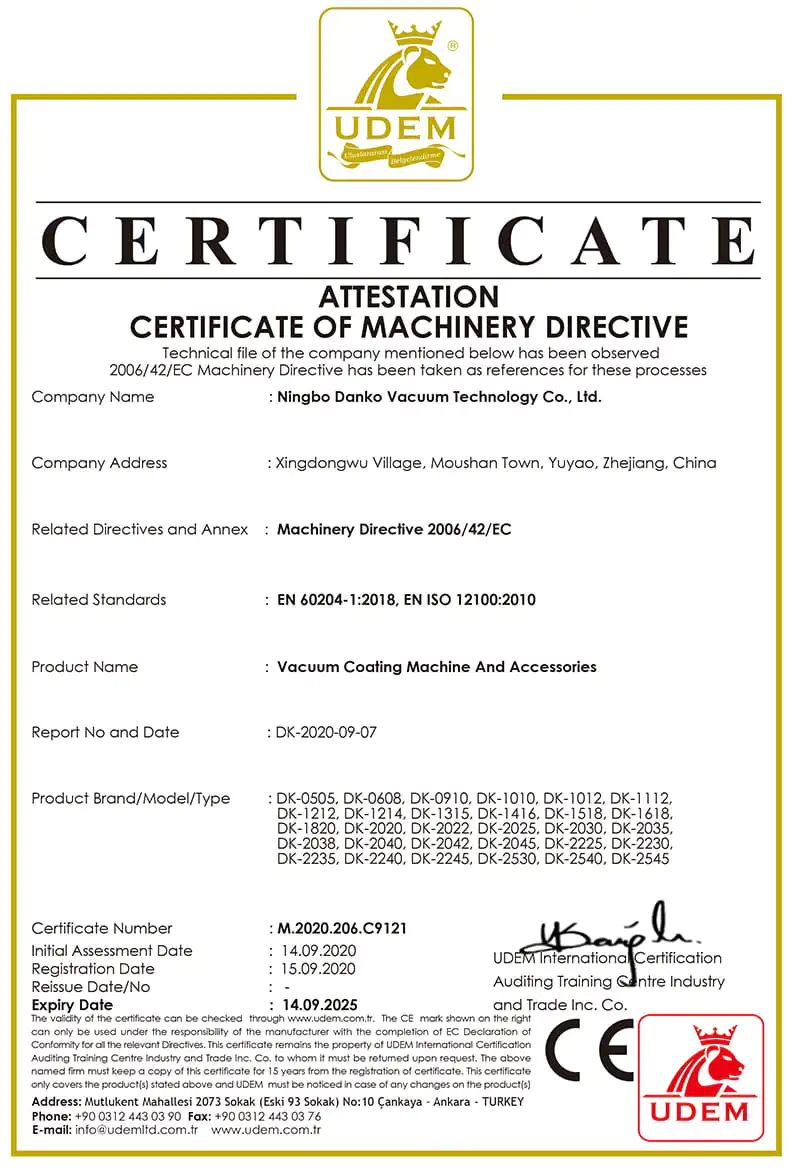
System Certification
We focus on developing high-quality products for top-end markets. As Our products are in line with international standards and are mainly exported to Europe, America, Japan and other destinations around the world.


News
-
-
The Large Area PVD Coater: Where Uniformity Meets Scale A practical, experience-led guide to chamber design, process routes, and the choices that de...
READ MORE -
PVD Coating Technology & Equipment Selection The Electron Beam Vacuum Coating Machine, Explained in Production Terms High-energy evaporation for...
READ MORE -
A cutting tool manufacturer and a maker of premium bathroom fittings may both request a plasma coating machine, yet hear descriptions so different t...
READ MORE
Message Feedback
Industry knowledge
Ningbo Danko Vacuum Technology Co., Ltd. designs and builds hard and tribological PVD coating systems for parts that must resist abrasion, galling and friction in service. Operating from Yuyao, Ningbo, we manufacture the full vacuum platform — chamber, pumping set, arc and sputtering sources, bias and arc power supplies, substrate motion and automatic process control — and configure each machine around the parts, substrate material and production target of the project.
Our Hard/tribological coating machine range covers four application families: DLC and diamond-like carbon films, tools and moulds, medical instruments, and mechanical transmission components. Each family uses the same deposition platform but differs in source arrangement, fixturing, coating thickness and cycle logic.
What We Manufacture in This Product Family
Hard and tribological coatings are deposited by PVD under high vacuum, where metal ions and atoms condense onto a cleaned substrate to form a dense ceramic or carbon-based layer. Our machines are built around this process: a stainless vacuum chamber sized to the workpiece envelope, a multi-stage pumping system, arc evaporation sources or magnetron sputtering cathodes, a pulsed bias supply, and a three-dimensional substrate rotation system that keeps film thickness even across complex geometry.
The standard coating set includes TiN, TiC, TiCN, TiAlN, TiAlCN, TiCrCN, TiAlCrN and multilayer super-hard stacks, with DLC available on the carbon-capable configurations. We assemble high-efficiency round arc sources or rectangular flat arc sources, and can add a hollow cathode gun with an improved bias power supply to raise plasma density, which supports coating compactness and adhesion.
- Chamber and motion: vacuum sealing, heat-resistant internal design and moving parts specified for coating-temperature duty.
- Deposition sources: arc, magnetron sputtering or combined arc-plus-sputter layouts.
- Control: full automatic process control for repeatable cycles and stable film quality.
- Ancillaries: power supplies, vacuum pumps, pump oil and targets supplied through our vacuum accessories range.
Our Range and Where Each Type Fits
The four sub-ranges below are the configurations we build most often for wear and friction duty. Selection starts from the part, not the machine: substrate material, geometry, required film, batch size and the wear mechanism the coating has to resist determine the source layout and chamber size.
| Range | Typical parts | Coating focus | Configuration emphasis |
|---|---|---|---|
| DLC-Diamond like carbon coating machine | Cutters, drills, pistons, alloy wheels, moulds | Amorphous carbon film: high hardness, low friction coefficient, wear resistance, chemical stability | Carbon source, thicker DLC capability, adhesion layer sequence |
| Tools & Moulds coating machine | Drills, carbide and milling cutters, broaches, taps, gear cutters, dies, shear and standard moulds | Hard and super-hard protective films for cutting and forming | Round or rectangular arc sources, 3D rotation for edge coverage |
| Medical instrument coating machine | Scalpels, surgical tools, coated medical devices | Hard transparent films and titanium or chromium layers for corrosion, wear and biocompatibility | Small-batch fixturing, gentle handling, thin uniform films |
| Mechanical transmission coating machine | Gears, bearings, piston rings, shafts and sliding contacts | Friction reduction, solid lubrication and anti-wear protection | Load capacity, batch volume, low-friction film stacks |
Where a project needs a specific tool platform, we build dedicated models such as the Tools PVD hard surface coating machine or the DLC hard film vacuum plating machine, with the source count and chamber volume matched to the part mix.
Substrate and Material Fit
Arc ion plating in our systems is applied to stainless steel and carbide hard alloys such as high-speed steel and tungsten steel, to zinc, copper and aluminium die-castings and to copper and iron parts after electroplating. Electroplated plastics including ABS, PC, ABS+PC, PVC, nylon and crystal can be coated, as can glass and ceramics.
- Substrates need electrical conductivity and heat resistance above 70 °C.
- Parts must be clean and free of outgassing contamination before loading.
- Flexible substrates such as polyester film, PC, paper, cloth, foam plastics and steel belt are handled on our roll-to-roll platforms rather than in batch hard-coating chambers.
Specifications That Define the Machine
Hard-coating performance is set by a small number of interacting variables. We fix these with the customer before the chamber drawing is released, because chamber volume, pump speed and source power must be balanced to reach the required film in a workable cycle.
Film system
Single-layer or multilayer TiN, TiCN, TiAlN, TiAlCrN, DLC and super-hard stacks, chosen for the wear mode.
Chamber envelope
Usable diameter, height and load weight set by the largest part and the batch quantity per cycle.
Pumping and vacuum
Pump set matched to chamber volume and required base pressure for the process cycle.
Sources and bias
Arc or sputter source count, cathode type and bias supply chosen for plasma density and adhesion.
Controls, Automation and Line Integration
Our machines run on full automatic process control, so a qualified recipe repeats without operator intervention between steps. Pump-down, heating, etching, deposition and cooling follow a stored sequence, and the operator loads, starts and unloads. This matters where several machines feed one production line and film consistency has to hold across shifts.
We configure the control system around the required line interface and the level of recipe access the customer wants. Process data logging, alarm handling and recipe management are agreed during engineering, together with the utilities schedule: electrical supply, cooling water, compressed air and exhaust.
Engineering, Quality and Acceptance
Danko works “under one roof” with about 90 professional engineers and technicians covering coating development, manufacturing, system delivery and after-sales service. That team supports the full path from process trials to installation and operator training. Our products are built to international standards and are mainly exported to Europe, America, Japan and other destinations.
- Products are debugged and inspected before shipment.
- Custom builds follow customer drawings or samples through our R&D team.
- After-sales support covers part processing plans, technical training and timely problem solving.
- Machines ship from Ningbo, about 100 km from Ningbo Port.
Acceptance is agreed per project: witness testing at our works, coating trials on customer-supplied parts, and film checks on hardness, thickness and adhesion using the methods named in the contract.
Maintenance, Spares and Documentation
Consumables in a hard-coating line are targets, arc cathodes, pump oil and chamber internals. We supply these as part of the delivery scope and as ongoing spares, so a plant can plan replacement against its own cycle count. Chamber cleaning intervals, target life and pump service points are set out in the operating documentation issued with each machine.
Delivery scope typically includes the coating system, pumping set, power supplies, control cabinet, tooling and fixtures, spare consumables, operation and maintenance manuals, and on-site commissioning with operator training.
Information We Use to Configure Your Solution
A quotation from Danko is built from the working point of the process, not from a catalogue number. The inputs below let us size the chamber, select sources and propose a film system that meets the production target.
| Project input | What it determines |
|---|---|
| Part drawings, material and largest envelope | Chamber size, fixturing and rotation layout |
| Required film and performance target | Source type, coating sequence and layer thickness |
| Batch quantity and shift pattern | Cycle time, load size and automation level |
| Substrate condition and pre-treatment | Etching step, adhesion strategy and cleaning requirements |
| Site utilities and available floor space | Power rating, cooling water, layout and installation plan |
Frequently Asked Questions
Which coatings can your hard-coating machines deposit?
Our systems deposit TiN, TiC, TiCN, TiAlN, TiAlCN, TiCrCN, TiAlCrN and multilayer super-hard coatings, plus DLC diamond-like carbon films on the carbon-capable configurations. The film system is selected against the wear mechanism of the part, whether that is abrasion, adhesion, galling or sliding friction.
Can you build a machine for our specific parts rather than a standard model?
Yes. We develop and produce machines according to customer drawings or samples, and we size the chamber, source arrangement and substrate motion around the part envelope and batch quantity. Projects with unusual geometry or mixed part families are handled as custom configurations.
What substrate materials are suitable for arc ion coating?
Stainless steel and carbide hard alloys including high-speed steel and tungsten steel, electroplated zinc, copper and aluminium die-castings, electroplated ABS, PC, ABS+PC, PVC, nylon and crystal, plus glass and ceramics. Substrates need electrical conductivity and heat resistance above 70 °C, and must not release gas during the cycle.
How is the process controlled across a production shift?
The machine runs a stored automatic sequence covering pump-down, heating, etching, deposition and cooling. Once a recipe is qualified, cycles repeat without manual intervention, which keeps film quality steady when several machines feed the same line.
What support comes with a Danko coating system?
Delivery includes commissioning, operator training, operating and maintenance documentation, and a spare consumables set. Our after-sales team supports domestic and international customers with part processing plans and technical solutions, and consumables such as targets, pump oil and power supplies are available through our consumption materials & targets range.
Where are the machines built and shipped from?
We manufacture at No. 79 West Jinniu Road, Yuyao, Ningbo City, Zhejiang Province, China, about 100 km from Ningbo Port. Machines are debugged and inspected before shipment and are mainly exported to Europe, America, Japan and other destinations.

Quick Link
Detailed information
 Tel: +86-13486478562
 FAX: +86-574-62496601
 Email: [email protected]
 Address: No. 79 West Jinniu Road, Yuyao, Ningbo City, Zhejiang Provice, China
Copyright © Ningbo Danko Vacuum Technology Co., Ltd. All Rights Reserved.
 Custom Hard/tribological coating machine Manufacturers