Product Consultation
Your email address will not be published. Required fields are marked *

When selecting a medical instrument coating machine for surgical tool applications, deposition rate is one of the most critical performance metrics. The direct answer: PVD (Physical Vapor Deposition) systems typically achieve deposition rates of 0.1–10 µm/hour, while CVD (Chemical Vapor Deposition) systems can reach 1–100 µm/hour depending on the process and material. However, raw speed alone does not determine the better choice — coating quality, temperature sensitivity, regulatory compliance, and total cost all play decisive roles in real-world surgical tool manufacturing.
Deposition rate refers to the thickness of coating material deposited on a substrate per unit of time, typically expressed in micrometers per hour (µm/hr) or nanometers per minute (nm/min). In a medical instrument coating machine, this parameter directly affects batch throughput, production cycle time, and ultimately the cost per coated instrument.
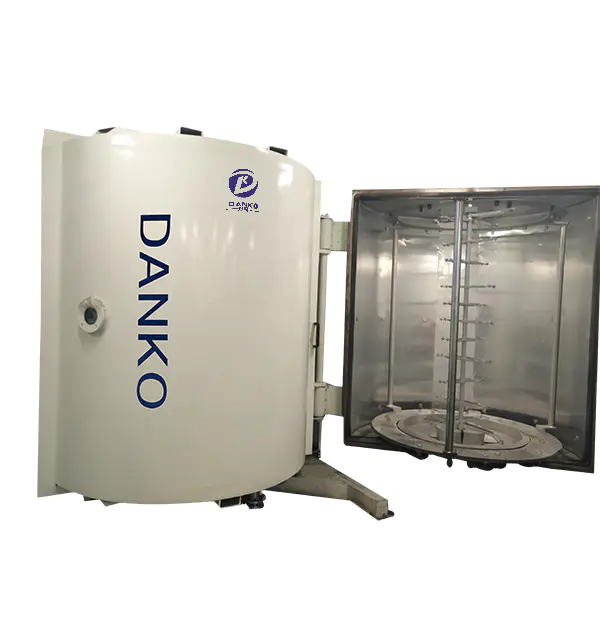
Both PVD and CVD are vacuum coating machine technologies — they operate under controlled low-pressure environments to ensure clean, contamination-free deposition. The fundamental difference lies in how material is transferred to the substrate: PVD relies on physical processes such as sputtering or evaporation, while CVD relies on chemical reactions between gaseous precursors on or near the substrate surface.
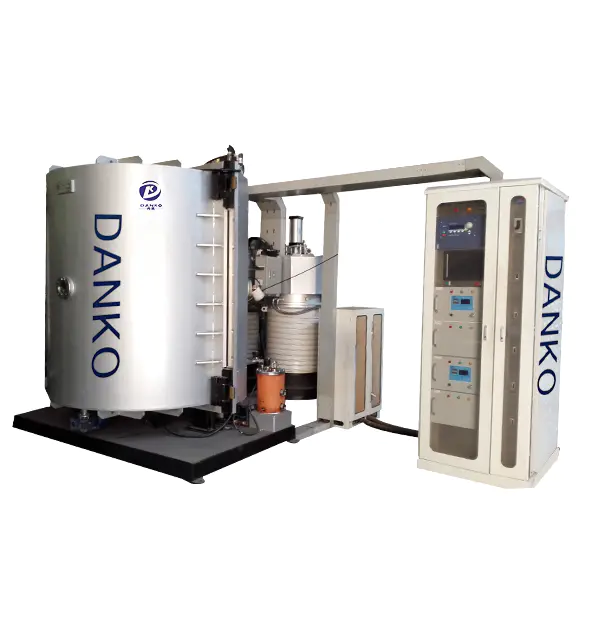
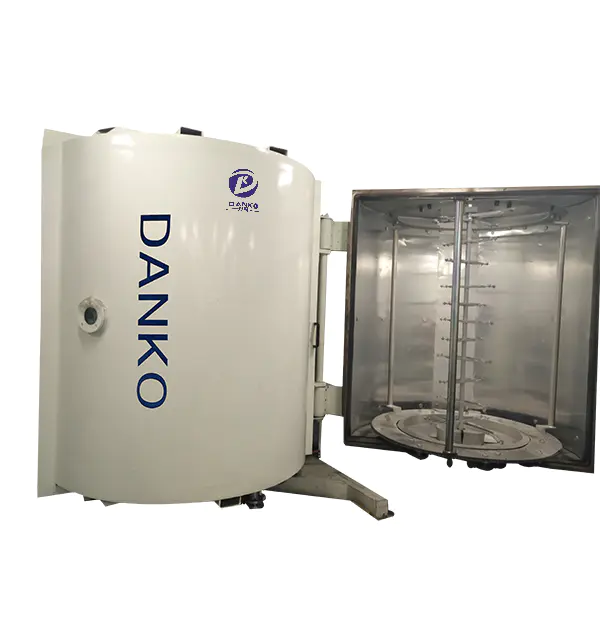
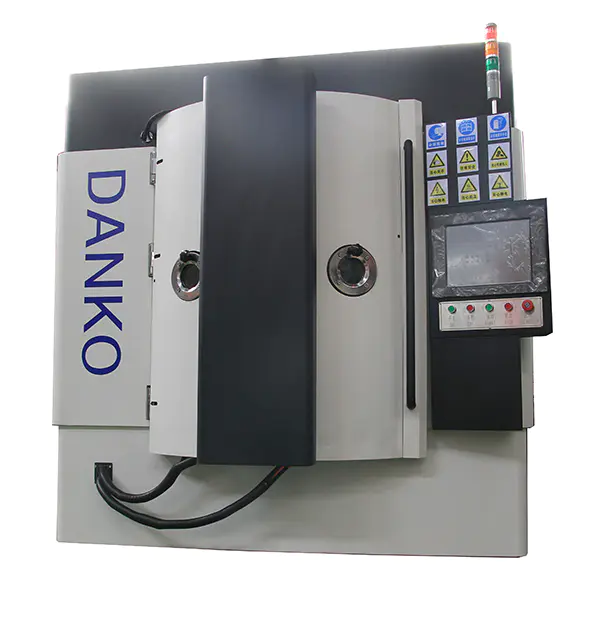
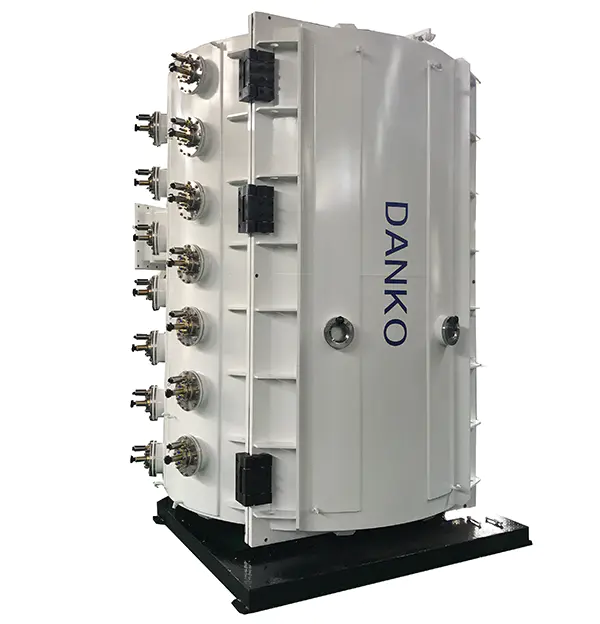
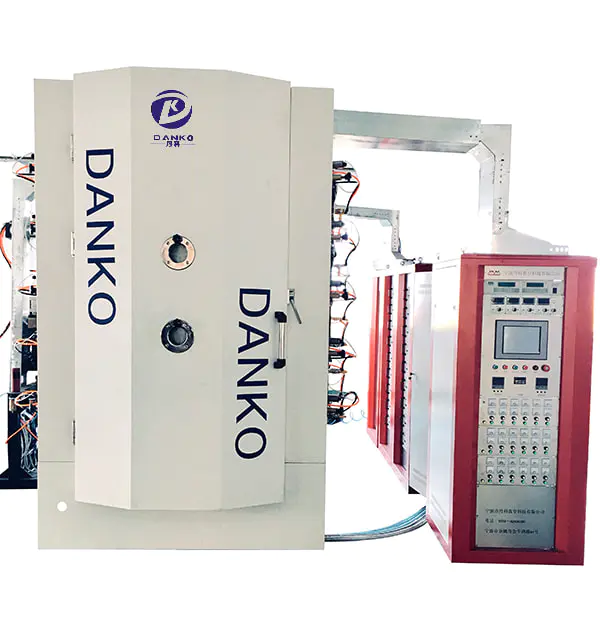
A PVD coater operates through magnetron sputtering, arc evaporation, or electron beam evaporation. For surgical tool applications, magnetron sputtering is the most widely adopted method due to its precise control and biocompatible output.
| PVD Method | Deposition Rate (µm/hr) | Common Surgical Coating |
|---|---|---|
| Magnetron Sputtering | 0.1 – 1.5 | TiN, CrN, DLC |
| Arc Evaporation | 1 – 5 | TiAlN, ZrN |
| Electron Beam Evaporation | 0.5 – 10 | Gold, Platinum, Oxide layers |
One of the most significant advantages of a PVD coater is its low process temperature, typically between 150°C and 500°C. This makes it suitable for coating heat-sensitive stainless steel and titanium surgical instruments without compromising their mechanical integrity or dimensional tolerances — a critical requirement for precision tools such as scalpels, forceps, and orthopedic implants.
CVD systems achieve significantly higher deposition rates — commonly 10–100 µm/hour for standard thermal CVD — by leveraging chemical reactions that form dense, conformal coatings even on complex geometries. This makes CVD particularly attractive when thick coatings or full surface coverage on intricate parts are required.
The high temperatures associated with conventional CVD processes create a fundamental compatibility problem for surgical instruments made from martensitic stainless steel (e.g., AISI 420), which can lose its hardness and corrosion resistance above 400°C. As a result, standard thermal CVD is rarely used as a medical instrument coating machine for finished surgical tools, though it remains relevant for implant-grade ceramic components.
| Parameter | PVD Coater | CVD System |
|---|---|---|
| Deposition Rate | 0.1 – 10 µm/hr | 1 – 100 µm/hr |
| Process Temperature | 150°C – 500°C | 200°C – 1100°C |
| Coating Uniformity | Good (line-of-sight limitation) | Excellent (conformal) |
| Biocompatible Materials | TiN, DLC, CrN, ZrN, Au | DLC (PECVD), SiO₂, Al₂O₃ |
| Hazardous Byproducts | Minimal | Yes (HCl, NH₃, silane) |
| Substrate Compatibility | Steel, Ti, Polymers | High-temp metals, Ceramics |
| ISO 10993 Compliance | Widely established | Case-by-case (residual precursors) |
| Equipment Cost (Entry) | $80,000 – $500,000+ | $150,000 – $1,000,000+ |
Many procurement engineers make the mistake of prioritizing deposition rate as the primary selection criterion. In surgical tool manufacturing, however, three additional factors consistently outweigh speed:
Surgical scissors and micro-forceps operate under tolerances as tight as ±2 µm. A coating machine that deposits too quickly at high temperatures can cause substrate warping or dimensional drift. PVD processes, being lower in temperature, preserve these tolerances far more reliably than thermal CVD.
CVD processes — especially those using silane, ammonia, or chloride-based precursors — require additional validation steps to prove the absence of toxic residues on finished instruments. This can add 6–18 months to the regulatory submission timeline under FDA or EU MDR frameworks. A PVD-based coating machine, by contrast, has a well-established biocompatibility track record under ISO 10993.
A vacuum coating machine based on PVD technology produces negligible hazardous byproducts, making it far more suitable for cleanroom and ISO Class 7/8 manufacturing environments. CVD systems handling pyrophoric or toxic precursor gases require extensive exhaust treatment infrastructure, adding capital and operational costs.
There are specific surgical application scenarios where CVD's faster deposition rate justifies its complexity:
In these cases, PECVD represents the most viable CVD variant, balancing a reasonable deposition rate of 5–20 µm/hr with process temperatures compatible with medical-grade titanium alloys (Ti-6Al-4V) used in implantable devices.
Based on real-world surgical tool manufacturing requirements, the following decision framework helps identify the most suitable coating machine:
Your email address will not be published. Required fields are marked *
Tel: +86-13486478562
FAX: +86-574-62496601
Email: [email protected]
Address: No. 79 West Jinniu Road, Yuyao, Ningbo City, Zhejiang Provice, China

OEM/ODM PVD Coater Manufacturers