Product Consultation
Your email address will not be published. Required fields are marked *

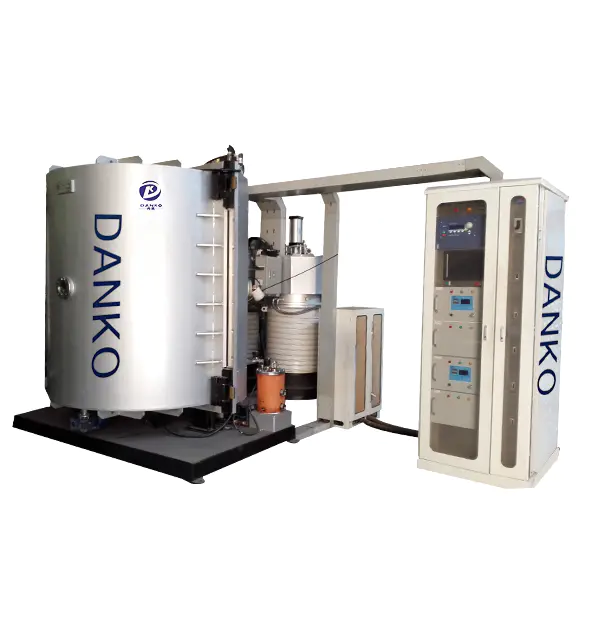
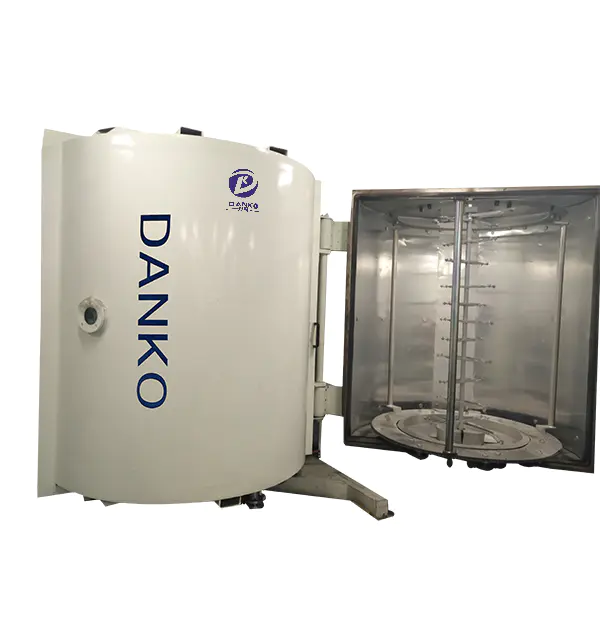
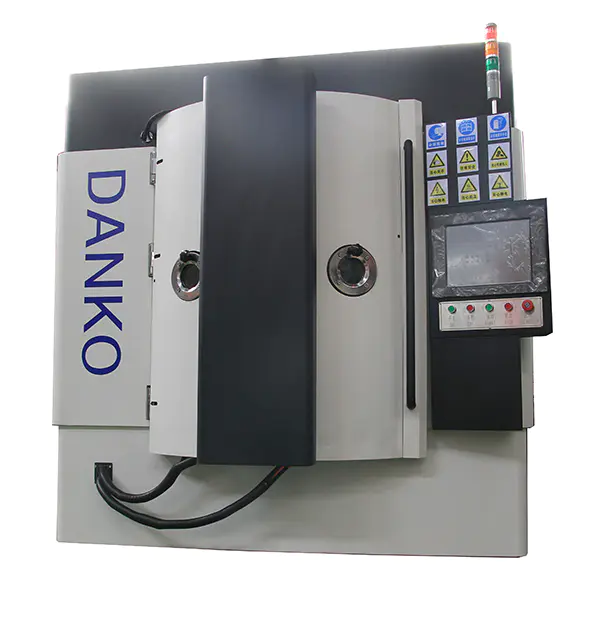
The DLC Coating Machine employs highly controlled substrate heating systems designed to maintain uniform temperature across the entire surface of the workpiece during deposition. DLC (Diamond-Like Carbon) coatings, whether applied via Physical Vapor Deposition (PVD) or Chemical Vapor Deposition (CVD) processes, often require elevated temperatures to ensure optimal adhesion, hardness, and film density. The machine achieves this through resistive heating elements, radiative panels, or induction heaters, which allow for precise adjustment of temperature and heating rate. By gradually ramping up the temperature to the target set point, the machine minimizes thermal shock, which can otherwise lead to micro-cracks, warping, or surface distortion. Uniform heating also ensures consistent layer thickness and surface finish, reducing risk of local overheating or uneven deposition that could compromise coating performance. Advanced machines may allow multi-zone heating, adjusting temperature at different areas to accommodate substrates of varying thickness or geometry, which is particularly critical for complex or composite parts.
Substrate warping can be exacerbated by rigid clamping systems that restrict natural expansion. The DLC Coating Machine uses thermally stable fixtures, floating supports, or compliant mounting systems designed to accommodate thermal expansion while maintaining substrate alignment. These fixtures allow controlled movement of the substrate, preventing stress concentration that could otherwise cause warping or bending. For parts with complex shapes or multi-surface geometries, the machine may employ rotating or planetary fixtures, ensuring that all surfaces are evenly exposed to the deposition source while allowing for subtle expansion and contraction. This combination of flexibility and support ensures mechanical integrity of the substrate throughout the high-temperature coating process.
To further control substrate temperature and prevent localized overheating, the DLC Coating Machine integrates active cooling systems, which may include water-cooled backing plates, gas-cooled mounts, or thermal contact pads. These systems maintain critical areas of the substrate at controlled temperatures, minimizing differential expansion between contact points and free surfaces. This is especially important for thin or delicate substrates that are prone to warping, as uneven heating can introduce mechanical stress. Active cooling also enables the machine to manage thermal gradients, which helps maintain uniform coating quality and protects the dimensional stability of the part.
The DLC Coating Machine carefully regulates plasma density, ion energy, deposition rate, and gas flow to minimize unnecessary thermal input. Excessive energy input can locally overheat the substrate, causing expansion, stress, or even delamination of previously deposited layers. By controlling these parameters, the machine ensures that the substrate absorbs heat gradually and evenly, reducing residual stress accumulation in the coating and preventing mechanical distortion. Advanced machines may employ pulsed or modulated deposition techniques, which allow the substrate to dissipate heat between pulses, further reducing the risk of warping and improving film uniformity.
Modern DLC Coating Machines utilize real-time temperature monitoring systems, such as embedded thermocouples, pyrometers, or infrared sensors, to continuously track the substrate temperature. This data is fed back into the control system, allowing dynamic adjustment of heating power, plasma energy, or deposition parameters to maintain thermal uniformity. Such closed-loop control ensures that even substrates with varying thicknesses, complex shapes, or differing thermal conductivities remain stable throughout the coating cycle. Real-time monitoring also helps prevent hot spots, overheating, and local warping, which are critical for high-precision components where dimensional accuracy is paramount.
Different substrate materials have varying coefficients of thermal expansion (CTE), which can lead to warping if not managed properly. The DLC Coating Machine allows operators to define customized heating and cooling profiles based on the substrate material. For example, aluminum substrates, which have a high CTE, require slow ramp-up and ramp-down cycles to prevent distortion, whereas stainless steel or titanium parts may tolerate faster thermal transitions. By tailoring the thermal profile to the material’s properties, the machine minimizes thermal stress and strain, ensuring the coating adheres uniformly without introducing cracks, delamination, or dimensional instability.
Your email address will not be published. Required fields are marked *
Tel: +86-13486478562
FAX: +86-574-62496601
Email: [email protected]
Address: No. 79 West Jinniu Road, Yuyao, Ningbo City, Zhejiang Provice, China

OEM/ODM PVD Coater Manufacturers