Product Consultation
Your email address will not be published. Required fields are marked *

A mirror-finish reflector is not just a cosmetic surface. It is a precision coating produced under vacuum, and the machine that deposits it determines the optical performance and service life of the headlamp.
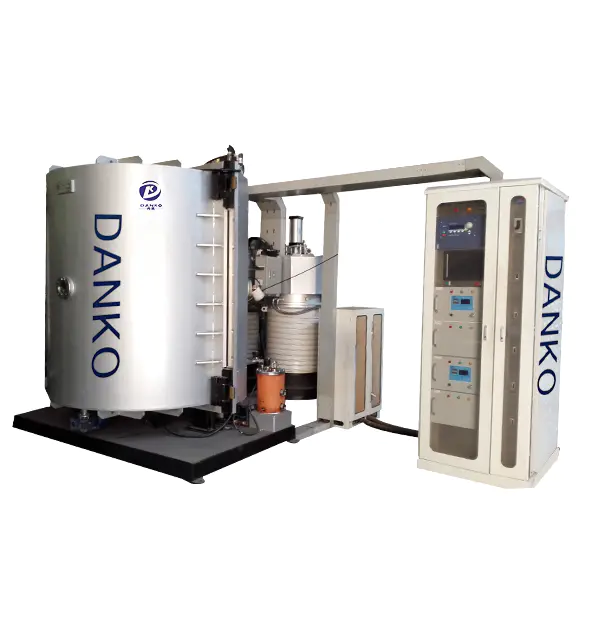
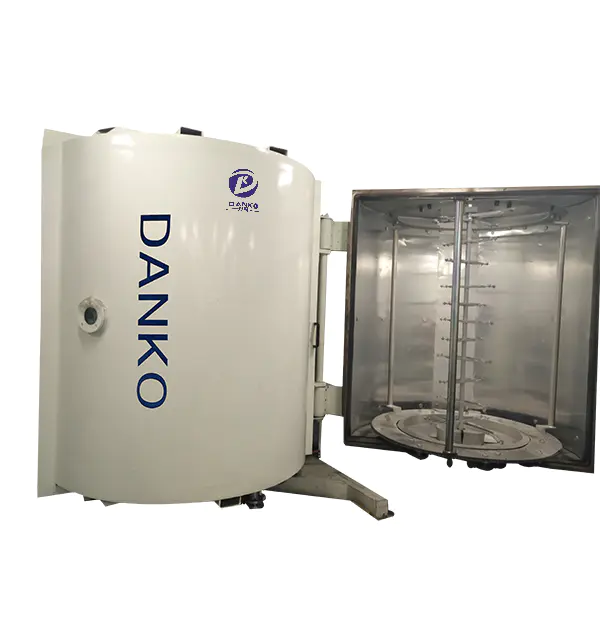
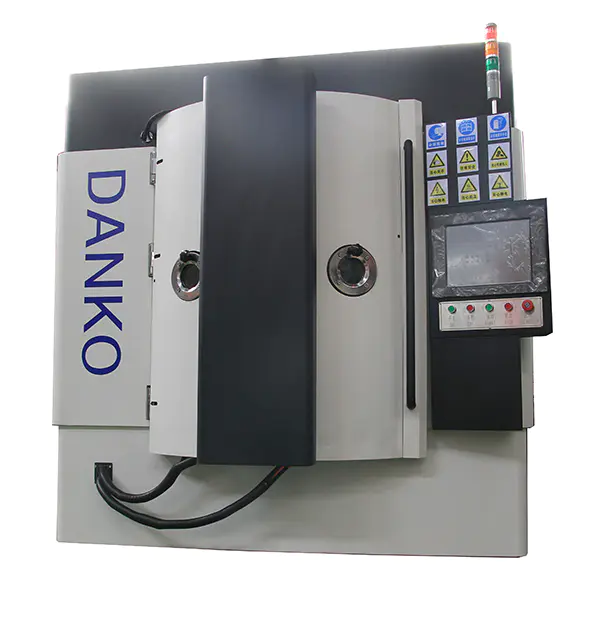
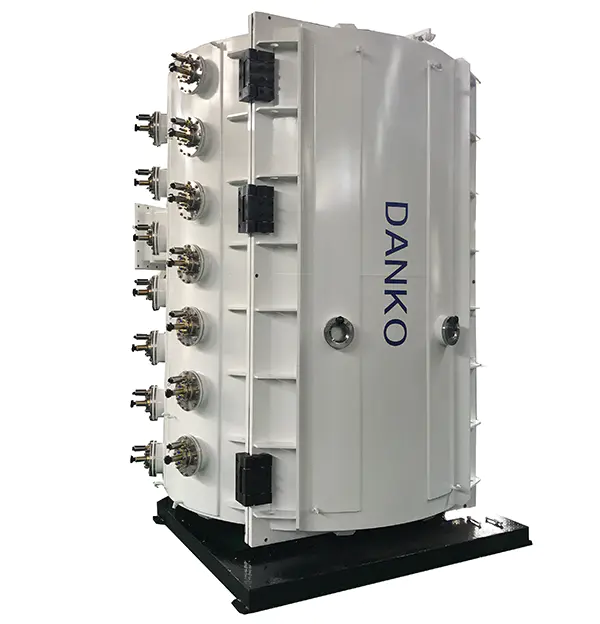
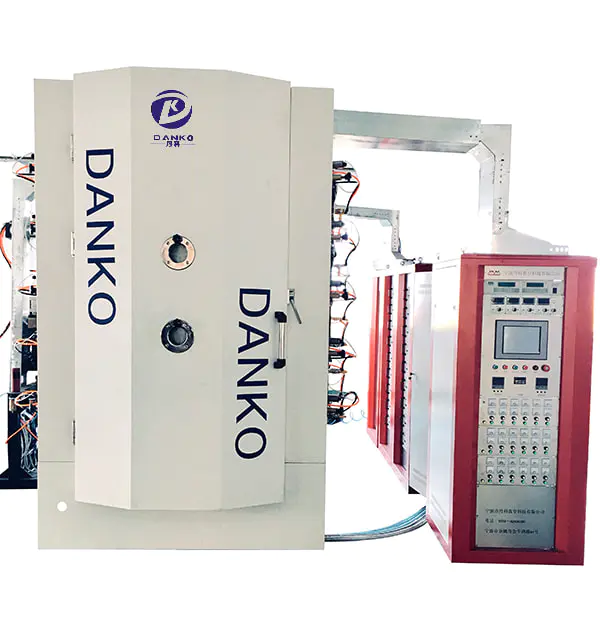
Walk through any automotive headlamp production line, and the reflector cup is the part that catches the eye. Within a few seconds, a molded plastic carrier is turned into a perfectly reflective component. What looks like a simple metal finish is actually a thin film engineered to maintain beam geometry while facing heat, moisture, vibration, and UV exposure. The system that applies this film is a car light PVD coating machine.
PVD stands for physical vapor deposition. The process takes place in a sealed vacuum chamber, where a solid metal source is evaporated or sputtered and then condensed onto the reflector surface. For automotive lighting, the most common coating is aluminum, sometimes covered by a protective oxide layer. The result is a dense, uniform metal film that creates the familiar mirror effect behind the lamp bulb.
Automotive reflectors are different from decorative trim or hardware coatings in one fundamental way: they are optical components. The coating must do more than look bright. It must reflect diffuse light from the bulb into a controlled beam pattern, keep that performance after temperature cycling, and maintain adhesion on polymers that expand and contract.
Typical requirements for an A-surface reflector layer include a reflectance value above 90% in the visible range, film thickness in the 50–200 nm range for aluminum, and resistance to thermal exposure that can reach 120–180°C near high-output bulbs. The same part may also face salt spray and humidity in the vehicle environment. Those conditions disqualify many generic decorative coatings that work well on static parts but fail under automotive stress.
| Method | Reflectivity | Adhesion on plastic | Environmental load | Typical automotive use |
|---|---|---|---|---|
| PVD aluminum | 90%+ | High with proper pretreatment | Low; vacuum process | Headlamp and fog lamp reflectors |
| Chemical silvering | 85–90% with protective layer | Medium; sensitive to polymer surface | High; chemical waste | Decorative interior parts, some optics |
| Electroplated chrome | 70–80% | Lower on non-conductive plastic | Heavy metal effluent | Non-optical trim pieces |
That is why a PVD coating machine built for automotive lamps is specified not simply for vacuum performance, but for the ability to repeat an optical finish across an entire production shift. Uniformity, thickness control, and particle-free deposition are the metrics that matter.
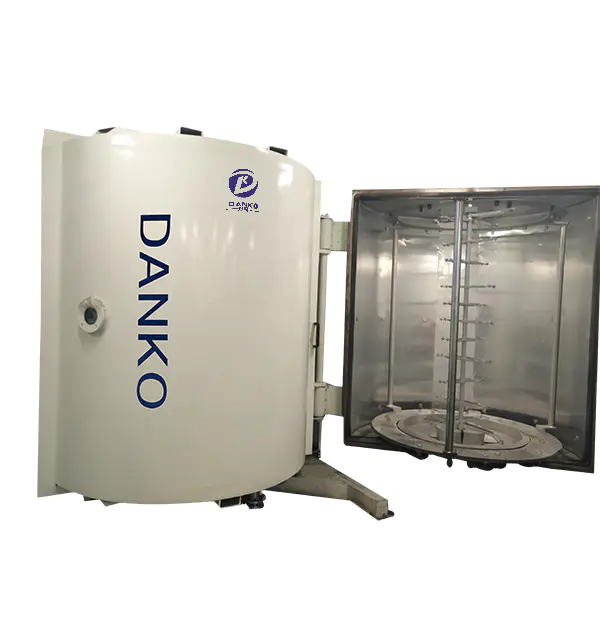
Regardless of the vacuum technology used, the coating cycle follows the same logic. Parts are cleaned and loaded onto a rotating rack inside the chamber. The chamber is pumped down to a working vacuum, usually in the range of 10−2 to 10−3 Pa for evaporation, to allow metal atoms to travel without colliding with gas molecules. After a glow-discharge cleaning step, the deposition source is energized and the metal vapor coats the exposed surface of the reflector.
For lamp reflectors, thermal evaporation with an aluminum wire is still the most widely used route because it produces a bright, dense film at high deposition rates. Magnetron sputtering is used when the coating must have superior adhesion or when an alloy film is required. Some systems combine both in one chamber, allowing a sputtered protective layer to be deposited immediately after the reflective layer without breaking vacuum.
The key machine-level variables are the pumping speed, the rotation geometry, and the deposition control. A slow pump-down creates residual water vapor that lowers adhesion; a static fixture creates non-uniform film on deep reflector cups; an unstable feed rate creates banding on the reflective surface. This is why experienced operators look beyond maximum chamber size when evaluating a machine. For a broader view of how vacuum-based metallization is changing lighting production, see our earlier note on car light vacuum coating technology.
A reflector layer does not have to be perfectly uniform on every square millimeter, but it has to be repeatable on every part.
Not every car light PVD coating machine is designed for the same workload. A small laboratory unit and a mass-production system can both deposit aluminum, but their operating windows are completely different. When you define your requirements, pressure these five areas:
For lighting manufacturers that integrate the reflector and the outer lamp package in one process, the scope may also include coating the inner surfaces of headlamp and rear lamp housings. These parts have different geometry but the same need for low defect density and reproducible optical appearance.
Many buyers compare coating machines on price, chamber size, and quoted cycle time. Those are useful baseline numbers, but the real operating cost is determined by yield, consumables, and service response.
Consider the consumable side first. Thermal evaporation systems consume aluminum wire and filament or crucible heaters. Sputtering systems require targets that erode in a characteristic profile. Both need periodic cleaning of the chamber walls to prevent film flaking. A machine that is easy to open, clean, and reload will have higher effective uptime than one with a larger nominal capacity but awkward maintenance access.
Another hidden cost is process development. If the supplier cannot help you optimize the coating cycle on your own part geometry, you may spend weeks of in-house trial-and-error before you reach the required reflectance and adhesion. Ask for coating tests on representative samples before you sign an order, and check whether the same team supports coating troubleshooting after installation.
A car light PVD coating machine is a production tool, but it is also the final quality gate for an optical component. The machine determines how efficiently the bulb’s light reaches the road, how the reflector survives thermal and environmental stress, and how consistent the product is at scale.
When selecting equipment, the right path is to start with the part, not with the brochure. Define the reflector geometry, the plastic substrate, the required reflectivity, the climate test specification, and the projected output. Then map those requirements to the machine’s vacuum system, coating source, rotating fixtures, and process controls. And finally, confirm that the supplier can transfer practical process knowledge together with the hardware.
For manufacturers entering automotive lighting or upgrading existing lines, a PVD coating machine built around lamp-specific requirements is not an optional refinement. It is the core of a durable, efficient, and defensible lighting product.
Your email address will not be published. Required fields are marked *
Tel: +86-13486478562
FAX: +86-574-62496601
Email: [email protected]
Address: No. 79 West Jinniu Road, Yuyao, Ningbo City, Zhejiang Provice, China

OEM/ODM PVD Coater Manufacturers