Product Consultation
Your email address will not be published. Required fields are marked *

Magnetron sputtering is renowned for its ability to create highly uniform coatings, which is essential for applications where precise film thickness is critical. The process involves bombarding a target material with ions in a vacuum, leading to the deposition of a thin and even layer on the substrate. This method ensures that the coating is consistent across large surfaces and complex geometries, with minimal variation in thickness. In contrast, thermal spray often results in non-uniform coatings due to the nature of the spray process, which can lead to inconsistencies in thickness and surface texture. Electroplating, while also capable of producing uniform coatings, struggles with achieving the same level of consistency, especially when dealing with non-conductive materials or parts with irregular shapes.
One of the key benefits of magnetron sputtering is its superior adhesion strength. During the sputtering process, energetic particles strike the substrate, promoting the formation of strong bonds at the molecular level between the coating and the surface. This results in coatings that are less likely to peel or delaminate under stress. In comparison, thermal spray coatings can suffer from lower adhesion on certain substrates, particularly if the surface preparation is insufficient. Electroplating can also present adhesion challenges, especially with complex shapes or non-metallic substrates, where coatings may be more prone to delamination over time.
The versatility of magnetron sputtering is one of its standout features. It can be used to deposit a wide variety of materials, including metals, alloys, ceramics, and complex composites such as oxides or nitrides. This makes magnetron sputtering suitable for diverse applications, including optical coatings, semiconductors, decorative finishes, and protective coatings. While thermal spray is generally limited to metal-based coatings, magnetron sputtering can achieve a far greater range of material properties, including hardness, magnetism, optical transparency, and chemical resistance. Electroplating, on the other hand, is typically restricted to metals and requires specific conditions for each material, limiting its flexibility.
Magnetron sputtering produces dense, smooth, and low-porosity films. The films deposited through this process are ideal for applications requiring high-performance coatings such as wear resistance, corrosion protection, and optical coatings. This is due to the controlled nature of the sputtering process, where the energy imparted to the atoms during deposition leads to high-quality, uniform coatings. In comparison, thermal spray coatings tend to be more rough, with higher porosity, which can compromise the integrity of the coating, especially for corrosion resistance or electronic applications. Electroplating can also produce smooth coatings, but the risk of surface defects such as bubbles, imperfections, or uneven thickness is more pronounced compared to magnetron sputtering.
Unlike thermal spray techniques, which use high temperatures that can cause thermal stress or even damage to heat-sensitive substrates, magnetron sputtering is typically carried out at low temperatures. This low-temperature characteristic is beneficial when working with sensitive materials such as plastics, glass, or composite materials, which could warp, crack, or degrade under extreme heat. Electroplating also involves elevated temperatures but typically within a bath solution, which can be a limiting factor for some applications. The low-temperature nature of magnetron sputtering makes it a much more versatile and material-friendly coating method for various applications.
Another major advantage of magnetron sputtering is the precise control it offers over the composition and structure of the deposited films. By adjusting parameters such as the target material, gas composition, plasma conditions, and substrate bias, the process can be finely tuned to produce coatings with desired properties, such as hardness, density, and crystallinity. This level of control makes it particularly valuable for producing multilayer coatings or coatings with specialized properties (e.g., optical coatings, corrosion-resistant layers). Thermal spray coatings offer less precision in terms of composition, as the material is melted and sprayed, often resulting in heterogeneous coatings. Electroplating can also provide some control over composition, but the process is limited by bath chemistry, which can be less flexible in meeting precise material requirements.
Magnetron sputtering is a cleaner, more environmentally friendly coating technique compared to thermal spray and electroplating. Since it occurs in a vacuum chamber, there is minimal release of harmful emissions, and the process uses relatively non-toxic materials. In contrast, thermal spray techniques can produce fumes, particulate matter, and heat, all of which can contribute to air pollution or require additional safety measures. Electroplating, on the other hand, typically uses hazardous chemicals and involves toxic waste disposal, which requires careful handling to meet environmental regulations. Magnetron sputtering’s minimal environmental impact makes it a more sustainable choice, especially for industries with strict environmental standards.
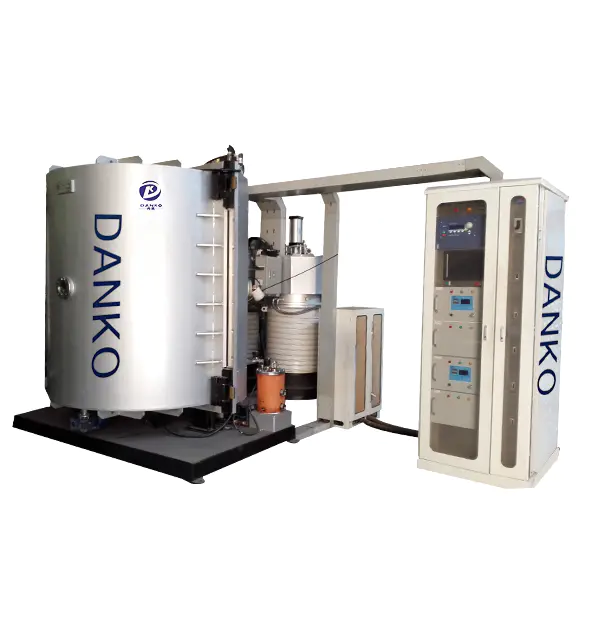
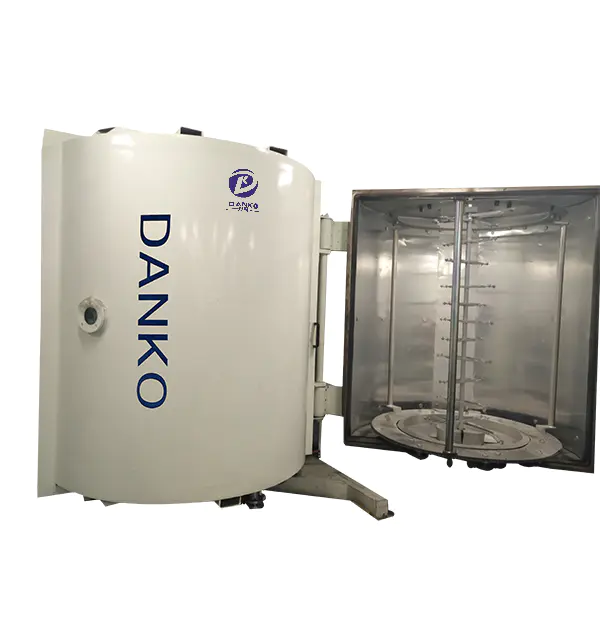
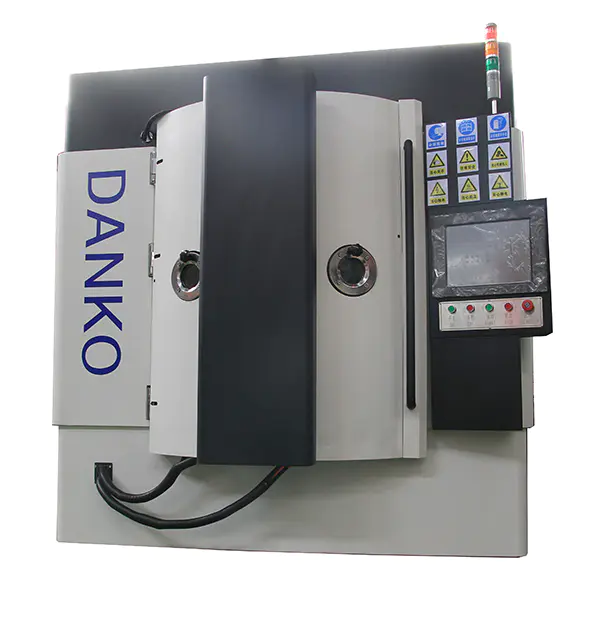
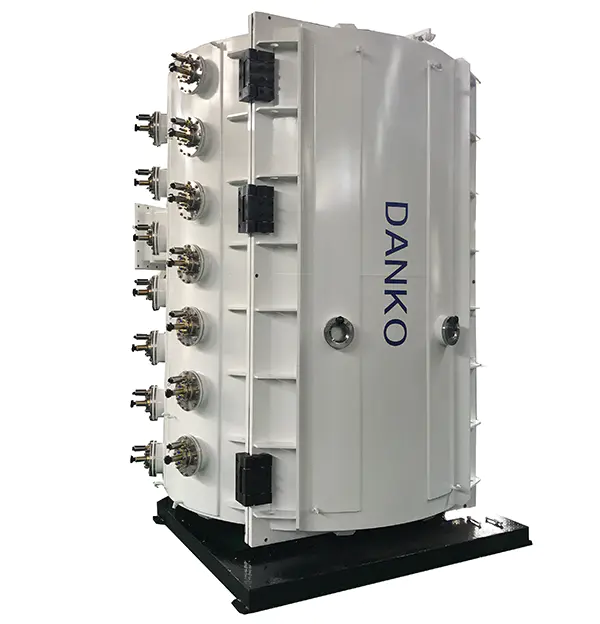
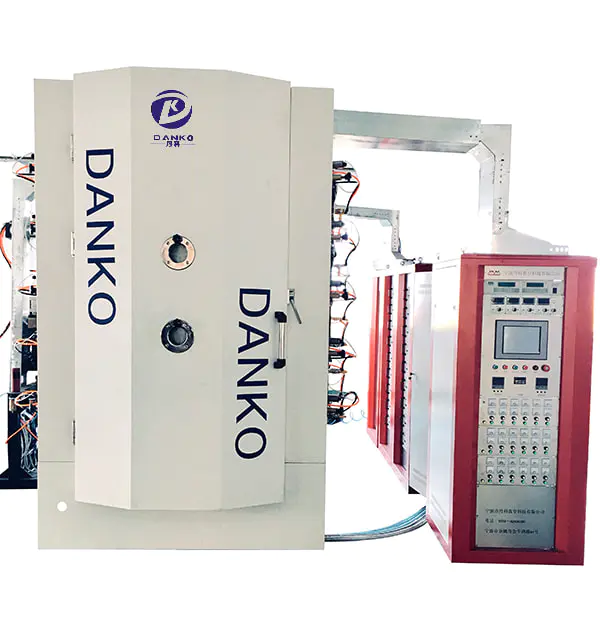
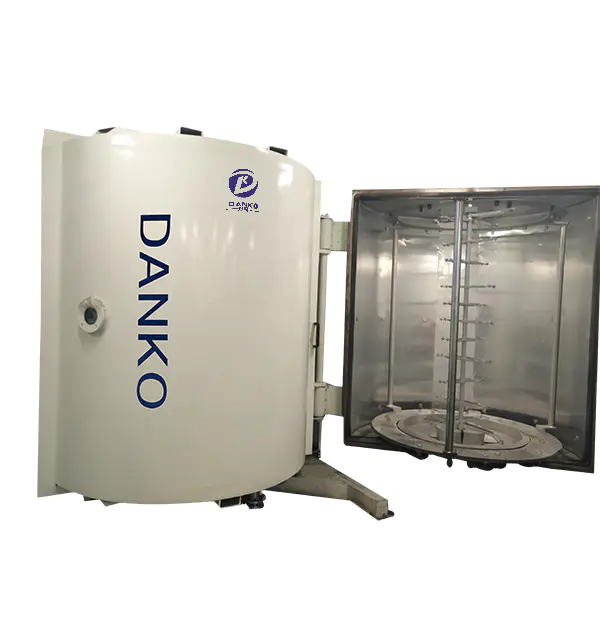
Magnetron sputtering coating machine
Your email address will not be published. Required fields are marked *
Tel: +86-13486478562
FAX: +86-574-62496601
Email: [email protected]
Address: No. 79 West Jinniu Road, Yuyao, Ningbo City, Zhejiang Provice, China

OEM/ODM PVD Coater Manufacturers