
 Email:
  Tel:+86-13486478562
 Language
  Español
 Português
Industrial Coating Economics
The initial capital investment for a PVD coating machine is higher than a traditional electroplating line primarily because PVD systems require a sealed vacuum chamber, high-precision vacuum pumping stages, specialized power supplies, and advanced process control electronics — none of which are needed in a wet chemical electroplating tank. A typical industrial-grade pvd vacuum coating machine can cost anywhere between $150,000 and $600,000 depending on chamber size and coating technology, while a comparable electroplating line for similar part volumes can often be set up for $30,000 to $100,000. This price gap of roughly 3 to 6 times is not arbitrary; it reflects the fundamentally different engineering complexity behind vacuum-based physical deposition versus chemical bath deposition.
In short, electroplating relies on relatively simple tanks, rectifiers, and chemical solutions, while PVD equipment must create and maintain a near-perfect vacuum environment, generate plasma or ion beams, and precisely control deposition rates at the atomic level. Every one of these requirements adds hardware cost, engineering complexity, and calibration time, which is why buyers evaluating a vacuum metalizing machine should expect a significantly higher entry price point compared to conventional plating equipment.
The Vacuum System: The Single Largest Cost Driver
The vacuum chamber and its associated pumping system typically account for 30% to 40% of the total machine cost in any pvd vacuum coating machine. Unlike electroplating, which operates at atmospheric pressure in an open or semi-open tank, PVD deposition must occur in a chamber evacuated to pressures as low as 10⁻⁴ to 10⁻⁶ mbar. Achieving and maintaining this environment requires a staged pumping system, usually combining a mechanical roughing pump, a Roots blower, and a high-vacuum pump such as a diffusion pump or turbomolecular pump.
Key Vacuum Components That Add Cost
- Turbomolecular or diffusion pumps for high-vacuum stages
- Precision vacuum gauges and leak-detection sensors
- Reinforced stainless steel or aluminum chamber walls capable of withstanding pressure differentials
- Vacuum-rated seals, valves, and viewports
- Automated pump-down and venting control systems
By comparison, an electroplating tank simply needs corrosion-resistant lining, a rectifier, and basic agitation equipment — no airtight sealing, no pressure monitoring, no multi-stage pumping.
There is no need for airtight sealing, pressure monitoring, or multi-stage pumping, which is why the vacuum subsystem alone can add well over $50,000 to $150,000 to the price of a mid-sized vacuum metalizing machine.
Deposition Source Technology Adds Further Expense
Beyond the vacuum system, the deposition source itself — whether magnetron sputtering cathodes, cathodic arc sources, or electron beam evaporators — represents another major cost center. These components must generate and sustain plasma or ionized metal vapor under precise electrical and magnetic conditions, requiring specialized power supplies capable of delivering pulsed DC, RF, or high-voltage arc current.
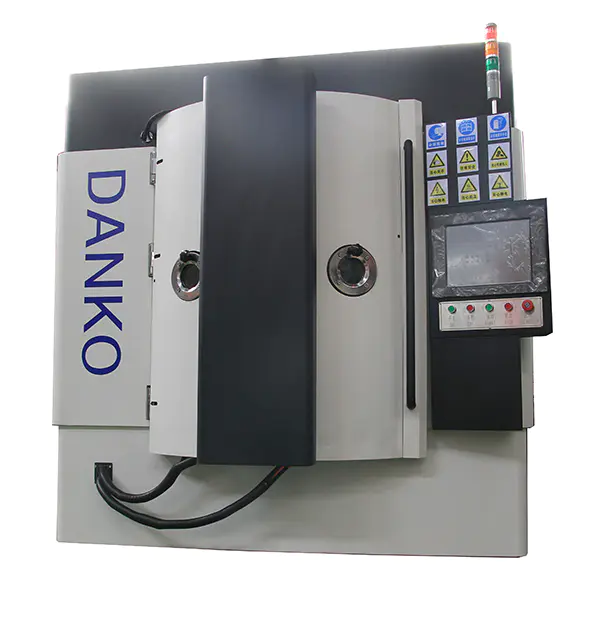
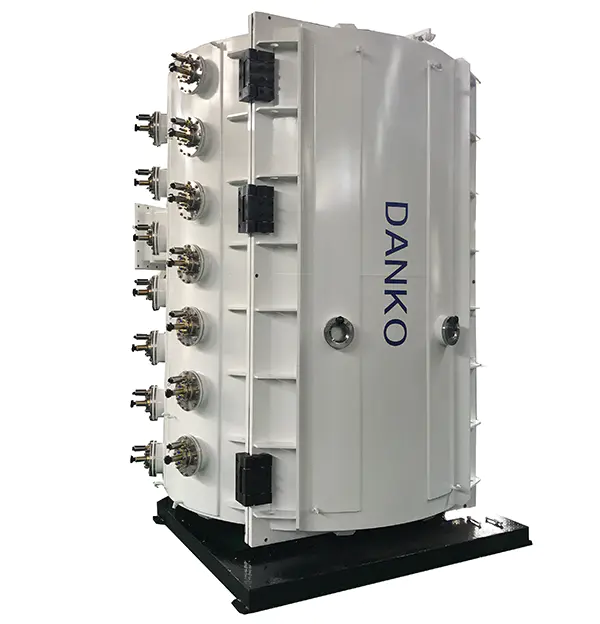
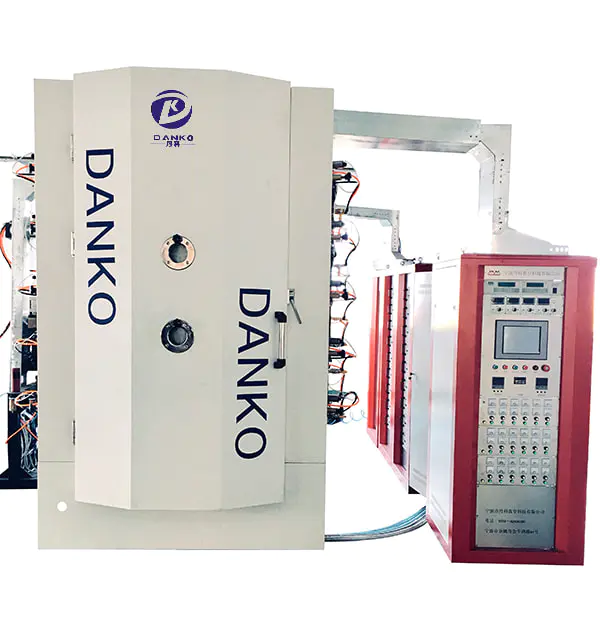
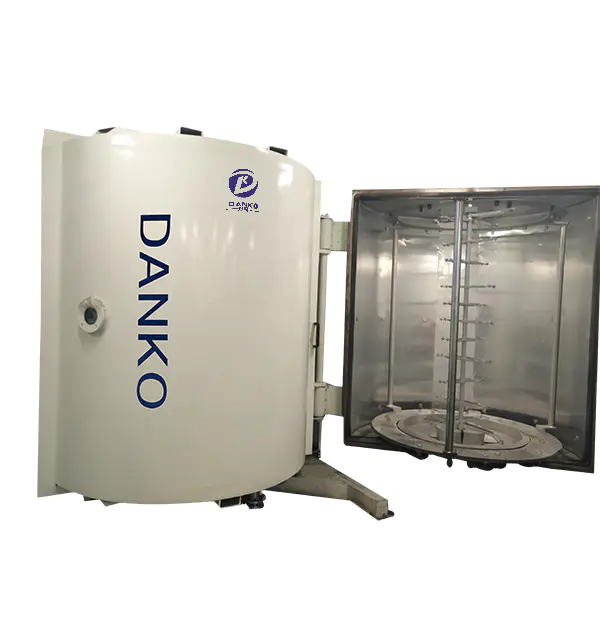
PVD coating machine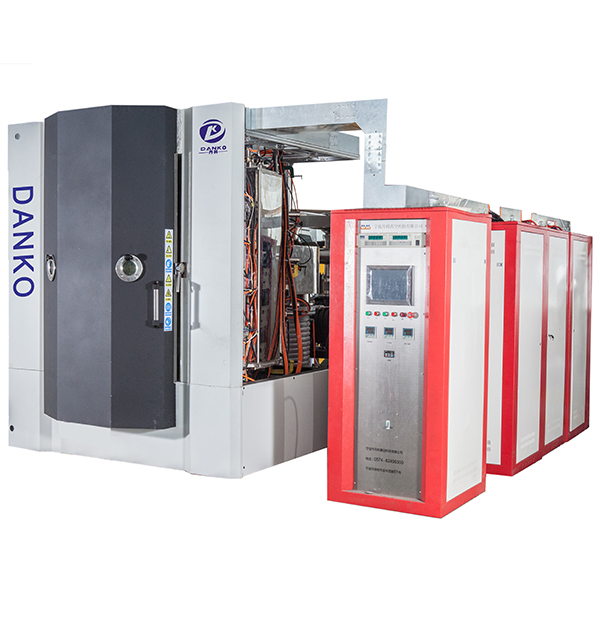
A single magnetron sputtering cathode assembly, including magnet arrays and water-cooling channels, can cost between $8,000 and $25,000 depending on size and target material compatibility. Multi-target systems, which are common in industrial PVD coating machine setups to enable multilayer or alloy coatings, multiply this cost several times over. Electroplating equipment, by contrast, uses standard DC rectifiers that are mass-produced and comparatively inexpensive, often costing a fraction of what a single sputtering power supply demands.
Process Control and Automation Requirements
PVD coating is a highly sensitive process where coating thickness, uniformity, and adhesion depend on precise control of variables such as chamber pressure, gas flow ratio, substrate temperature, and rotation speed. To manage this complexity, modern PVD systems integrate programmable logic controllers (PLCs), mass flow controllers, thermocouples, and often touchscreen HMI interfaces for recipe management.
Cost Comparison Table: PVD vs. Electroplating Line
The table below summarizes typical cost differences between a mid-sized industrial PVD system and a comparable electroplating line designed for similar part throughput.
| Cost Component | PVD Coating Machine | Electroplating Line |
| Vacuum / Chamber System | $50,000–$150,000 | Not applicable |
| Deposition / Power Source | $20,000–$100,000 | $5,000–$15,000 |
| Automation & Controls | $15,000–$40,000 | $3,000–$10,000 |
| Facility / Installation | $20,000–$60,000 | $5,000–$20,000 |
| Total Estimated Range | $150,000–$600,000+ | $30,000–$100,000 |
Facility and Installation Requirements Increase Total Investment
Beyond the machine itself, installing a PVD coating machine typically demands reinforced flooring to support chamber weight, three-phase high-voltage electrical service, dedicated cooling water circuits, and sometimes clean-room-adjacent conditions to avoid particulate contamination during deposition. These facility upgrades can add tens of thousands of dollars before the machine even produces its first coated part.
Why Buyers Still Choose PVD Despite Higher Upfront Costs
Despite the steeper initial price, many manufacturers still choose a vacuum metalizing machine over electroplating for several practical reasons. PVD coatings are dry, environmentally friendly, and free from the heavy metal wastewater treatment obligations that electroplating requires under most environmental regulations. Over a multi-year operating period, the elimination of chemical disposal costs, safety compliance expenses, and wastewater permits can offset a significant portion of the higher initial investment.
Long-Term Cost Offsets Worth Considering
- No hazardous chemical purchasing or storage costs
- Reduced wastewater treatment and environmental compliance fees
- Lower long-term labor costs due to higher automation
- Longer coating lifespan reducing rework and part replacement costs
Practical Guidance for Evaluating Equipment Investment
Before committing to a pvd vacuum coating machine purchase, manufacturers should request a detailed cost breakdown from suppliers covering chamber size, pumping configuration, number of deposition sources, and automation level. Comparing quotes solely on total price without understanding these underlying components can lead to underestimating operating costs or overestimating throughput capacity.
Summary
The higher initial capital investment required for a PVD coating machine compared to a traditional electroplating line comes down to the fundamental physics and engineering of vacuum-based deposition. Vacuum chambers, high-vacuum pumps, specialized power supplies, and advanced automation systems are all essential to achieving the precise, high-quality coatings that PVD technology is known for, and each of these components adds substantial cost that simple electroplating tanks do not require. While the upfront price difference can be significant — often three to six times higher — many manufacturers find that the environmental, performance, and long-term operating advantages of PVD justify the investment over the equipment's working life.

 Tel: +86-13486478562
 FAX: +86-574-62496601
 Email:
  Address: No. 79 West Jinniu Road, Yuyao, Ningbo City, Zhejiang Provice, China