 Email:
  Tel:+86-13486478562
 Language
  Español
 Português
Product Consultation
Your email address will not be published. Required fields are marked *
The arc plasma coating machine is often confused with a plasma spray system, but in the vacuum coating industry the two are very different. Here, the term refers to a cathodic arc evaporation machine that generates a metal plasma by striking an electric arc on a solid target inside a vacuum chamber. The practical point for buyers: if you need a dense, well-adhered thin film on tools, metal parts, or selected plastic parts, an arc plasma coating machine is one of the most productive PVD options, particularly for hard wear-resistant coatings and consistent decorative finishes.
The process starts with a vacuum chamber evacuated to a base pressure in the 10^-3 Pa range. The coating material, usually titanium, chromium, aluminum, graphite, or an alloy, is mounted as a target that acts as the cathode. When the process begins, an arc is ignited on the target surface. The arc spot has an extremely high current density, so it evaporates the target material almost instantly, producing a fully ionized plasma that expands toward the parts to be coated.
The parts are connected to a bias supply that gives them a negative potential. Positive metal ions from the plasma are accelerated across the bias potential and strike the part surface with high energy. If a reactive gas such as nitrogen, oxygen, or acetylene is admitted into the chamber, the metal ions react with the gas to form nitrides, oxides, or diamond-like carbon films such as TiN, CrN, AlTiN, and DLC. This working principle of cathodic arc ion plating is the foundation of most arc plasma coating machines sold today.
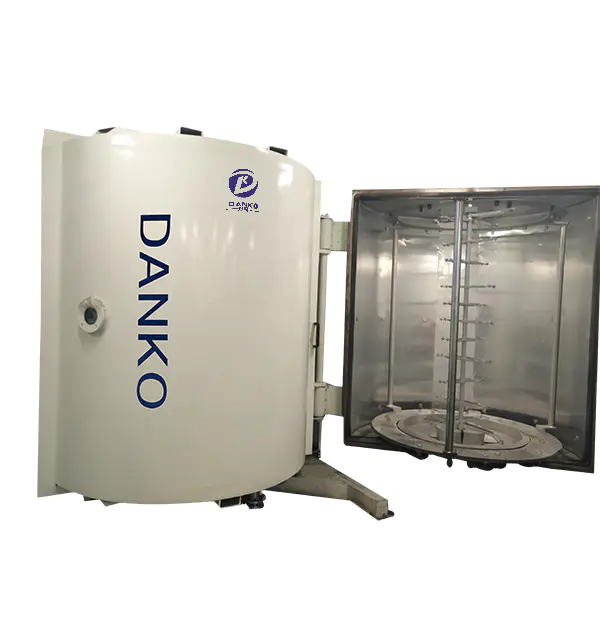
A complete system includes the vacuum chamber, pumping unit, arc power supplies, bias supply, gas flow controllers, and a programmable control system, with options such as substrate heating, ion etching, and glow discharge cleaning. The mechanical layout has as much influence on final coating quality as the electrical parameters, because uniform coating depends on the position and orientation of every part inside the chamber.
It is worth separating this method from plasma spraying. Plasma spray equipment melts powder or wire in a plasma jet and propels molten droplets onto a surface to build thick, mechanically bonded layers, typically from 100 to 500 microns. PVD arc plasma coating machines deposit 1 to 5 micron films with an atomic-level bond. Both processes use plasma, but they solve different problems, and they should be selected for different reasons.
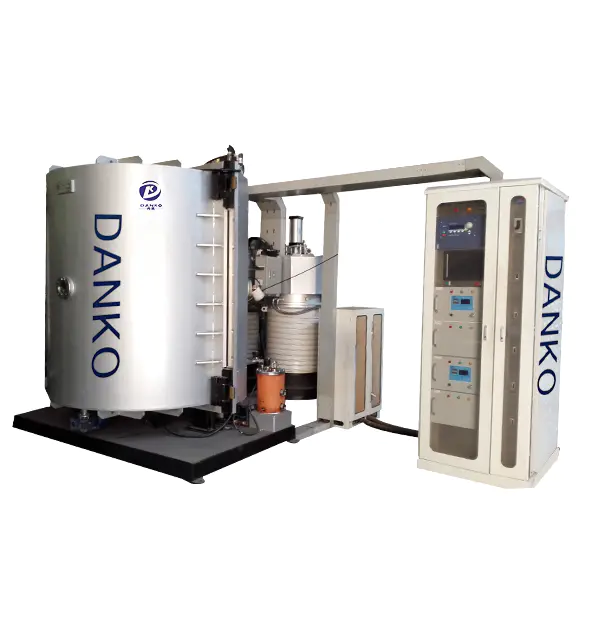
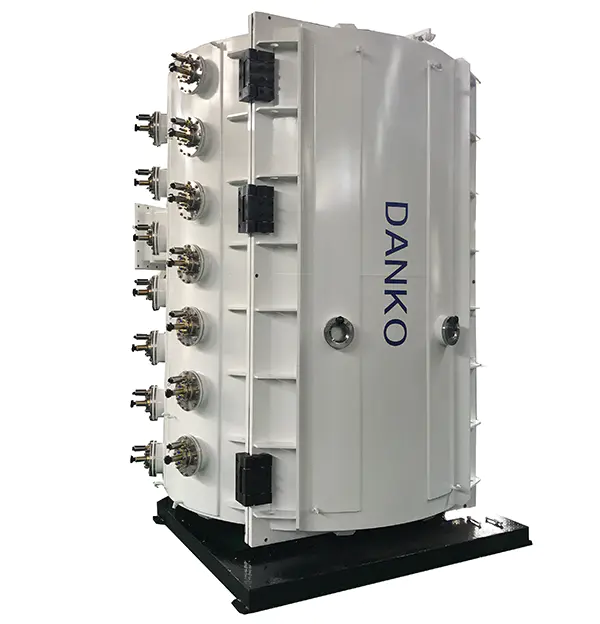
The most common production configuration is the multi-arc layout, in which several arc sources are distributed around the chamber walls to cover a rotating workload evenly. A good example is the multi-arc ion vacuum coating machine, which is designed for batch coating of cutting tools, hardware, and automotive components.
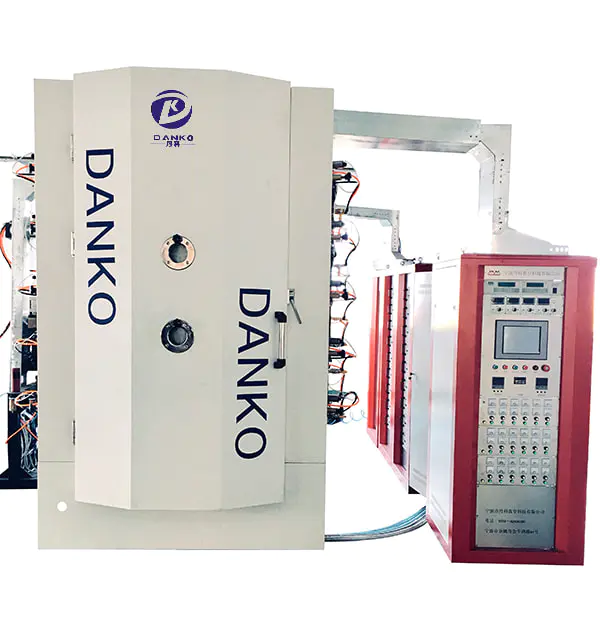 Multi-Arc Ion Vacuum Coating Machine Suppliers, FactoryAs China multi-arc ion coating machine manufacturers and factory, Ningbo Danko Vacuum Technology Co., Ltd. custom multi-arc ion vacuum co...View Product →
Buyers choose an arc plasma coating machine for three measurable reasons: adhesion, coating density, and deposition rate. The ions arrive at the substrate with far higher energy than evaporated neutral atoms, so the film has strong adhesion even on polished surfaces. The coating grows with a dense structure and no through-thickness porosity, which matters for corrosion resistance and wear protection. And the arc process deposits material faster than most magnetron sputtering configurations, which shortens cycle times.
Arc plasma coating also runs at relatively low substrate temperatures when bias and arc current are controlled correctly. Many parts can be coated below 200 degrees Celsius, which means hardened tools and pre-tempered components keep their metallurgical properties.
No process is without trade-offs. Arc evaporation produces micro-droplets that can leave small defects on the film surface. Suppliers reduce them with magnetic steering of the arc spot, macro-particle filters, or pulsed arc power. This point matters for decorative work, because droplets affect gloss and color consistency. Arc plasma coating is also a line-of-sight process: deep blind holes and internal bores are hard to coat uniformly, so fixture design and part orientation need to be part of the purchase decision.
The table below summarizes the main use areas and what the coating is expected to do in each case.
| Application area | Typical parts | Coating function |
|---|---|---|
| Cutting tools and moulds | Milling cutters, drills, inserts, forming dies | Wear resistance, friction reduction, longer tool life |
| Mechanical transmission | Gears, bearings, screw rotors, compressor parts | Low friction, anti-galling, wear protection |
| Decorative hardware | Sanitary fittings, tableware, watch cases, furniture hardware | Metallic color, anti-fingerprint behavior, abrasion resistance |
| Automotive components | Wheel rims, trim parts, logos, lamp reflectors | Decorative metal finish, scratch resistance, reflectivity |
| Medical instruments | Scalpels, surgical tools, dental instruments | Hardness, low friction, corrosion resistance |
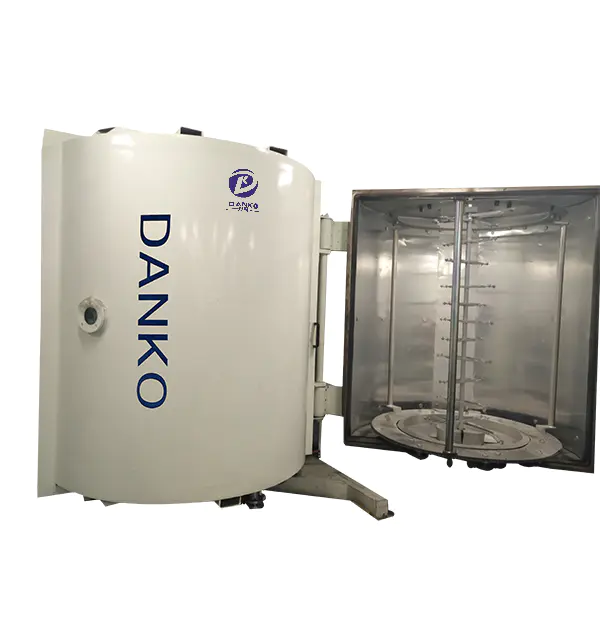
Cutting tool shops are the largest users of arc plasma coating machines. A hard film such as TiN or AlTiN allows a milling cutter to run at higher speeds while protecting the cutting edge. Dedicated tools and moulds coating machine configurations are built with multiple arc sources, bias control, and preheating systems to meet this type of production demand.
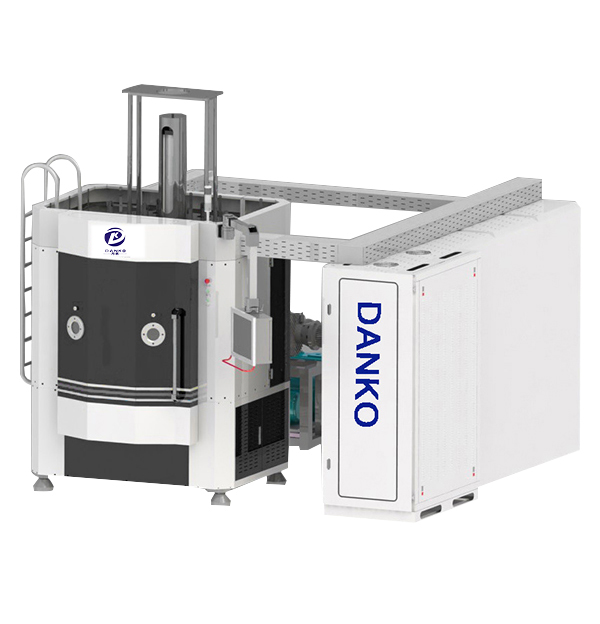 Custom Tool&Die super subdural ion plating machine Suppliers, Factory - Ningbo DNingbo Danko Vacuum Technology Co., Ltd. is China custom Tool&Die super subdural ion plating machine suppliers and factory,This equipment...View Product →
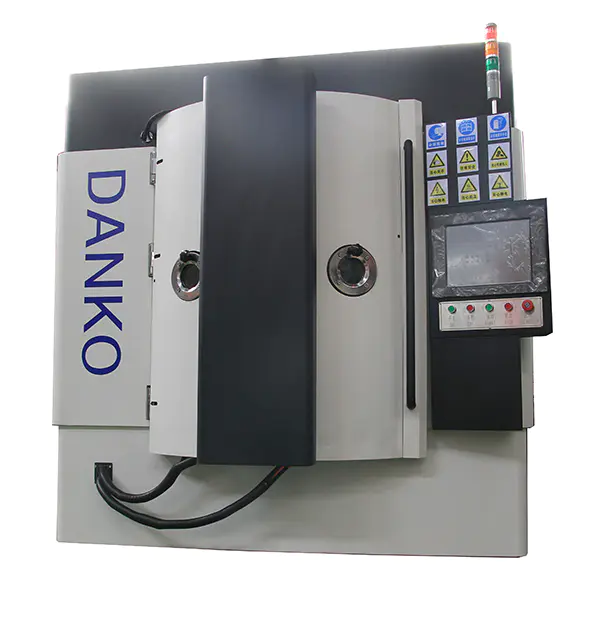
Decorative production places a different set of demands on the machine. Color consistency from batch to batch, surface smoothness, and mixed part geometries are the priorities. A hardware decoration PVD vacuum coating machine addresses these requirements with controlled arc current, stable reactive gas flow, and rotating fixtures that keep film thickness uniform over each load.
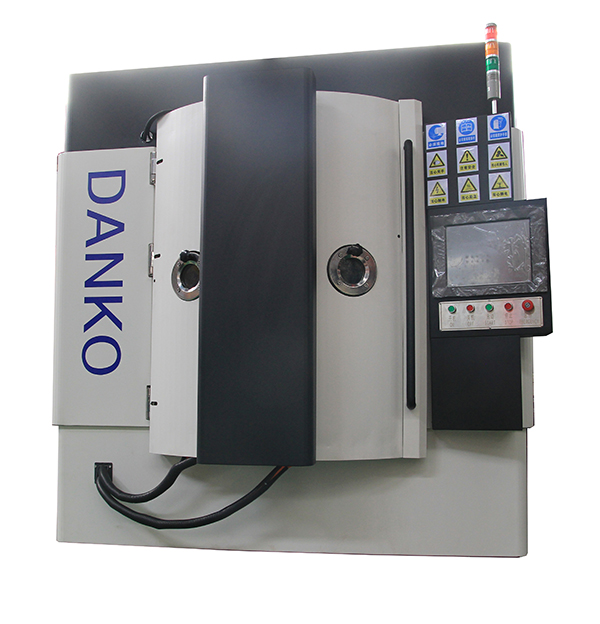 Custom Hardware decoration PVD vacuum coating machine Suppliers, Factory - NingbNingbo Danko Vacuum Technology Co., Ltd. is China custom Hardware decoration PVD vacuum coating machine suppliers and factory,Hardware De...View Product →
Mechanical transmission parts such as gears, bearings, and screw compressors benefit from low-friction DLC or CrN coatings that reduce wear and galling. Automotive plants use arc plasma coating machines for wheel rims, exterior trim, logos, and lamp reflectors, where every batch must reproduce the same metallic appearance.
An arc plasma coating machine is a long-term capital purchase. The machine with the best specification does not always win on paper, but the following points will help you compare offers on an equal basis.
Reviewing models from manufacturers that build a full range of multi-arc ion coating machines can help you match the equipment to your existing part mix and production plan.
The quality of an arc plasma coating machine shows up in daily production: cycle time, coating repeatability, and the number of rejected batches. A manufacturer with experience across hard, decorative, and optical PVD applications can advise on chamber design, arc source selection, and process parameters before you commit. When evaluating a supplier, ask for reference installations in your industry and confirm that the machine can be installed, commissioned, and serviced without long delays. The right machine is the one that fits your parts, your coating specifications, and your production volume, and that fit is determined by the machine configuration and process support as much as by the price.
Your email address will not be published. Required fields are marked *

 Tel: +86-13486478562
 FAX: +86-574-62496601
 Email: [email protected]
 Address: No. 79 West Jinniu Road, Yuyao, Ningbo City, Zhejiang Provice, China
 OEM/ODM PVD Coater Manufacturers