Product Consultation
Your email address will not be published. Required fields are marked *

Process Engineering
A coating cycle is a chain of controlled windows rather than a single action. This is how pump-down, outgassing, ion etching, deposition, and cooling fit together on a real production line, and where thin films are usually lost.
Strip away the hardware and a vacuum coating machine process does one job: it removes everything from the chamber that you did not ask to be there, then lets a chosen material arrive at the part surface under controlled energy. The film you get is the result of three variables — background pressure, ion energy at the substrate, and the rate and time of deposition. Every other setting, from argon flow to jig rotation, is only a way of tuning those three.
That is why two shops can run "the same" PVD recipe and see different results. A chamber held at 3 x 10⁻³ Pa without substrate heating still carries a water-vapour load that competes with the coating for bonding sites. The same chamber at 4 x 10⁻⁴ Pa after a proper bake-out behaves like a different machine. Pressure alone is not the number that matters; the ratio between residual gas load and deposition rate is.
Vacuum is not the goal of the process. It is the filter that decides what else is allowed to touch the part before the film does.
Most batch cycles follow the same sequence, whether the machine uses cathodic arc, magnetron sputtering, or thermal evaporation. The differences sit in the middle of the cycle, not at the ends.
Safety note: never vent a hot chamber straight to atmosphere and never bypass door interlocks to save a few minutes. A hot load meeting moist air will oxidise, and the same shortcut on a large system exposes operators to hot fixtures and moving pump assemblies.
The middle of the cycle is where methods diverge, and that choice sets the practical limits on rate, uniformity, and defect risk.
| Method | Working pressure | Typical film thickness | Main process risk |
|---|---|---|---|
| Thermal evaporation | 10⁻³–10⁻² Pa | 0.2–1 µm | Line-of-sight deposition and weak coverage on complex shapes |
| Cathodic arc | 5 x 10⁻² – 5 x 10⁻¹ Pa | 1–5 µm | Macroparticles and droplets landing inside the film |
| Magnetron sputtering | 0.1–1 Pa | 0.5–3 µm | Slow rate and reactive target poisoning |
| DLC / plasma-assisted CVD | 0.1–1 Pa with hydrocarbon gas | 1–3 µm | High film stress and adhesion on steel substrates |
A decorative line chasing colour consistency usually settles on multi-arc deposition, while an optical filter line cannot use arc at all, because a single droplet destroys the layer stack. Process selection is therefore a trade between speed, surface quality, and the geometry of the parts in the fixture.
Process drift is rarely dramatic. It creeps. A machine that logs the same eight values on every run can usually trace a defect back to its origin within one or two batches instead of one or two weeks.
Practical tolerance: on many decorative lines a working-pressure swing of plus or minus ten percent is invisible in the finished part, while a bias drop of 20 V shifts the colour of a TiN film enough for a customer to reject the batch. Decide per film which values earn an alarm and which only earn a log line.
Most coating defects are process defects rather than equipment defects, and they appear in predictable places.
Watch the pattern, not the part: one rejected piece is usually handling damage. The same defect appearing at the same jig position, batch after batch, is a chamber signature — gas flow, shield condition, or rotation — and extra cleaning will not fix it.
The part decides more of the recipe than the machine does. Three groups cover most production requests, and each one pushes the process in a different direction.
Cutting tools, forming dies, and transmission components need 1–5 µm of a hard nitride or carbon-based film and a substrate temperature high enough to build a metallurgical bond. Cycles run long, adhesion testing is non-negotiable, and a dedicated hard-coating platform is usually more economical than adapting a decorative machine.
Reflectors and lamp housings combine a base coat, an aluminium reflective layer, and a protective top coat. The base coat matters as much as the metal, because it hides moulding marks that would otherwise show through a mirror finish. Wheels, trim strips, and badges follow the same logic, with colour consistency as the main acceptance criterion.
Fittings, tableware, watch bands, and door hardware live or die on colour repeatability, uniformity across polished surfaces, and increasingly on anti-fingerprint performance. Sputtering gives tighter control over colour and thickness than arc deposition, at the cost of a slower cycle and more careful target maintenance.
Pump-down and outgassing can consume 30–50 percent of a batch cycle, and deposition often takes less than half the time on the clock. That ratio explains why jig design, loading density, and pumping speed move cost per part more than a marginal gain in deposition rate. When cycle time becomes the constraint, the honest options are a larger chamber, a second batch position, or a continuous inline system for parts that can be handled in one orientation.
Operating cost also hides in the work nobody schedules: pump oil changes, target replacement and utilisation, shield cleaning downtime, and the power drawn by diffusion pumps that stay hot between shifts. A machine that is technically capable but demands weekly mechanical intervention rarely delivers the lowest cost per coated part. That is the practical argument for measuring equipment against your own part mix and batch size, as covered in this guide on how to choose a PVD vacuum coating machine, before comparing headline deposition rates.
A mature coating process is boring in the best sense. Base pressure returns to the same figure in the same time, colour readings stay inside a narrow band across shifts, and maintenance intervals are predictable rather than reactive.
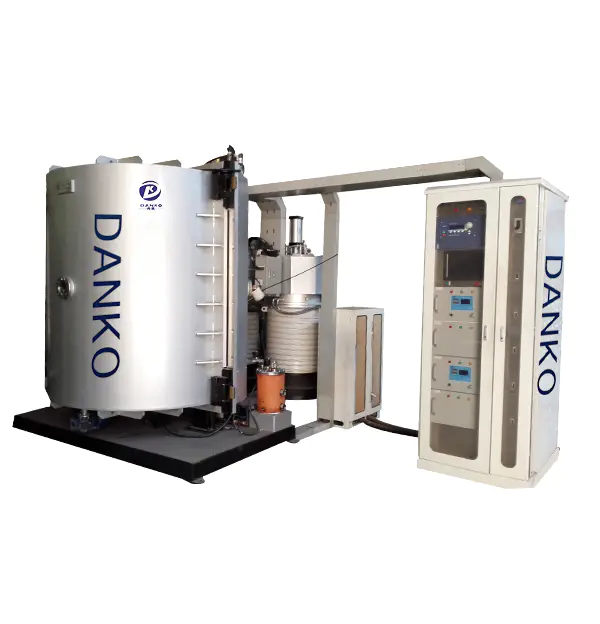
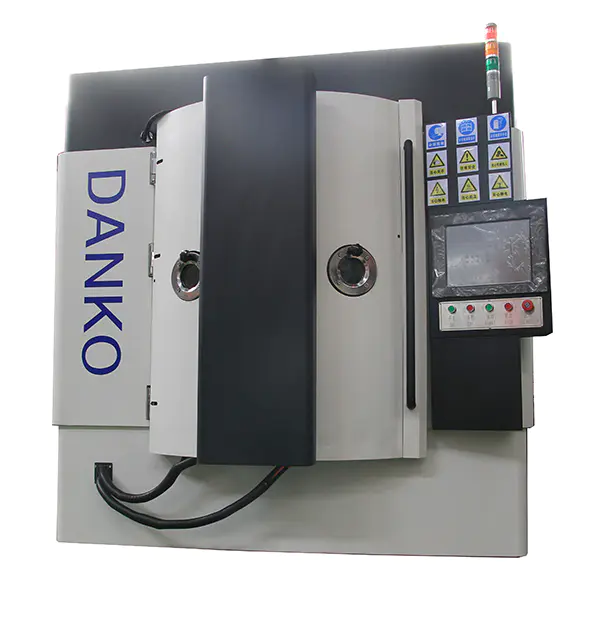
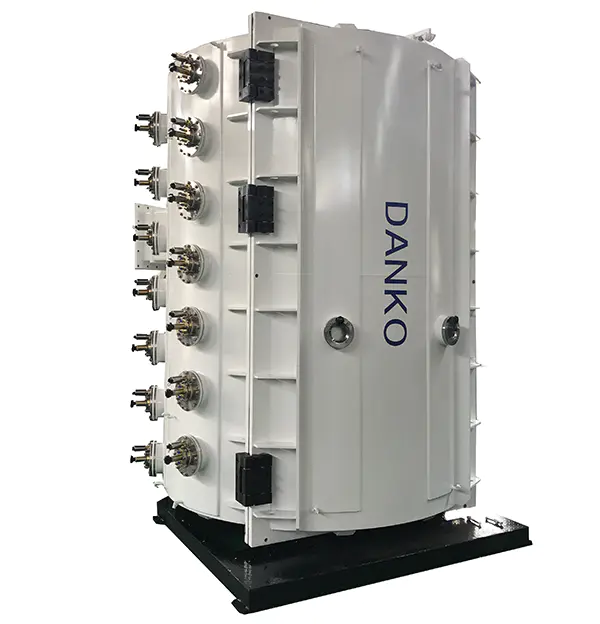
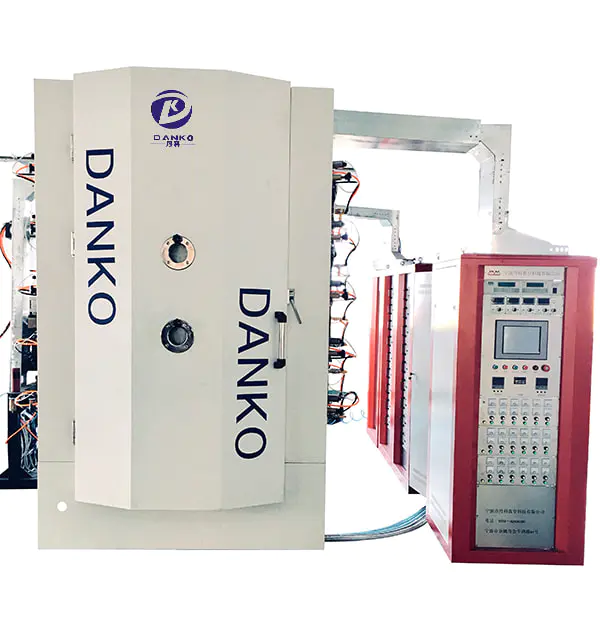
For manufacturers specifying new capacity, that means buying a documented process window rather than a chamber with a target inside. PVD vacuum coating systems should be judged on how repeatably they hold pressure, bias, and temperature through a full production day, because those three numbers are what the film actually remembers.
Signs the process is under control: rejects cluster around handling rather than chamber positions, a new operator can follow the recipe without heroics, and the first acceptable part of a shift looks like the last one from the previous shift.
Your email address will not be published. Required fields are marked *
Tel: +86-13486478562
FAX: +86-574-62496601
Email: [email protected]
Address: No. 79 West Jinniu Road, Yuyao, Ningbo City, Zhejiang Provice, China

OEM/ODM PVD Coater Manufacturers