Product Consultation
Your email address will not be published. Required fields are marked *

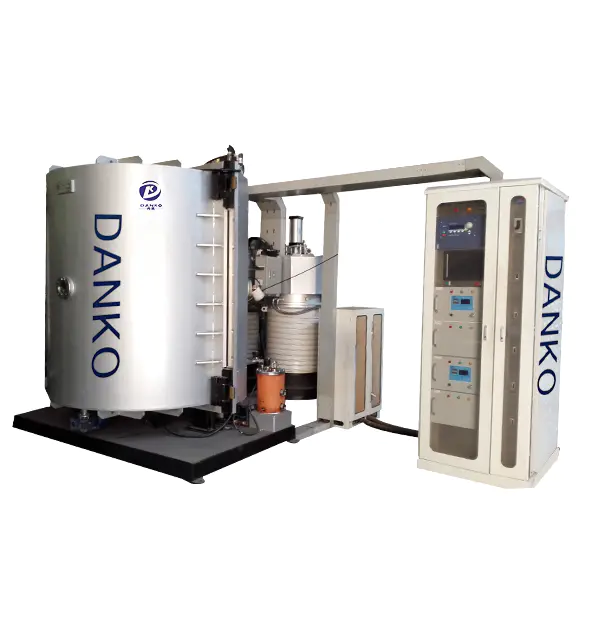
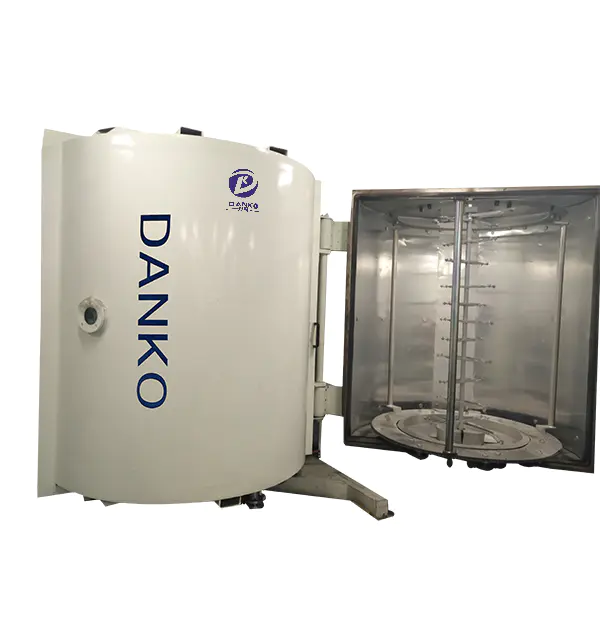
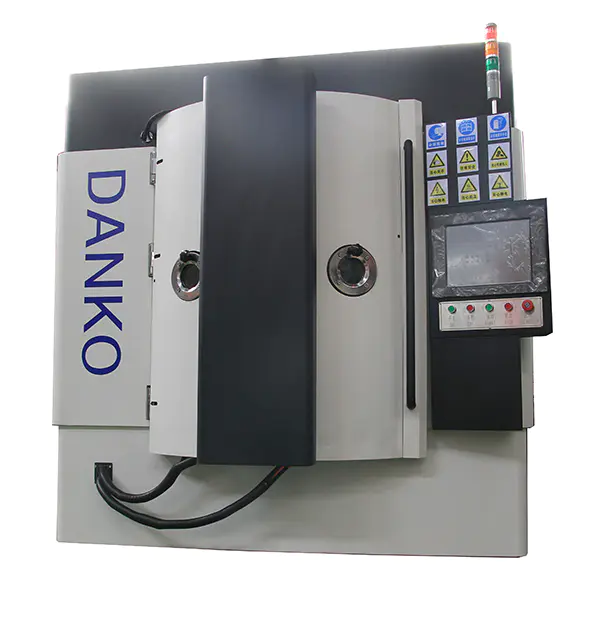
PVD coating machines handle multi-layer and gradient coating architectures by precisely sequencing target materials, adjusting reactive gas flows, and modulating substrate bias and temperature in a single continuous vacuum cycle — without breaking chamber pressure between layers. This capability is central to producing high-performance coatings for cutting tools, molds, medical implants, and decorative components. Whether referred to as a PVD coater or a PVD plating machine, the core engineering principle remains the same: each layer is metallurgically bonded to the next, with no oxidation or contamination at the interfaces.
The following sections explain how this is achieved mechanically and electronically, what architectures are realistically achievable, and what process parameters determine coating quality.
Before examining machine capabilities, it is important to distinguish between the two architectures:
Industrial PVD coating machines are engineered to execute all three architectures within the same deposition run, making them the preferred choice over conventional single-layer PVD coaters for demanding tooling and component applications.
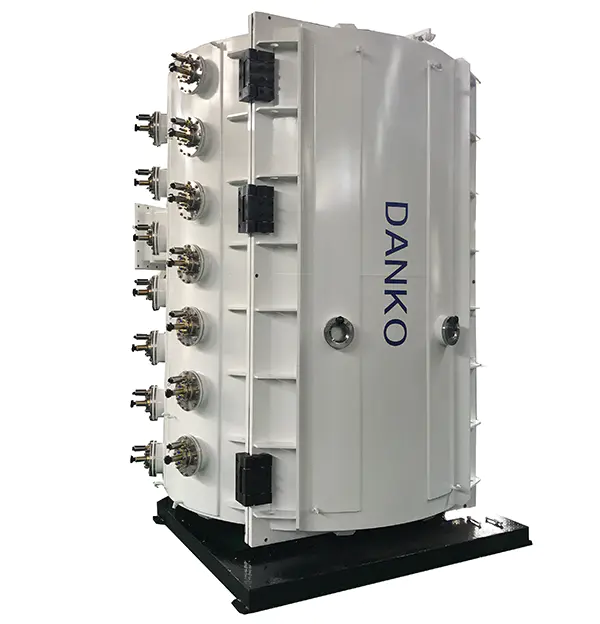
Most industrial PVD coating machines are equipped with multiple cathode positions — typically 4 to 8 arc cathodes or magnetron sputtering targets arranged around the chamber perimeter. Each cathode holds a different target material (e.g., Ti, TiAl, Cr, Zr). The process controller activates and deactivates individual cathodes according to a pre-programmed recipe, allowing the system to deposit different materials in sequence without any vacuum interruption.
For example, a typical TiAlN/TiN multi-layer run on a 6-cathode arc evaporation PVD coater might proceed as follows:
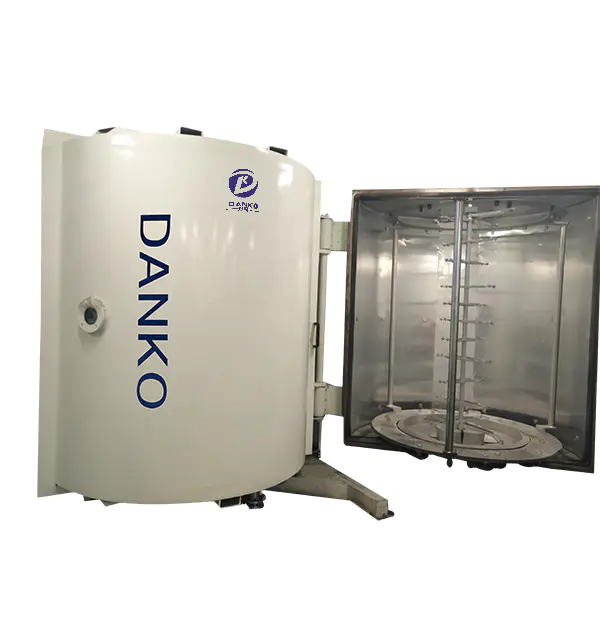
The substrate's planetary rotation system (3-fold rotation is standard in industrial machines) is critical here. As substrates rotate past each cathode, they are exposed to alternating material fluxes, which naturally builds the multi-layer structure without requiring the cathodes to switch on and off rapidly. This is a key mechanical advantage of a well-designed PVD plating machine over simpler batch coaters.
Gradient coatings are primarily achieved by ramping reactive gas flow rates (N₂, O₂, C₂H₂, or CH₄) over time during deposition. A programmable mass flow controller (MFC) allows the PVD coating machine to increase or decrease gas concentration in a linear, stepped, or custom profile, directly altering the stoichiometry of the growing film.
A practical example: depositing a CrN-to-CrCN gradient coating for plastic injection molds. The PVD coater begins with pure Cr evaporation under N₂ atmosphere to form CrN, then gradually introduces C₂H₂ gas while reducing N₂ flow. The result is a composition that smoothly transitions from CrN (high hardness, ~20 GPa) to CrCN (low friction, coefficient ~0.15), without any abrupt interface.
Key parameters controlled during gradient deposition include:
Substrate bias voltage is one of the most powerful variables for controlling interface density and adhesion in multi-layer coatings. A higher negative bias (e.g., −150 V to −200 V) increases ion bombardment energy, which densifies each layer and sharpens the interface between consecutive materials. However, excessive bias can introduce excessive compressive stress, leading to delamination in thick coatings exceeding 4–6 µm.
For this reason, advanced PVD coating machines offer pulsed bias power supplies with programmable duty cycles (typically 50–80 kHz pulse frequency). Pulsed bias allows the operator to maintain high average ion energy while reducing charge buildup on insulating layers — a critical factor when depositing oxide-based films like Al₂O₃ or SiO₂ within a stack. When evaluating any PVD plating machine for multi-layer work, confirming the availability of pulsed bias capability should be a primary specification checkpoint.
| Coating Architecture | Typical Application | Hardness (GPa) | Total Thickness (µm) |
|---|---|---|---|
| TiN/TiAlN multi-layer | Carbide cutting tools | 32–38 | 2–4 |
| CrN/CrCN gradient | Plastic injection molds | 18–24 | 3–6 |
| Ti/TiN/TiAlN gradient | HSS drills and end mills | 28–33 | 2–5 |
| DLC multi-layer with Cr interlayer | Automotive engine components | 20–30 | 1–3 |
| ZrN/ZrO₂ gradient | Medical implants, decorative | 16–22 | 1–3 |
All coating systems listed above are routinely produced on a modern industrial PVD coating machine or PVD coater without requiring any chamber reconfiguration between jobs, provided the machine carries the appropriate cathode materials loaded in advance.
Producing multi-layer and gradient coatings consistently across production batches demands sophisticated recipe management. Industrial PVD coating machines store full process recipes — including time-stamped sequences for cathode activation, gas flows, bias voltage profiles, and temperature setpoints — in a programmable logic controller (PLC) or dedicated coating software platform.
Leading machines allow operators to define up to 100+ sequential process steps per recipe, with each step specifying its own duration, cathode power, bias setting, and gas mixture. This level of granularity is what enables complex architectures like a 200-bilayer TiN/TiAlN stack — where individual layers are only 15–25 nm thick — to be reproduced reliably from batch to batch with thickness variation under ±5%.
Optical emission spectroscopy (OES) and quartz crystal microbalances (QCM) are increasingly integrated into modern PVD plating machines for real-time deposition rate monitoring, providing closed-loop feedback that automatically corrects for target erosion over the cathode's lifespan.
While a PVD coating machine offers impressive flexibility for multi-layer and gradient architectures, users should be aware of practical constraints:
Your email address will not be published. Required fields are marked *
Tel: +86-13486478562
FAX: +86-574-62496601
Email: [email protected]
Address: No. 79 West Jinniu Road, Yuyao, Ningbo City, Zhejiang Provice, China

OEM/ODM PVD Coater Manufacturers