Product Consultation
Your email address will not be published. Required fields are marked *

What separates a dependable anti-reflective coating system from a machine that merely looks convincing on paper.
Ask an engineer who runs an AR coating line what causes the most sleepless nights, and the answer has little to do with vacuum pump brands or chamber decorations. It is repeatability: the machine's ability to deposit the same optical thickness on the same substrates, batch after batch, without drifting into scrap.
So let us state the conclusion directly. A good AR film vacuum coating machine is not defined by chamber size or a flashy control screen. It is defined by how precisely and how consistently it builds thin-film interference stacks. If the equipment cannot hold optical thickness within a few percent of the design target, a larger chamber and a faster pumping system will not rescue your yield.
AR, or anti-reflective, coatings work through destructive interference. Layers of alternating high- and low-refractive-index materials are deposited at carefully calculated optical thicknesses, usually quarter-wave multiples, so that reflected light waves cancel each other while transmission increases. This is why quality eyeglass lenses, camera elements, and display covers show a subtle bluish or greenish bloom rather than a bright reflection. Even a few nanometres of thickness error shifts the interference curve, and the coating stops being anti-reflective and starts being a defect.
An anti-reflective stack is an optical calculation expressed in material. Four variables determine whether that calculation survives contact with production reality.
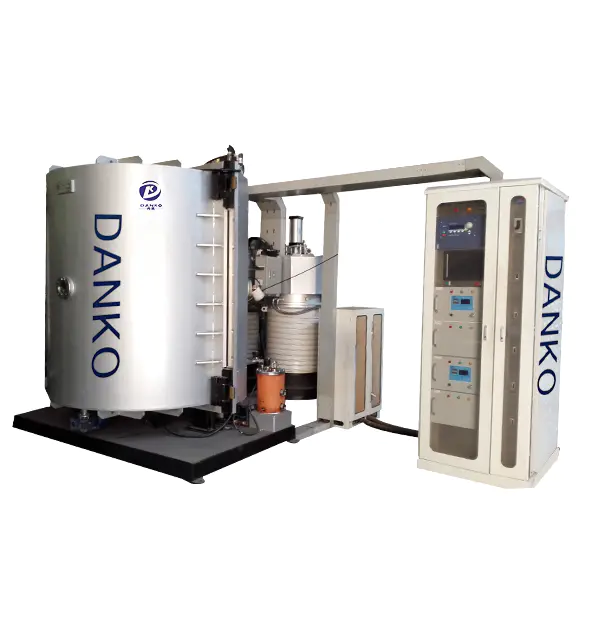
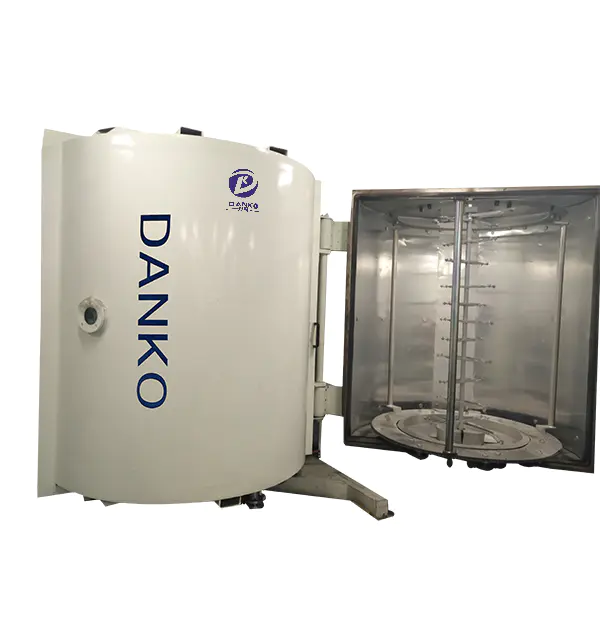
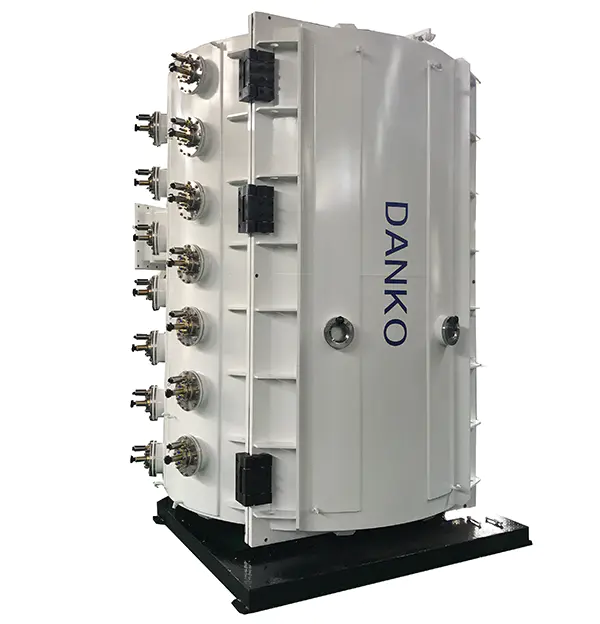
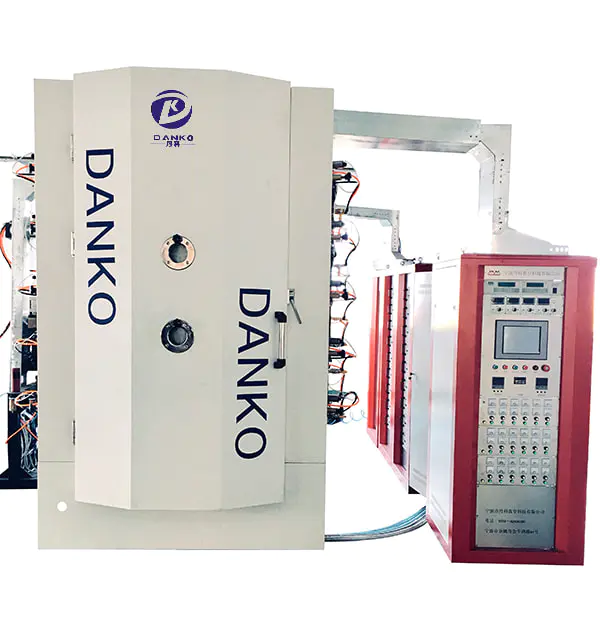
Thermal evaporation remains the classic route for AR coating on smaller optics, while magnetron sputtering and ion-assisted processes are preferred when films must be denser and more abrasion resistant. The optical film vacuum coating machine we offer is deliberately configurable around these decisions, with source layouts and monitoring loops matched to the coating design rather than to a generic product catalogue.
Every AR film vacuum coating machine contains the same broad building blocks: a chamber, a pumping system, deposition sources, and controls. The quality difference lives in how those blocks behave together.
The chamber and pumping group set the ceiling for everything else. A production AR system needs a clean, reproducible vacuum: fast pump-down to working pressure, a stable ultimate vacuum in the low 10^-3 to 10^-4 Pa range for evaporation processes, and a leak rate low enough that residual water vapour never compromises film density. Typical configurations pair rotary vane and roots pumps with diffusion or turbomolecular high-vacuum stages, sometimes adding cryo panels where water vapour is the enemy. The pump brand matters less than the consistency of the starting condition the machine returns to after every cleaning cycle.
Electron-beam guns with multi-crucible turrets allow several oxides to be deposited in a single pump-down without breaking vacuum. Resistive boats and wire-fed sources remain practical for low-melting-point materials. On the sputtering side, DC, MF, and RF magnetron cathodes produce denser films at lower substrate temperatures, which is often decisive for plastic substrates like PC or PET. In every case, rate control depends on sensing: quartz crystal microbalances measure mass, while optical monitors measure light behaviour, and the best machines use both in complementary roles.
This is the largest technical gap between AR coating machines and general-purpose decorative coaters. Because AR quality is defined by optical thickness, terminating each layer at the correct quarter-wave point is essential. Optical monitoring watches the growing film's transmission or reflection signal and cuts the layer at the turn point, where the interference curve reaches its extreme. That direct measurement of optical behaviour is far more reliable than timing alone, and it is why serious AR machines carry serious monitoring hardware as standard equipment.
| Evaluation point | AR optical coating | Decorative coating |
|---|---|---|
| Thickness tolerance | +/-1-3% of optical thickness | +/-10% is often acceptable |
| Primary quality check | Spectrophotometer transmission and reflection | Visual colour, gloss, colourimeter |
| Typical layer count | 2 to 8+ alternating high/low index layers | 1 to 3 decorative layers |
| Common materials | SiO2, TiO2, Ta2O5, MgF2, ZrO2 | TiN, ZrN, Cr, Al, TiAlN |
| Process monitoring | Optical monitor or rate-controlled quartz crystal | Mostly time- or recipe-based |
| Typical substrates | Glass, PC, PET, acrylic, lenses | Metals, plastics, ceramics, glass |
| Common failure modes | Soft films, adhesion loss, centre wavelength drift | Pinholes, uneven coverage, colour shift |
Reading the table from a buyer's perspective, the practical message is simple: an AR film vacuum coating machine must be specified like an optical instrument, not like a batch coater with a longer name.
Buying an AR film vacuum coating machine is a capital decision with a process decision hidden inside it. The machine price is only the entry ticket; the real cost is what happens to your substrates during the first year. Work through these checks before signing anything.
Even with a correct machine and disciplined operation, film quality erodes slowly as sources age and fixtures accumulate residue. A realistic care routine matters as much as the purchase itself; our guide to the cleaning and maintenance of optical vacuum coating machines covers the habits that protect coating quality over the machine's lifetime.
AR coating demand splits into different economic realities, and the right machine follows the product, not the other way around.
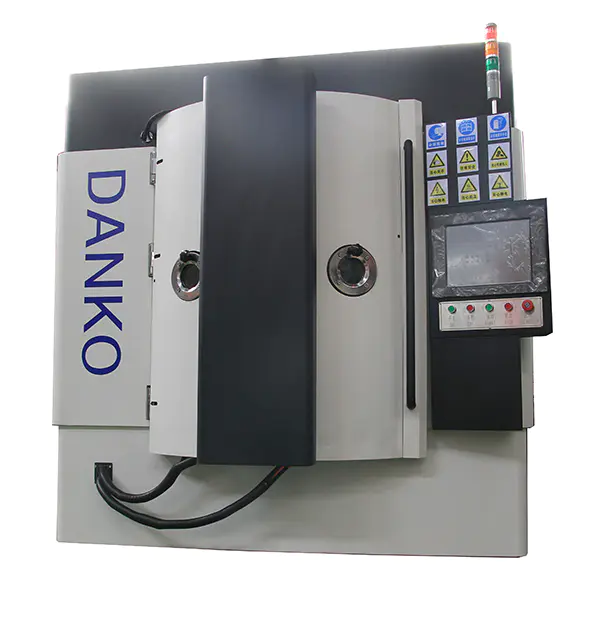
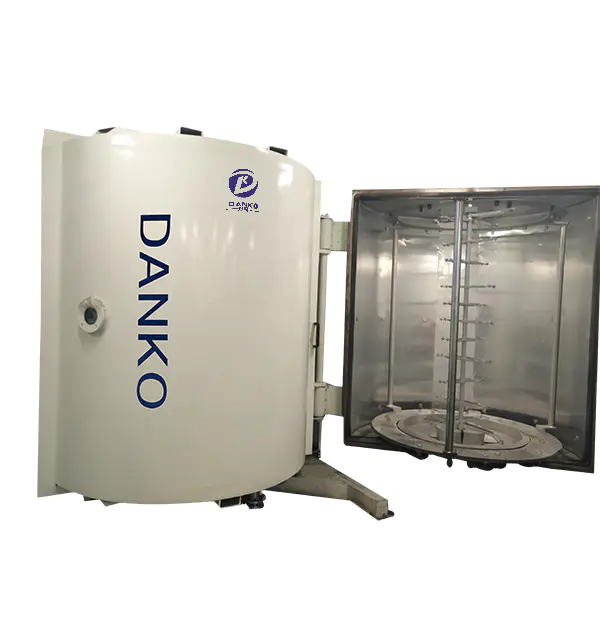
For the many shops that run mixed small-format batches, a well-configured evaporation system with high vacuum stability remains the workhorse. When batch size is modest but the optical specification is demanding, the high-vacuum thin-film coating machine in our range is a configuration worth examining before you default to a larger platform.
A veteran optical coating workshop manager once put it this way: "The machine is only half of the process. The recipes, the monitoring habits, and the people who understand both are the other half. Buy all of them."
When procurement compares two AR film vacuum coating machines, the tendency is to focus on the purchase price. The economics of optical coating argue otherwise. The lifetime cost of the machine is the sum of equipment price, tooling, consumables, operator time, rejected substrates, and downtime. In that total, a few percent of first-pass yield often dwarfs the difference in quoted machine prices.
A machine that holds its tolerance, stays clean, and responds predictably to process changes will pay for itself through yield. One that drifts will consume that same margin in rework and customer returns. Before negotiating on price, map the complete range of vacuum deposition systems the manufacturer offers; the breadth of their product line is a reliable indicator of how much process experience stands behind the quotation.
An AR film vacuum coating machine is, in the end, a precision instrument. Evaluate it like one: demand measured uniformities, verify repeatability over multiple runs, and confirm that the monitoring architecture actually watches the optical thickness. The machine that passes those tests will produce films you can sell; the machine that only looks good in the brochure will teach you the meaning of scatter losses. Choose the one that holds its numbers, and the rest of the process follows.
Your email address will not be published. Required fields are marked *
Tel: +86-13486478562
FAX: +86-574-62496601
Email: [email protected]
Address: No. 79 West Jinniu Road, Yuyao, Ningbo City, Zhejiang Provice, China

OEM/ODM PVD Coater Manufacturers