 Email:
  Tel:+86-13486478562
 Language
  Español
 Português
Product Consultation
Your email address will not be published. Required fields are marked *
Surface Engineering · Cutting Tools
A PVD coating machine is a capital decision disguised as a chemistry decision. Deposition method, vacuum integrity, fixturing, and process control decide whether it pays for itself.
A carbide end mill that fails after forty minutes in stainless steel is rarely a metallurgy problem. In most tool shops, it is a coating problem, and therefore a coating-machine problem. The coater you install controls adhesion, density, and thickness uniformity — three variables that decide whether your tools last six times longer or only slightly longer than uncoated.
Every PVD coating on a cutting tool is built the same way: the chamber is pumped down, plasma is generated, coating material is vaporized from a source, and film grows atom by atom on the tool surface. Vacuum quality and deposition control shape that film. A layer deposited near 5 × 10⁻³ Pa with an unstable pumping train will not have the same density as one deposited near 5 × 10⁻⁴ Pa with stable pumping. Hardness figures for TiN or AlTiN assume a dense film; flaking in service is almost always an adhesion fault that started in the chamber.
For cutting tools, the consequences are direct. Coatings run 2 to 4 µm thick, and a half-micron variation across the rake face changes edge geometry; a flute that carries more coating causes runout and vibration on the first part. A machine for tools must therefore deliver repeatable bias, stable plasma density across the rack, and per-batch process records — not merely a high deposition rate.
| Coating | Typical Hardness | Main Benefit | Common Tool Applications |
|---|---|---|---|
| TiN | ~2,300 HV | General wear resistance, strong adhesion | HSS drills, taps, end mills |
| TiCN | ~3,000 HV | Higher hardness, lower friction | Carbide end mills, drills in cast iron |
| AlTiN | ~3,300 HV | Hot hardness, oxidation resistance | High-speed machining of alloy and stainless steel |
| ZrN | ~2,600 HV | Low friction, good edge retention | Tools for non-ferrous materials |
| DLC | ~2,000–2,800 HV | Very low friction coefficient | Machining aluminum and plastics; mould tools |
Most production tool coaters rely on cathodic arc ion plating. Arc sources generate a dense, highly ionized plasma that forms films with excellent adhesion — the property that matters most when a cutting edge is loaded and unloaded thousands of times a minute. The tradeoff is macroparticles: metallic droplets can embed in the film and create roughness that shortens tool life in finishing operations. Filtered arc sources reduce this, but droplet control remains a system-level tradeoff.
Magnetron sputtering avoids droplets entirely. Films are smoother and can be applied at lower substrate temperatures, which suits very sharp edges. The weakness is a slower deposition rate, and film density depends heavily on the bias applied to the tool rack. This is why several midsize machines combine arc sources and sputter cathodes in one chamber, letting a tool room run arc AlTiN and sputtered DLC batches without owning two systems.
A coating on a cutting tool is not a surface layer; it is the contact surface. If it is not dense, uniform, and well adhered, the edge is compromised before the spindle turns.
A coater is an assembly of subsystems that must hold specification across hundreds of batches. Start with the vacuum package: diffusion pumps are robust and economical, while turbo-molecular pumps give cleaner high vacuum and faster cycles for a higher price. For tool coating, base pressure should reach below 5 × 10⁻³ Pa, with a repeatable pump-down time — every extra minute is a direct cost on the batch.
A practical starting point is to study how experienced tool shops approach the selection process before comparing quotes. The difference between a machine that passes acceptance and one that performs for years is usually found in these details.
If drills, end mills, and milling cutters dominate your output, a purpose-built vacuum cutting tool coating machine with arc sources and tool-length fixtures is usually a more direct answer than a decorative coater.
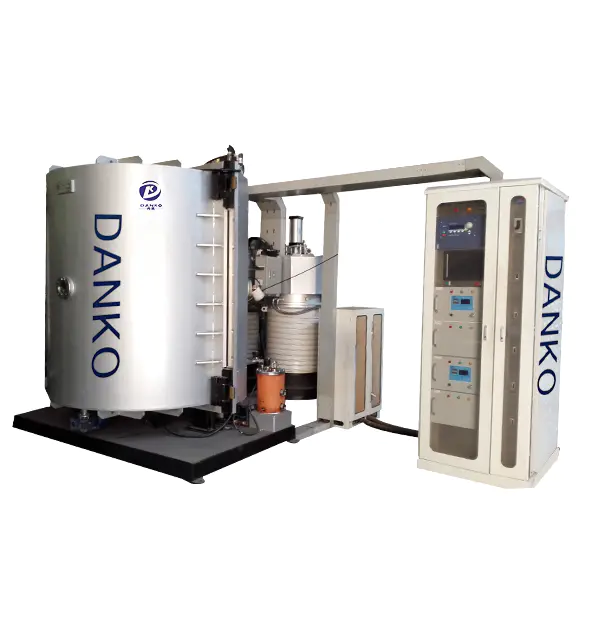
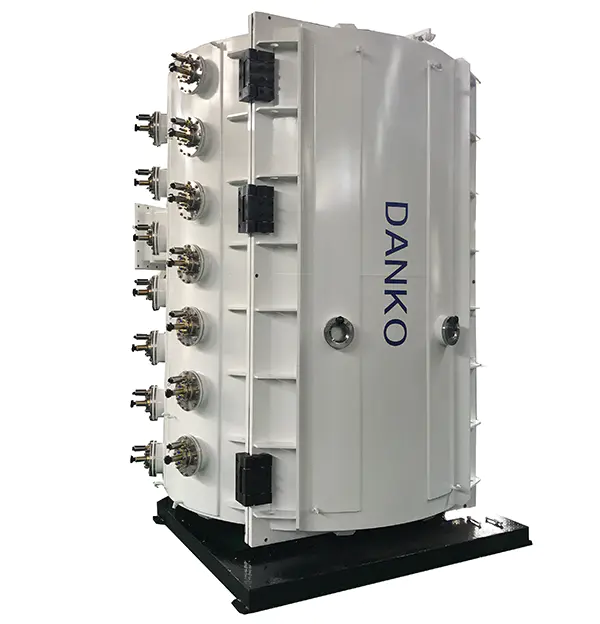
 Vacuum Arc Coating Machine for Cutting ToolsA purpose-built coater with arc sources and tool-length fixtures supports TiN, AlTiN, and other hard films on drills and end mills, suiting shops focused on steel and cast iron machining.View Product →
List the coatings you run today and those you plan next year. Shops machining steel and cast iron cover most jobs with TiN and AlTiN from arc sources. Titanium alloys and heat-resistant superalloys push the specification toward AlTiN or AlCrN with high substrate bias. Aluminum and copper machining rewards DLC or other low-friction films, which usually require a carbon source or a dedicated sputtering configuration.
DLC is the most requested second coating among tool shops with their first coater. It is not simply a dark layer: its low friction suppresses built-up edge when cutting aluminum, plastics, and composites. But the process window is narrower than for TiN. Hard DLC needs stable control of the carbon precursor and careful ion bombardment during nucleation; otherwise the film stays graphitic and offers little wear protection.
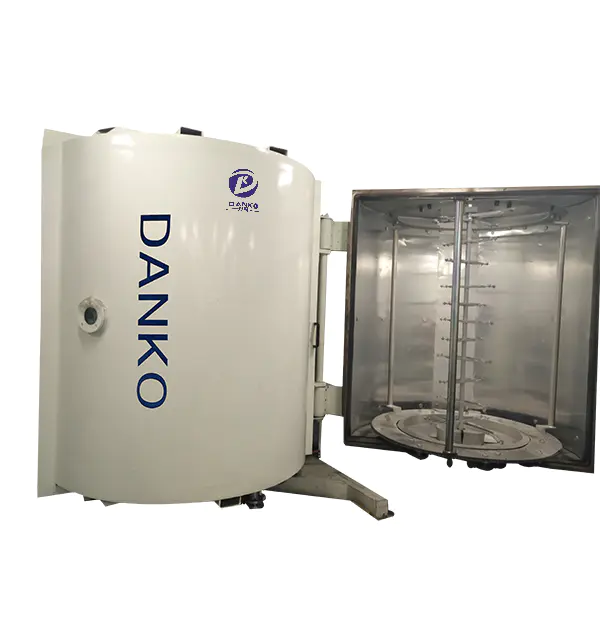
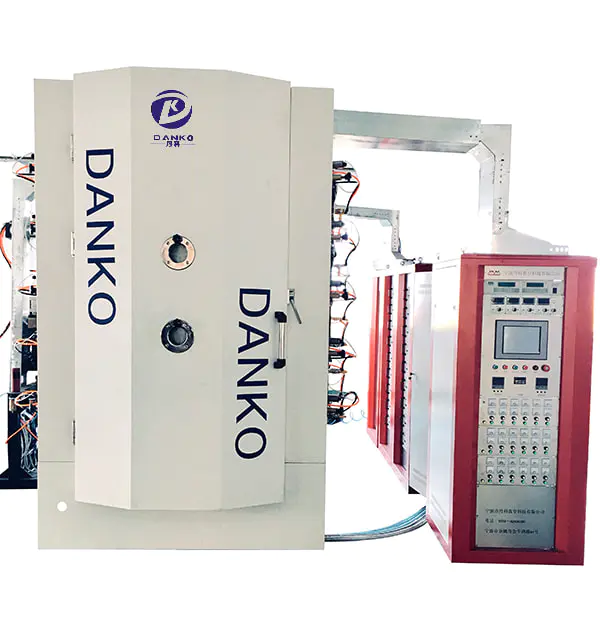
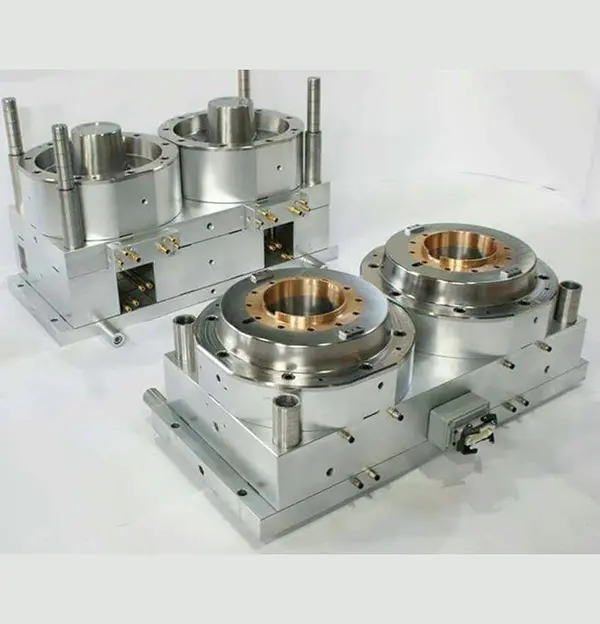 DLC Hard Film Vacuum Plating SystemThis PVD/PECVD system deposits low-friction amorphous carbon films for aluminum, plastics, and composites. It addresses the narrow process window for hard DLC with stable carbon precursor control.View Product →
Review your expected coating mix with the equipment supplier before choosing chamber size. A hard-surface machine that combines arc and sputtering sources lets you switch between metallurgical and carbon-based coatings in a single workflow, which improves how fully you can load each batch.
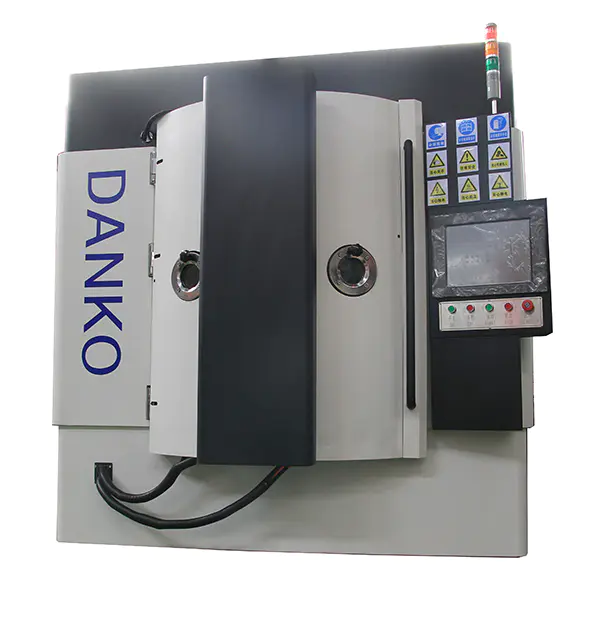
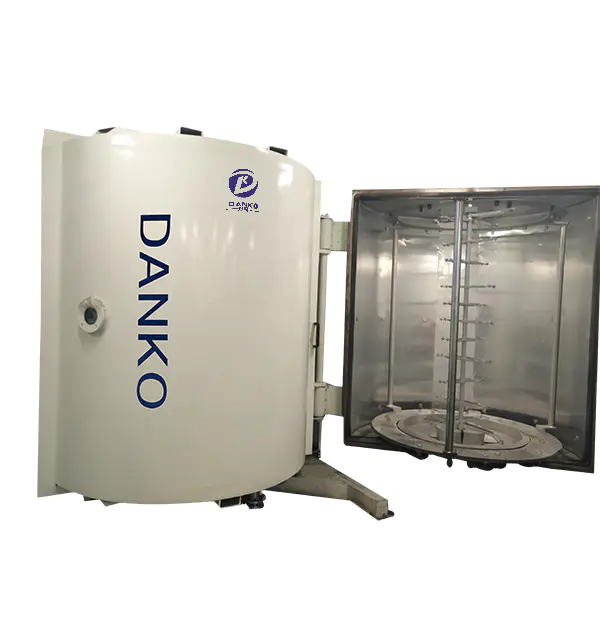
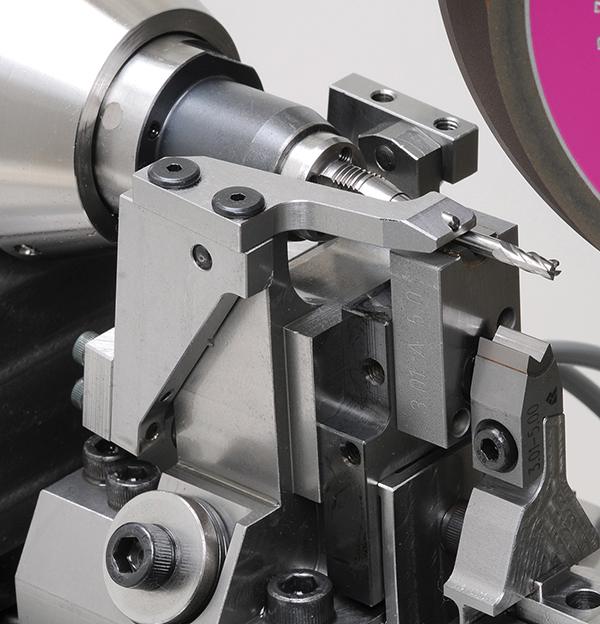 PVD Hard Surface Coating Machine for ToolsA combined arc and sputtering platform that handles metallurgical and carbon-based films in one workflow. Useful for comparing chamber designs and fixture layouts when evaluating annual consumables.View Product →
A PVD coating machine is a capital purchase, but its annual cost is consumed in targets, process gas, electricity, vacuum pump oil, and maintenance. Titanium and aluminum targets wear at steady rates; chromium and graphite behave differently. Reactive deposition degrades diffusion pump oil faster, and sputter cathodes need periodic reconditioning. Ask for consumption per batch and compare the numbers across your shortlist; a tools and moulds coating machine range is useful when comparing chamber designs and fixture layouts.
Throughput is part of the cost too: a coater that needs four hours of pump-down before every three-hour run forces a two-shift shop to sacrifice capacity. Pump-down time and leak rate are capacity numbers, not engineering details.
The right PVD coating machine for cutting tools is not the one with the highest hardness figure on paper; it is the one whose vacuum stability, source configuration, fixturing, and support workflow fit the tools you actually produce. Dense adhesion, uniform thickness, and repeatable control are what appear in measured tool life. Buy it as a production system — cleaning line, edge preparation, fixtures, maintenance — and it repays itself through fewer change-outs and better finishes.
Start with your five most important tools. If the machine can apply the right composition with the right hardness and deliver the same result at every rack position, you have found your answer.
Your email address will not be published. Required fields are marked *

 Tel: +86-13486478562
 FAX: +86-574-62496601
 Email: [email protected]
 Address: No. 79 West Jinniu Road, Yuyao, Ningbo City, Zhejiang Provice, China
 OEM/ODM PVD Coater Manufacturers