 Email:
 Tel:+86-13486478562

 Language
 Español
 Português
Product Consultation
Your email address will not be published. Required fields are marked *
A practical, experience-led guide to chamber design, process routes, and the choices that decide whether a big vacuum coater earns its floor space.
A large area PVD coater is often imagined as a batch machine with a bigger door. In practice, the moment substrate dimensions grow, the process becomes a different kind of engineering problem. Gas distribution no longer behaves the same way. Plasma density can drift from the centre to the edge. Heat loads accumulate on parts that cannot be rotated as freely. Even the way a fixture shadows the deposition flux becomes part of the film specification.
We have seen this in projects for furniture panels, stainless steel sheets, automotive trim, and architectural hardware. The successful installations are rarely the ones with the biggest targets or the most power. They are the ones where the substrate envelope, pumping speed, target arrangement, and motion profile were designed together.
On a large substrate, uniformity is not a setting on the screen. It is the result of geometry, gas flow, and motion working in the same direction.
For a manufacturing team, that means the specification conversation should start with the part, not the chamber. What is the largest and smallest part? How will it be fixtured? Which surface must meet the colour and thickness target? And how much cycle time can the line tolerate? Those answers shape everything that follows.
Most large area PVD coaters settle into one of three process families: multi-arc ion plating, magnetron sputtering, or thermal evaporation. Each has a distinct personality at scale.
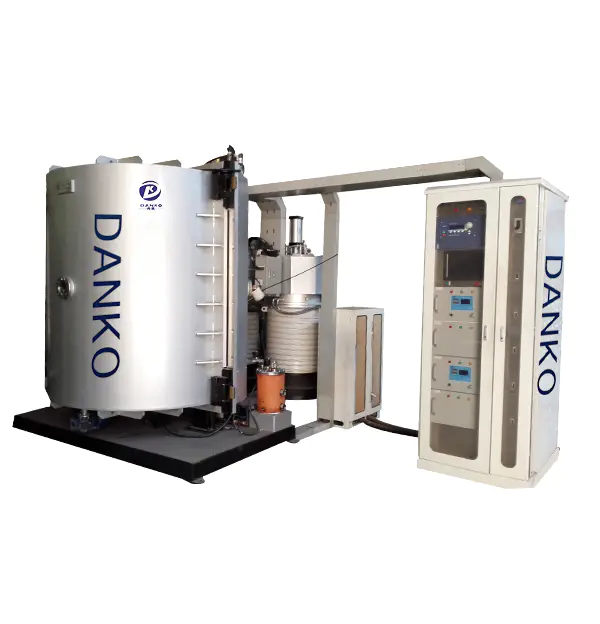
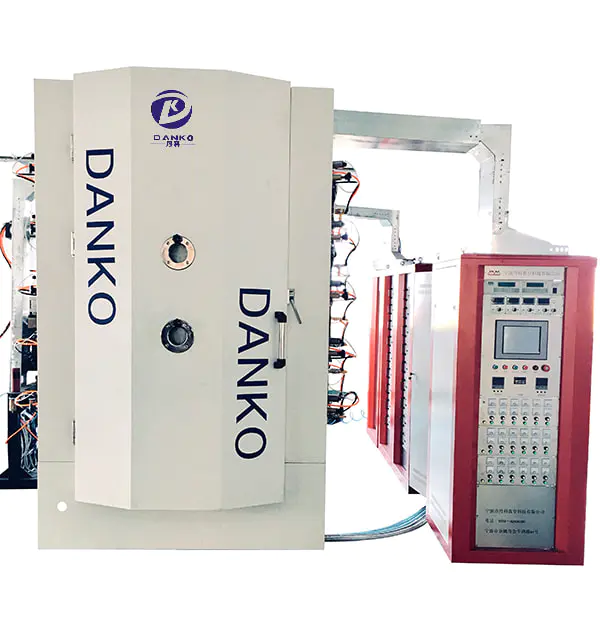
Multi-arc ion plating is a workhorse for decorative and wear-resistant films. It produces dense coatings, strong colour depth, and good adhesion on parts such as furniture hardware, sanitary ware, and metal trim. On large systems, the challenge is not reaching the colour. It is keeping that colour consistent across a long chamber and from one rack to the next. Arc source placement, magnetic steering, and substrate motion all matter. Danko's large multi-arc platform is built around that balance, with process tuning for decorative coating systems that need repeatable colour rather than one-off samples.
 Large Multi-Arc Ion Coating Machine for Decorative and Functional FilmsVacuum coating system for large workpieces and stainless steel plates, supporting decorative colors and functional films with automated process control.View Product →
Magnetron sputtering gives finer control over film composition and surface smoothness. It is often the better route for stainless steel sheets, automotive trim, and functional layers where a tight thickness window matters. At large area, target utilisation and deposition rate become practical concerns: a beautiful film that takes too long to deposit can still be the wrong film for production. The answer usually comes from a combination of target geometry, power delivery, and gas distribution rather than a single parameter.
Thermal evaporation remains efficient for metallisation of plastics, packaging, reflectors, and other parts that need a bright, reflective surface. Because the flux is line-of-sight, large chambers need thoughtful fixturing and, in some cases, substrate rotation. The process can be very productive, but it rewards teams who design the rack around the vapour path rather than treating the rack as an afterthought.
A large area coater usually falls into one of two production models. A batch system loads a full rack or several large panels, closes the door, and runs a complete cycle. It offers flexibility and a clear batch record. An inline or continuous system moves substrates through dedicated zones, which can suit high-volume sheet or panel production but demands a more disciplined product mix.
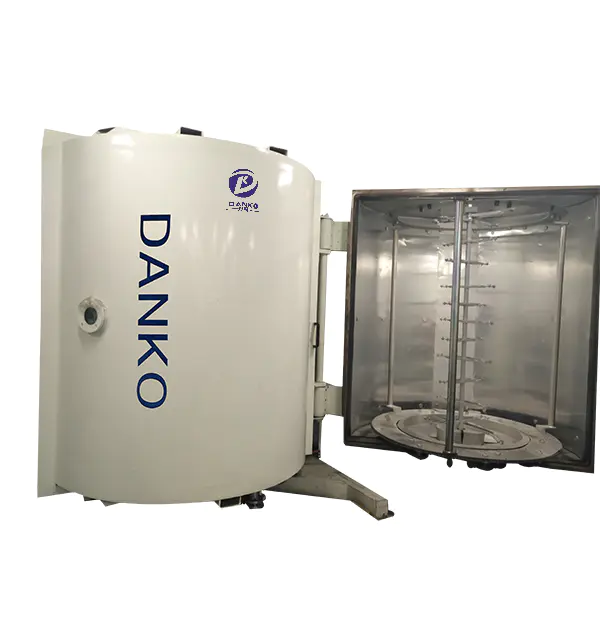
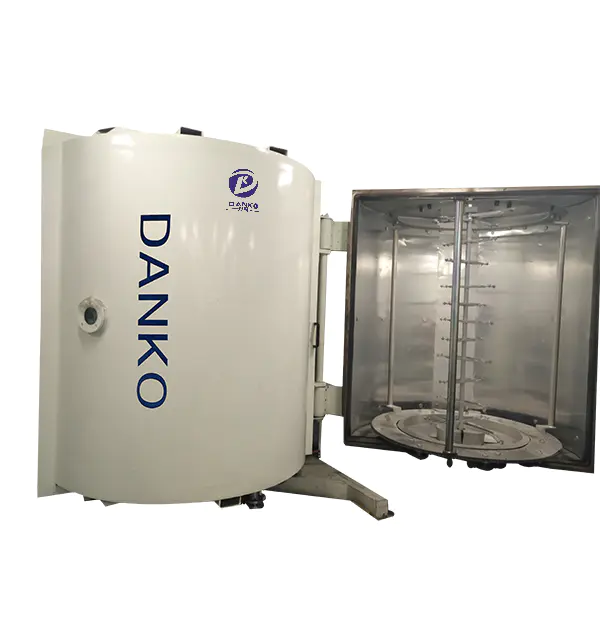
Horizontal batch systems are common for large panels, furniture components, and mixed decorative work. They give operators room to fixture parts properly and to change recipes without rebuilding a line. For teams that need that flexibility, a horizontal big PVD vacuum coating machine is often the practical starting point.
Horizontal Big PVD Vacuum Coating Machine for Large PanelsDesigned for large-area PVD coating with a horizontal chamber, suited to panels, furniture components and mixed decorative work needing flexible recipes.View Product →
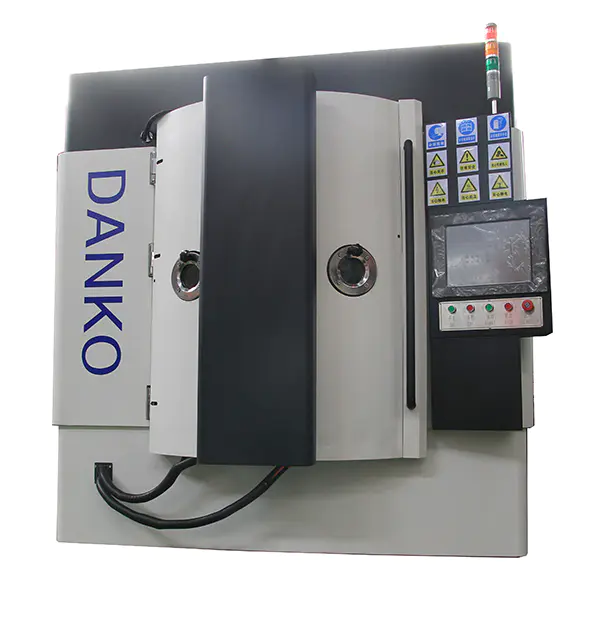
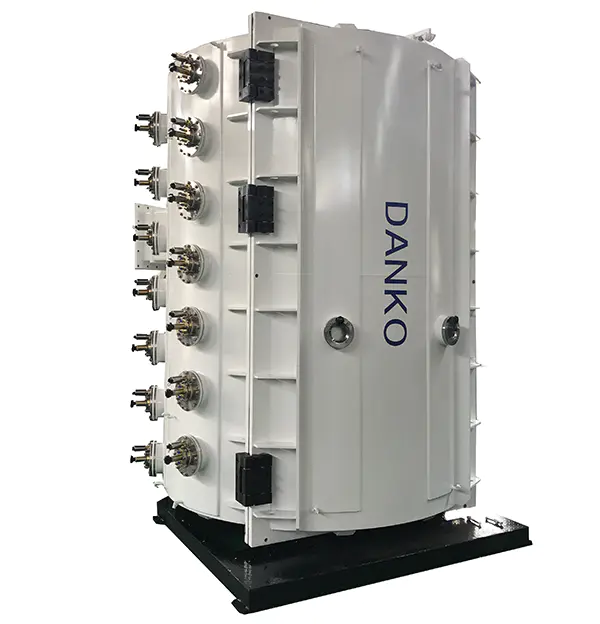
When the product is a flat sheet, the calculation changes. Stainless steel sheets and similar panels need uniform coverage across a wide surface, and the handling system becomes part of the process. A dedicated stainless steel sheets vacuum coating machine is designed around that geometry, with sheet movement and target layout matched to the panel format rather than adapted from a smaller chamber.
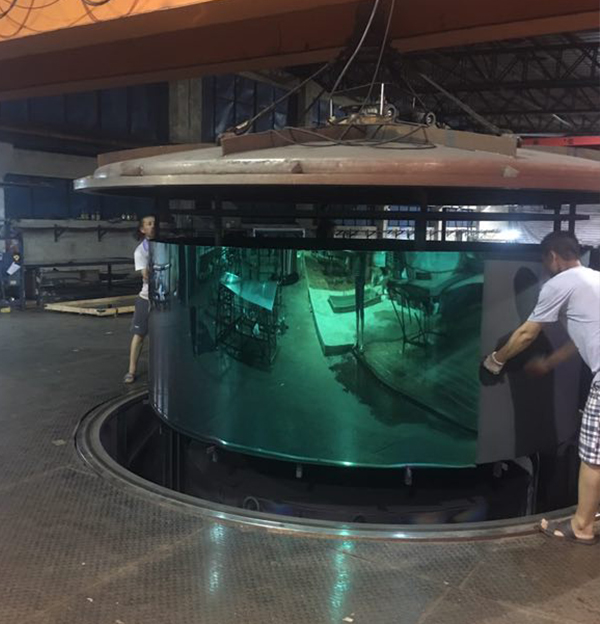 Stainless Steel Sheets Vacuum Coating Machine for Large Flat PanelsCustom PVD system using MF sputtering for large stainless steel sheets, plates and furniture, with stable deposition and decorative coating options.View Product →
For higher volumes of flexible or rigid flat materials, continuous magnetron sputtering can be the better fit. It is less about a single large chamber and more about stable web or carrier movement through carefully separated process zones. That approach rewards teams who can keep the product mix narrow and the line availability high.
The visible part of a large area PVD coater is the chamber. The invisible part is the relationship between pumping, gas flow, and motion. If any one of those is underspecified, the operator ends up compensating with power, time, or manual adjustment. That is not a stable production model.
Several design choices deserve a place on the specification table:
| Route | Typical films | Strong fit | Watch point |
|---|---|---|---|
| Multi-arc ion plating | TiN, TiCN, CrN, decorative colours | Furniture, sanitary ware, hardware | Droplets and macroparticles need filtering |
| Magnetron sputtering | Metal, alloy, oxide, nitride films | Stainless sheets, automotive trim, functional layers | Target utilisation and deposition rate |
| Thermal evaporation | Aluminium, chrome, reflective films | Plastics, packaging, reflectors | Line-of-sight coverage and fixturing |
| DLC and hybrid routes | Diamond-like carbon, hard films | Tools, medical parts, wear components | Adhesion and heat load on large parts |
Info: A large chamber can still produce a narrow process window. Uniformity comes from the interaction of gas, geometry, and motion, not from chamber volume alone.
A large area PVD coater is a capital decision, so the specification should be written in production language rather than catalogue language. Our engineers usually work through a short sequence with the customer:
Warning: Do not size the vacuum system for chamber volume alone. Gas load during processing and the required pump-down rhythm often decide the real production cycle.
Small machines can hide poor uniformity behind short distances and small racks. Large machines expose it. The first symptom is often a colour drift from the centre to the edge, or a thickness difference that only appears after the parts are measured. Operators may be tempted to add power or extend deposition time, but that usually makes the thermal load worse without fixing the root cause.
Danger: If the plasma looks stable but the film drifts across the rack, stop tuning by power alone. Check gas distribution, target condition, and fixture repeatability first.
Success: A pre-acceptance run with your own parts, your own rack, and a clear sampling plan is the cheapest insurance a large-area project can buy.
A large area PVD coater is not a single product so much as a production system. The process route, chamber geometry, pumping, fixturing, and motion have to agree with the parts you actually run. When they do, the machine becomes quiet in the best sense: stable colour, predictable cycle times, and a coating operation that does not demand constant rescue.
If you are planning a large-area coating line, start with the substrate and the film specification. Then let the chamber follow. That order keeps the project honest, and it usually leads to a system that is easier to run, easier to maintain, and more valuable over its service life.
Your email address will not be published. Required fields are marked *

 Tel: +86-13486478562
 FAX: +86-574-62496601
 Email: [email protected]
 Address: No. 79 West Jinniu Road, Yuyao, Ningbo City, Zhejiang Provice, China
 OEM/ODM PVD Coater Manufacturers