 Email:
 Tel:+86-13486478562

 Language
 Español
 Português
Product Consultation
Your email address will not be published. Required fields are marked *
PVD Coating Technology & Equipment Selection
The Electron Beam Vacuum Coating Machine, Explained in Production Terms
High-energy evaporation for dense optical films, lamp reflectors, and functional surfaces — what the process does well, and where it earns its place.
Coating line managers rarely decide to invest in an electron beam vacuum coating machine after reading a datasheet. The decision usually starts with a rejected batch of lamp reflectors, a customer request for a harder optical film, or a production target that a slow deposition process cannot meet. The conclusion, once the requirements are laid out, tends to be the same: when the coating material melts above 2,000 °C, or the film must stay dense and stable through years of thermal cycling, electron beam evaporation is the most direct answer.
An electron beam vacuum coating machine is an evaporation-based PVD system that directs a high-energy electron beam at the coating material inside a vacuum chamber. The beam heats the source until it vaporizes, and the vapor condenses on the substrate surface as a thin, functional layer. This is the process behind reflective aluminum on automotive headlamps, anti-reflective stacks on precision optics, and many decorative and protective films on metal, glass, and plastic components.
The central assembly is the electron gun, usually mounted outside the vacuum chamber or in a separately pumped compartment. A tungsten filament emits electrons, which are accelerated by a high-voltage field, typically between 5 kV and 20 kV. Magnetic coils bend the beam and steer it across the surface of the source material in a crucible, concentrating energy exactly where it is needed.
The vacuum environment is not optional. Most e-beam processes run between 10-3 Pa and 10-5 Pa, roughly 10-5 to 10-7 mbar. At this pressure, vapor atoms reach the substrate along long, collision-free paths, and residual oxygen and water vapor are low enough to keep the growing film clean.
The distinctive feature of e-beam evaporation is how it concentrates energy on a small area of the source. That is why tungsten, zirconia, and aluminum oxide — materials that would sit unmelted in a resistance-heated boat — can be evaporated at practical production rates.
The practical advantages of an electron beam vacuum coating machine follow directly from the way heat is generated and controlled:
The selection between electron beam evaporation, magnetron sputtering, and resistive thermal evaporation is not about which process is “best” in general. It is about matching the process to the film properties, substrate geometry, and batch size your production actually requires.
| Criterion | E-Beam Evaporation | Magnetron Sputtering | Thermal Evaporation |
|---|---|---|---|
| Deposition rate | High | Moderate | Moderate |
| Film density | High | Very high | Lower |
| Melting point of source materials | Very high | High | Limited |
| Typical applications | Optical films, reflectors, barrier layers | Hard coatings, decorative films, conductive layers | Aluminum metallization, simple decorative finishes |
| Main limitation | Point-source vapor requires moving substrates | Target utilization and process tuning | Cannot handle refractory metals or oxides |
Electron beam evaporation occupies the practical middle ground: it delivers sputter-quality density for many films while keeping the speed and simplicity of evaporation. For optical layers, lamp reflectors, and barrier films, that is precisely where most specifiers need to be.
Three application groups account for most e-beam coating equipment decisions in the manufacturing sector.
Aluminum coatings on headlamp and rear-lamp reflectors must be highly reflective, uniform, and stable under the heat generated by modern LED and laser light sources. E-beam evaporation produces the dense, bright aluminum layer these parts require, and clean high-vacuum conditions keep the reflective surface free of haze. For automotive component suppliers, this application is often the entry point into vacuum coating.
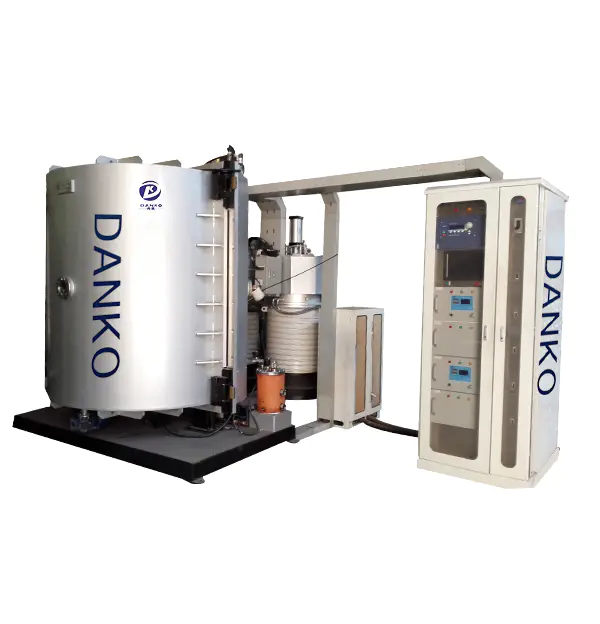
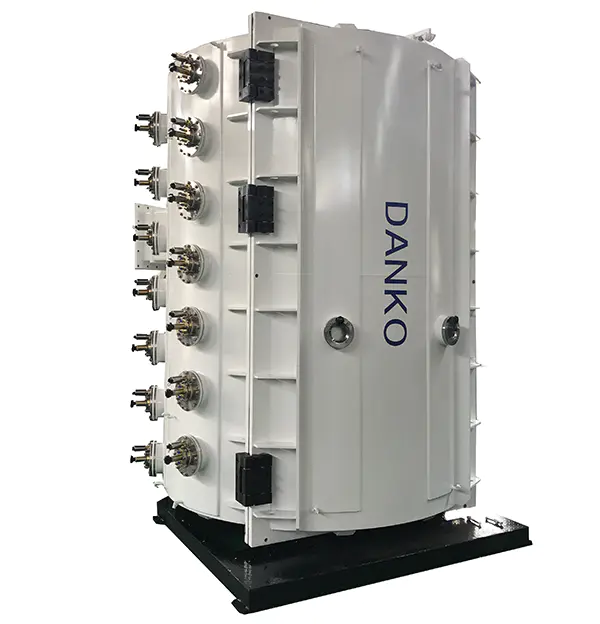
 Automotive Lamp Reflector Film Vacuum Coating MachineDeposits bright, uniform aluminum or silver layers on plastic lamp reflectors, achieving up to 90% reflectivity and fast cycle times for in-line production.View Product →
Anti-reflective coatings, band-pass filters, and protective oxide layers are built layer by layer with thickness tolerance at the nanometer level. The electron beam provides a stable, controllable vapor flux, and optical monitoring closes the control loop during deposition. Alternating high- and low-index oxide stacks are a standard workload for this type of equipment.
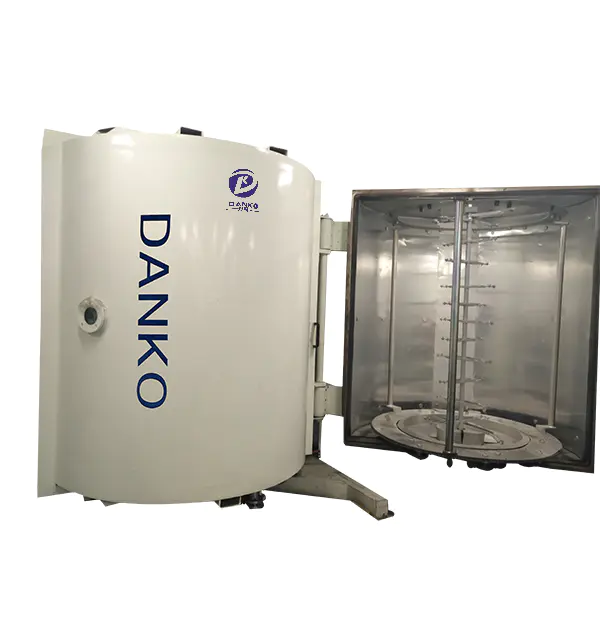
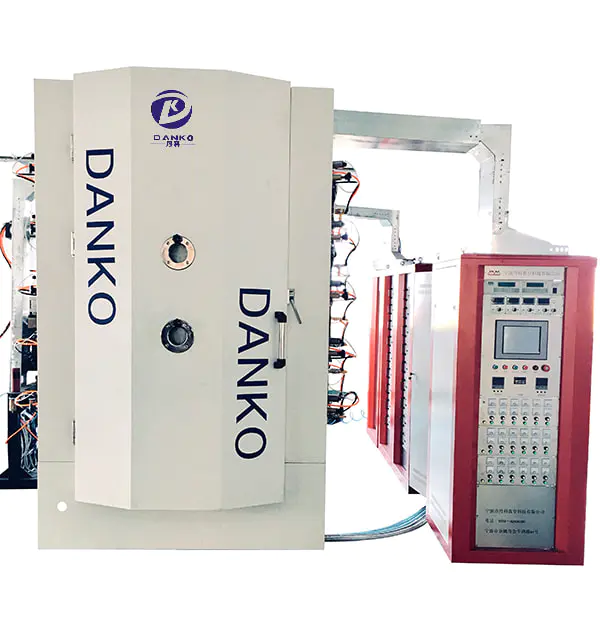
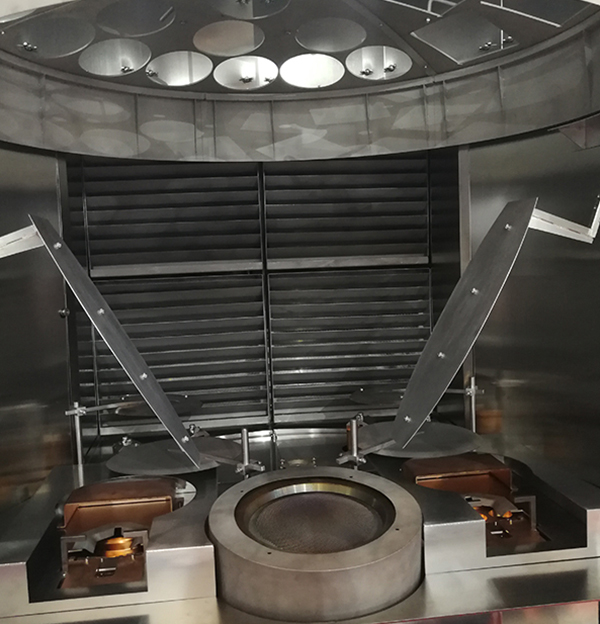 Optical Film Vacuum Coating MachineBuilds precision multi-layer optical films like AR and anti-fingerprint coatings with nanometer-level thickness control, suitable for glass, ceramics, and optical plastics.View Product →
Not all e-beam work is optical. Evaporated titanium, chromium, and silicon-based layers are used on plastic parts, ceramic surfaces, and metal components that must stay below their softening temperature. Because the electron beam heats only the source material, the overall thermal load on the substrate remains modest compared with some arc-based PVD processes.
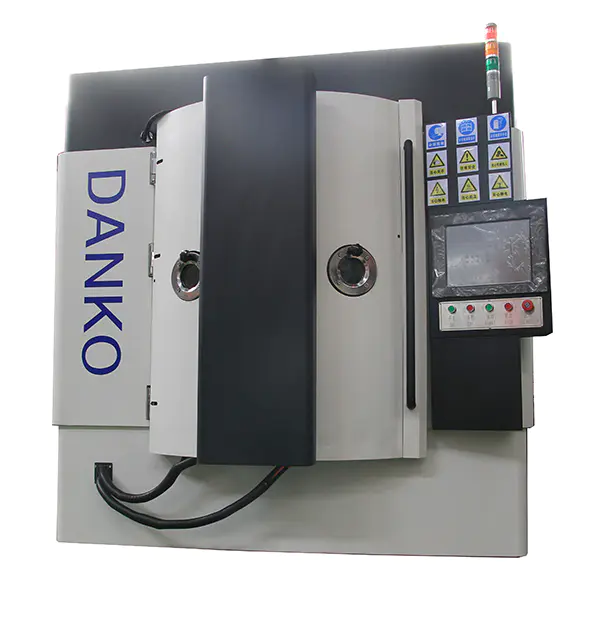
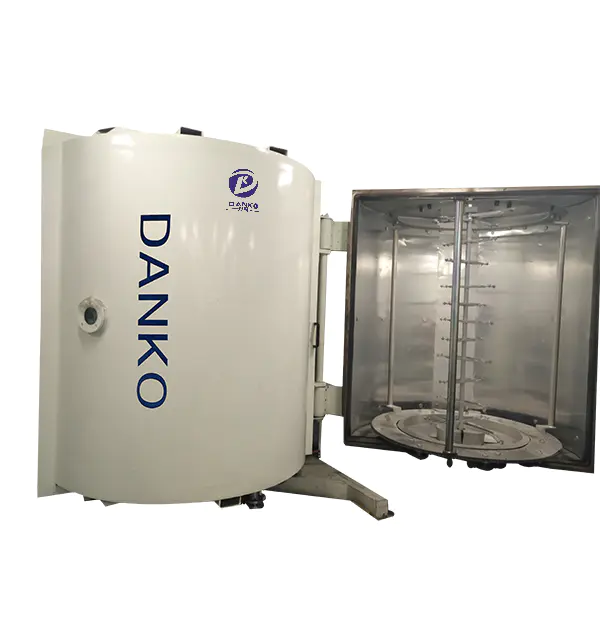
 High Vacuum Thermal Evaporation Coating MachineEvaporates aluminum, chrome, or copper onto plastics and ceramics for decorative and protective coatings, offering various colors and compatibility with substrates like ABS and PC.View Product →
The difference between a well-built e-beam vacuum coating machine and one that produces frustrating variability shows up in the details. Review these points before comparing quotations:
It is also worth remembering that chamber volume, pumping capacity, and fixturing should be matched to your product mix, not to the largest catalogue model. This is why experienced buyers start with the parts they need to coat, not with a specification sheet. A practical PVD vacuum coating machine selection checklist covers most of the common pitfalls.
An electron beam vacuum coating machine is, at the end of the day, a production tool whose value is measured in repeatable film quality, usable uptime, and compatibility with the parts you actually process. Spend the time on materials validation before purchase, and the equipment will deliver exactly what the physics promises. For manufacturers that need dense, high-performance films at production speed, electron beam evaporation remains one of the most refined and dependable processes in the PVD toolbox — especially when supported by a manufacturer like Danko Vacuum Technology that can match the process to your product line.
Your email address will not be published. Required fields are marked *

 Tel: +86-13486478562
 FAX: +86-574-62496601
 Email: [email protected]
 Address: No. 79 West Jinniu Road, Yuyao, Ningbo City, Zhejiang Provice, China
 OEM/ODM PVD Coater Manufacturers