 Email:
 Tel:+86-13486478562

 Language
 Español
 Português
Product Consultation
Your email address will not be published. Required fields are marked *
A cutting tool manufacturer and a maker of premium bathroom fittings may both request a plasma coating machine, yet hear descriptions so different that they might belong to two separate industries. One is shown a vacuum chamber that grows micron-thin hard films to extend tool life. The other is told about melted powder sprayed onto surfaces to rebuild worn components. Both suppliers call their equipment plasma coating machines, which makes the term genuinely confusing. For most production teams, the answer lives in vacuum PVD, the physical vapor deposition family. This article explains what a plasma coating machine in that family does, how the main processes differ, and what to verify before approving a purchase order.
The short version first. A plasma coating machine in the physical vapor deposition family is a sealed vacuum chamber that converts solid coating material into ionized vapor and condenses it onto parts as a film, typically 0.1 to 10 micrometers thick. The layer grows atom by atom from a plasma state, so it comes out dense, strongly bonded, and able to tolerate mechanical stress that paint and electroplated coatings often cannot.
The plasma performs two jobs in a single cycle. Before deposition, energetic ions bombard the parts and remove oxide layers and organic residues at a microscopic scale. During deposition, the plasma transfers energy that helps arriving atoms pack into a tight, uniform structure. That is how a two-micrometer hard film can multiply the working life of a carbide edge several times without altering its geometry. Understanding how plasma coating machines improve surface treatment explains why the technology has become standard across tool and component manufacturing.
A coating that survives on a cutting edge is not painted onto the part. It is grown by controlling how atoms arrive, how they bond, and how tightly they pack.
Production-scale plasma coating machines rely mainly on two PVD processes. Both operate in vacuum, both use plasma, but the way each releases coating material from the source defines its strengths and its best applications.
Multi-arc ion plating, also called cathodic arc deposition, strikes an electric arc on the surface of a solid metal target. The arc evaporates target material into a highly ionized vapor, and a bias voltage accelerates those ions toward the parts. Because the ions arrive with high kinetic energy, films are dense, adhesion is strong, and deposition speed is high. This makes the process the standard choice for titanium nitride, chromium nitride, and aluminum titanium nitride coatings on cutting tools, stamping dies, bearings, and transmission parts. Hardness for these nitride films typically lands between 2,000 and 3,500 HV, depending on composition and parameters.
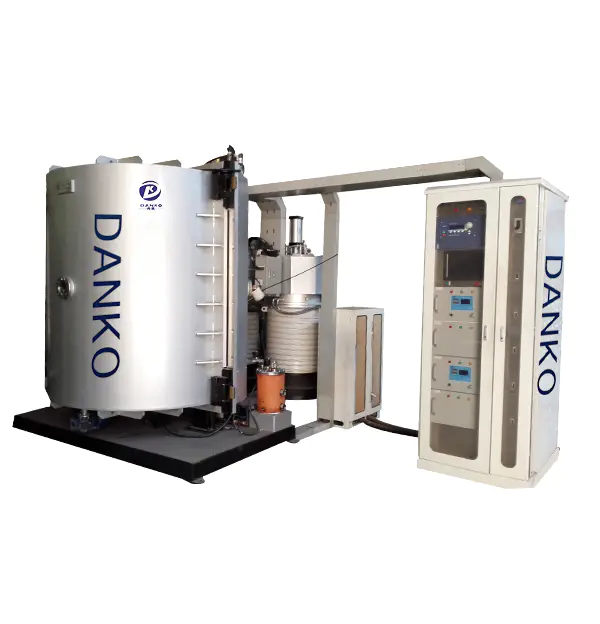
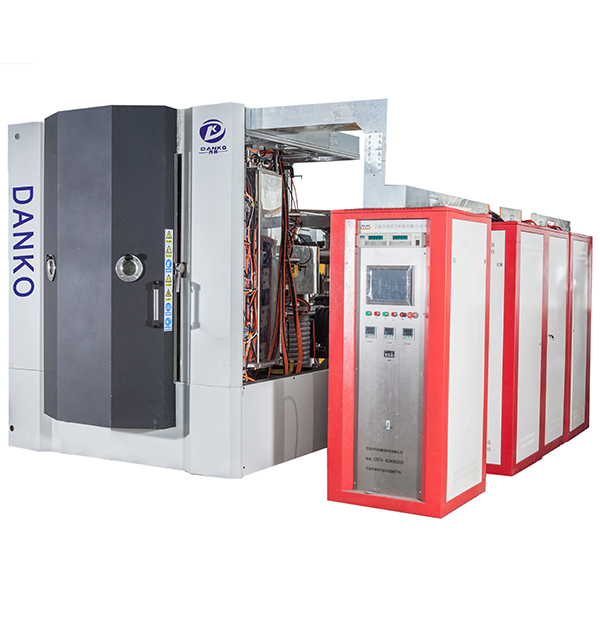 Multi-Arc Ion Coating System for Hard Protective FilmsThis machine applies plasma ion coating for durable nitride layers on tools and parts, aligning with the high-energy arc deposition method discussed above.View Product →
Magnetron sputtering releases coating material in a milder way. A magnetically confined plasma bombards the target with gas ions, knocking atoms loose one by one. Those atoms travel through the chamber and condense on the substrate. The energy input is adjustable with fine resolution, which makes thickness distribution and surface smoothness easier to keep consistent across a batch. Sputtering tends to be the preferred route for decorative layers, anti-fingerprint finishes, optical coatings, and any surface where roughness or reflectivity appears in the specification.
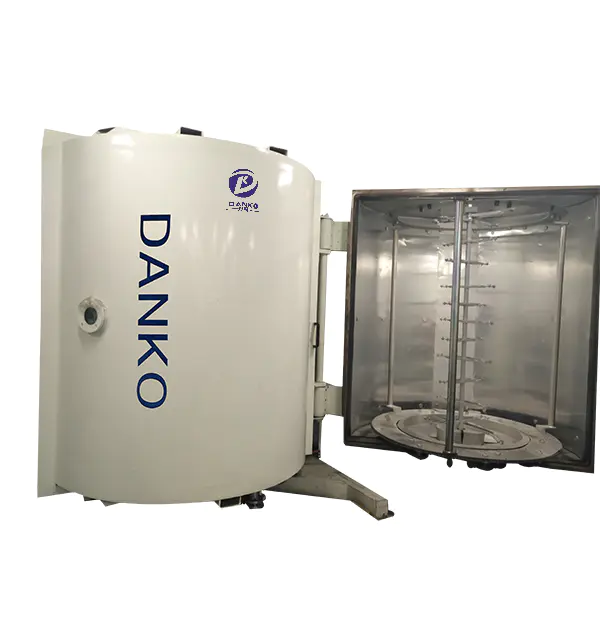
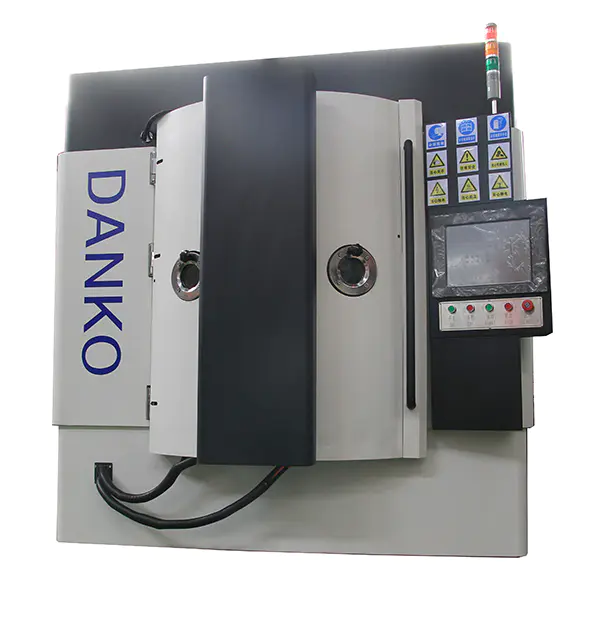 Hybrid Magnetron Sputtering and Multi-Arc Coating EquipmentA versatile decorative vacuum coater that combines sputtering and arc deposition for colored finishes on glass, metal, and plastic with precise control.View Product →
The two methods complement each other in real production. A fittings manufacturer might use magnetron sputtering for bright silver tones and multi-arc deposition for dark gunmetal or gold shades, sometimes on the same vacuum platform redesigned for different source configurations. The coating portfolio decides the process, not the other way around.
The most common sourcing mistake appears right here. Plasma spray coating systems, which many suppliers also describe as plasma coaters, feed metal or ceramic powder into a plasma jet, melt the particles, and propel them toward a surface. Deposits build from overlapping splats, normally reaching 50 to 500 micrometers, and are widely used for thermal barriers, wear rebuild, and large-area protection. The technology is valuable, but it shares neither film behavior nor hardware with vacuum PVD.
| Dimension | Vacuum plasma coating (PVD) | Plasma spray coating |
|---|---|---|
| Process medium | Atoms and ions condensing in vacuum | Melted powder particles in a plasma jet |
| Typical thickness | 0.1–10 µm | 50–500 µm |
| Film structure | Dense, atomic-level growth | Built up from overlapping splats |
| Best-known uses | Tool coatings, decorative finishes, DLC | Turbine blades, boiler tubes, wear rebuild |
| Dimensional fit | Very high, tolerances survive | Often requires post-machining |
A plant that installs a vacuum PVD chamber expecting thermal barrier performance, or adds a spray torch hoping for a decorative automotive finish, will be disappointed in both directions. The film requirement has to drive the machine decision, not the name printed on the brochure.
Application fit remains the central purchasing criterion, so mapping the typical production segments helps before any supplier conversation begins.
| Production segment | Typical components | Coating objective |
|---|---|---|
| Cutting tools | End mills, drills, inserts, taps | Hardness and heat resistance for longer tool life |
| Molds and dies | Injection molds, stamping dies | Wear resistance and release behavior |
| Automotive | Piston rings, injector parts, interior trim | Low friction, corrosion protection, styling |
| Medical instruments | Surgical scissors, forceps, bone saws | Hardness, corrosion resistance, durability |
| Decorative hardware | Faucets, watch cases, tableware | Metallic color, anti-fingerprint, scratch resistance |
Diamond-like carbon films deserve a separate mention. DLC combines hardness in the roughly 1,000 to 3,000 HV range with friction coefficients as low as 0.05 to 0.15, making it increasingly specified for engine components, gearboxes, punching dies, and surgical instruments where contact pressure is high and lubrication is limited.
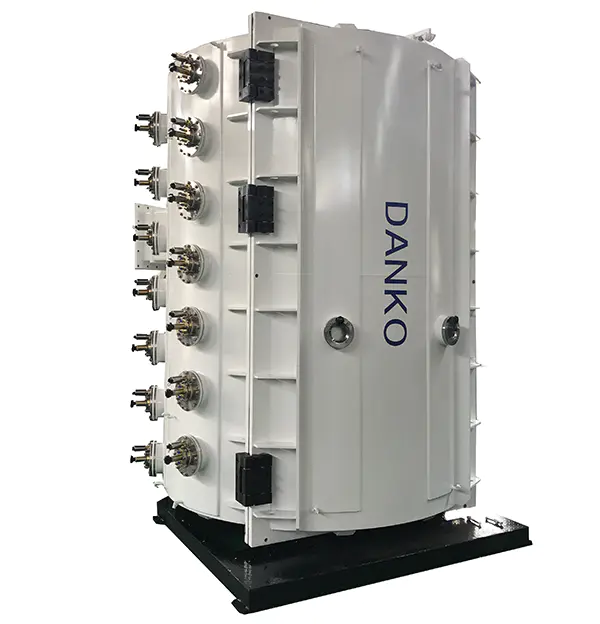
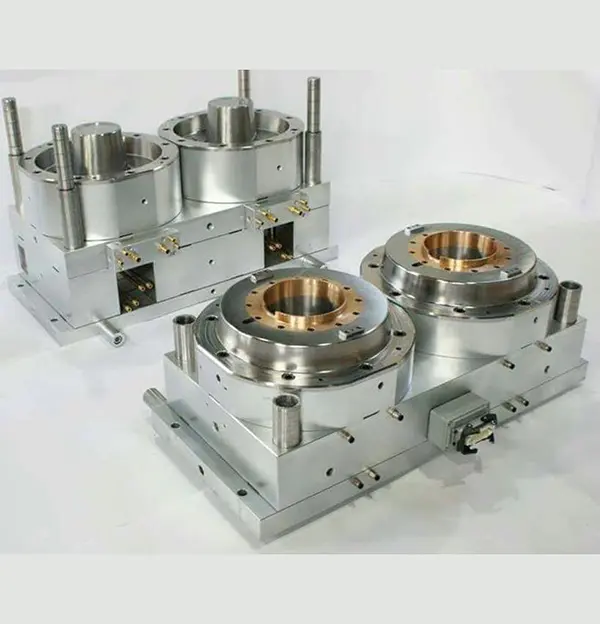 DLC Hard Film Vacuum Plating Machine for High-Stress SurfacesDeposits diamond-like carbon coatings with low friction and high hardness, ideal for components in demanding contact and limited lubrication conditions.View Product →
With the process family defined, procurement moves to a handful of verifiable points that separate smooth projects from expensive rework:
Beyond the checklist, it helps to compare how a supplier documents its equipment and supports process development. This structured guide to choosing PVD vacuum coating equipment walks through each decision in a sensible order.
A plasma coating machine is not a single product category. Within vacuum PVD, it is a precision deposition tool that solves surface problems at the atomic level, while plasma spray serves a different, thicker-coating world. The deciding factors are the coating objective and the production schedule around it. Once those are clear, the choice between multi-arc ion plating, magnetron sputtering, and specialized hard-film systems becomes a matter of matching verified equipment capability to a defined specification.
Your email address will not be published. Required fields are marked *

 Tel: +86-13486478562
 FAX: +86-574-62496601
 Email: [email protected]
 Address: No. 79 West Jinniu Road, Yuyao, Ningbo City, Zhejiang Provice, China
 OEM/ODM PVD Coater Manufacturers