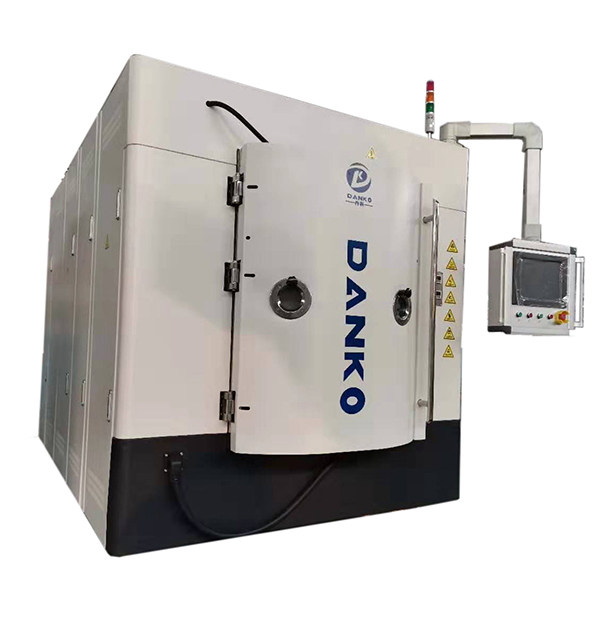
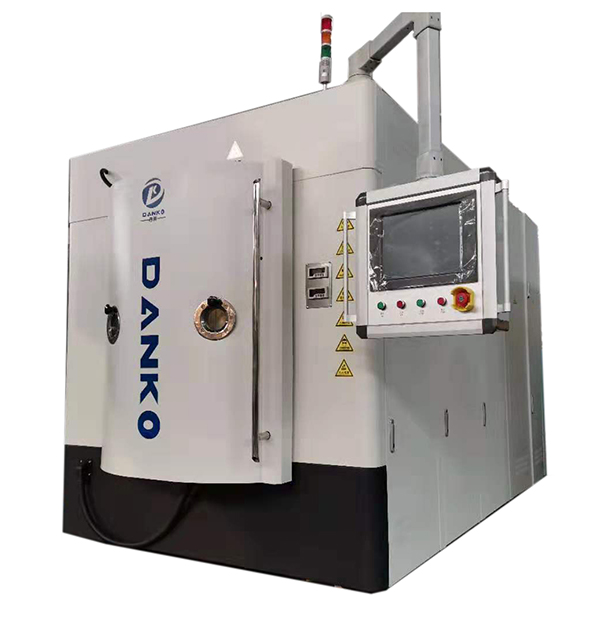
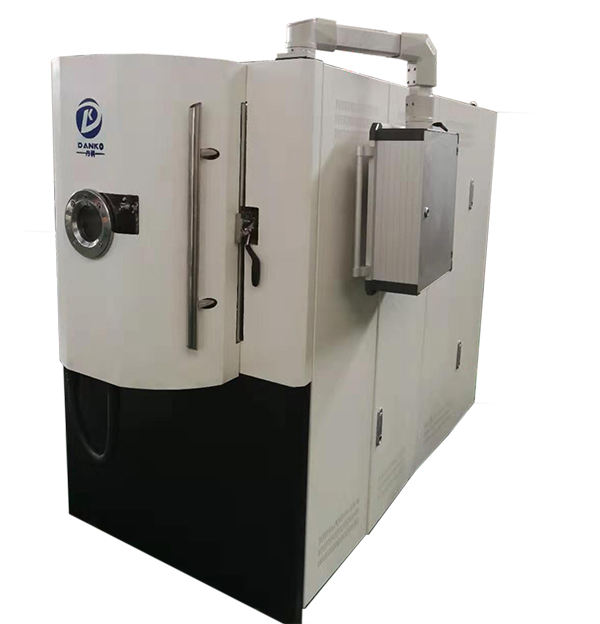
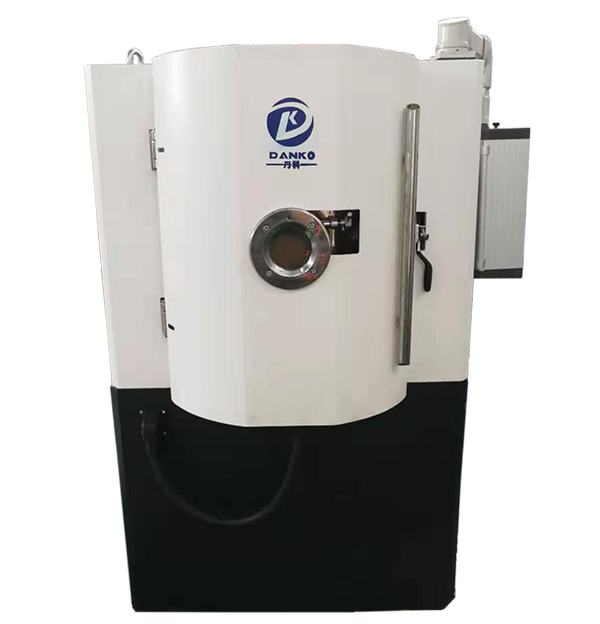
Ningbo Danko Vacuum Technology Co., Ltd. manufactures Multi-arc ion coating machine systems for decorative and functional PVD finishing. Our range covers vertical and horizontal chamber layouts, single- and multi-cathode arc sources, and reactive-gas colour control for metal, glass, ceramic and plated plastic parts.
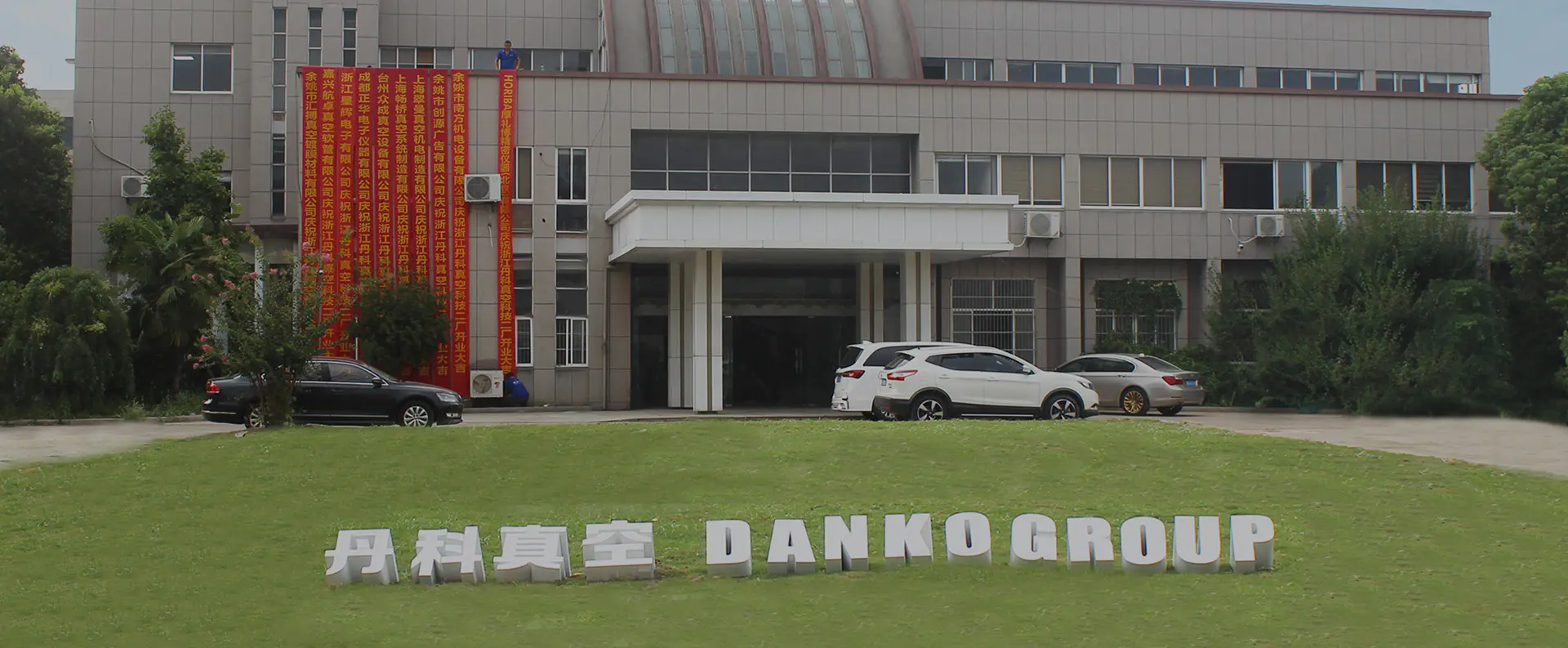
Since 2007, first as Huahong Vacuum Technology and now as Danko, we have built vacuum coating equipment for automotive, decorative, tool and thin-film applications. Our engineering team of about 90 professionals handles coating development, system manufacturing, delivery and after-sales support from Yuyao, Ningbo, China.
What Our Multi-Arc Ion Coating Machines Do
A multi-arc ion coating machine uses a vacuum arc discharge to evaporate a metal cathode and deposit a dense ionised film onto a prepared substrate. The process gives high deposition rate, strong ionisation and good adhesion on parts that need a decorative colour, wear resistance or corrosion resistance in one coating cycle.
We build these systems around the part, the required film and the production target. Chamber size, cathode number and arrangement, pumping set, bias power supply and gas control are selected together so the machine reaches a stable working point rather than a nominal specification.
Our Multi-Arc Ion Coating Range
The range below is the product family we supply under this category. Each variant addresses a different substrate mix, part geometry or film requirement.
| System Variant |
Typical Substrates |
Main Film / Colour Role |
Application Fit |
| Multi-Arc Ion Vacuum Coating Machine |
Stainless steel, brass, zinc alloy, plated ABS |
TiN, CrN, ZrN, TiCN, TiAlN, DLC; gold, rose gold, gun black, purple |
Door handles, locks, sanitary ware, watches, jewellery |
| Plasma Ion Coating Equipment |
Metal, ceramic, glass, engineering plastics |
Decorative and protective compound films |
Automotive trim, electronic housings, medical and optical parts |
| Vacuum Coating and Metallizing Machinery for Metal, Ceramic, Glass |
Glassware, ceramics, large metal sheets and tubes |
Metallising, reflective and decorative films |
Glass cups, lamps, artworks, tableware, architectural panels |
| Physical Vapor Deposition Coating Machine |
Metal, glass, ceramic, plated plastic |
Multi-functional metal, composite and transparent conductive films |
General decorative and functional PVD production |
| Metal Parts Colorful Decorating PVD Coating Machine |
Stainless steel, zinc alloy, brass, aluminium |
Colour-controlled decorative films, especially deep black |
High-end hardware, bathroom fittings, mosaic tiles, furniture trim |
Substrate and Process Fit
Arc ion coating works best on substrates that can tolerate the vacuum cycle and the thermal load of the arc. We confirm the substrate condition before proposing a chamber and cathode layout.
- Metals: stainless steel, carbon steel, brass, zinc alloy, copper and iron after electroplating; carbide and high-speed steel for wear films.
- Plated plastics: ABS, PC, ABS+PC, PVC and nylon after electroplating, with heat resistance above 70 °C and no outgassing.
- Glass and ceramics: cups, lamps, artworks, tiles and technical ceramic parts.
- Flexible substrates: polyester film, PC, paper, cloth and foam are handled on roll-to-roll platforms rather than batch arc chambers.
Parts must be clean and free of dust, oil or chemical residue before loading. Conductivity, heat resistance and low outgassing are the three conditions we check first, because they determine whether an arc process is suitable or whether another PVD route should be used.
Critical Specifications We Configure
Each proposal is built from a defined set of mechanical, vacuum and electrical parameters. The table below shows the variables that shape the final machine.
| Parameter |
What We Set |
Why It Matters |
| Chamber structure |
Vertical or horizontal layout, #304 stainless steel body |
Part loading, floor space and uniform throw distance |
| Arc source count |
Single or multiple cathodes, fixed or oscillating |
Coverage on complex geometry and target utilisation |
| Pumping set |
Rotary, roots and diffusion or turbo combination |
Base pressure and cycle time |
| Bias and arc power |
DC or pulsed bias, matched arc supplies |
Adhesion, film density and arc stability |
| Gas control |
Mass-flow control for N₂, O₂, Ar and C₂H₂ |
Colour repeatability and film stoichiometry |
| Fixturing |
Planetary, rotating or static jigs |
Uniform coating on small and large parts |
Colour, Film and Consumables
Decorative arc coatings are produced by reacting a metal cathode with a controlled gas. The metal-to-gas ratio and coating structure determine the final colour, so gas flow, arc current and deposition time are held within a defined window.
- Film types: TiN, CrN, ZrN, TiCN, TiCrN, TiNC, TiAlN and DLC.
- Colours: titanium gold, rose gold, gun black, stainless steel, purple and other reactive-gas colours.
- Consumables: titanium, chromium, zirconium, iron and alloy targets, supplied through our consumption materials & targets range.
Deep black and dark decorative finishes are among the more demanding colour targets. We tune the reactive gas and arc parameters during process development so the colour can be reproduced from batch to batch.
Controls, Automation and Installation
Process parameters are monitored and controlled by an automatic computer control system throughout the coating cycle. Operators work from a stored recipe, which reduces variation between shifts and makes colour and film thickness easier to repeat.
- Recipe storage for different part families and colours.
- Interlocks for vacuum level, cooling water and arc power.
- Integration with the customer's loading and handling arrangement where required.
- Utilities: three-phase power, cooling water and compressed air are confirmed against the site before shipment.
We prepare the installation scope with the customer, including foundation and utility requirements, and support commissioning and operator training as part of the delivery.
Quality, Acceptance and Documentation
We debug and inspect each system before shipment. Acceptance is based on agreed coating samples, film colour and appearance, adhesion and the mechanical function of the vacuum, arc and control systems.
- Pre-shipment inspection of chamber, pumping set, power supplies and controls.
- Coating trials on customer-supplied parts where samples are available.
- Documentation covering operation, maintenance and spare-parts identification.
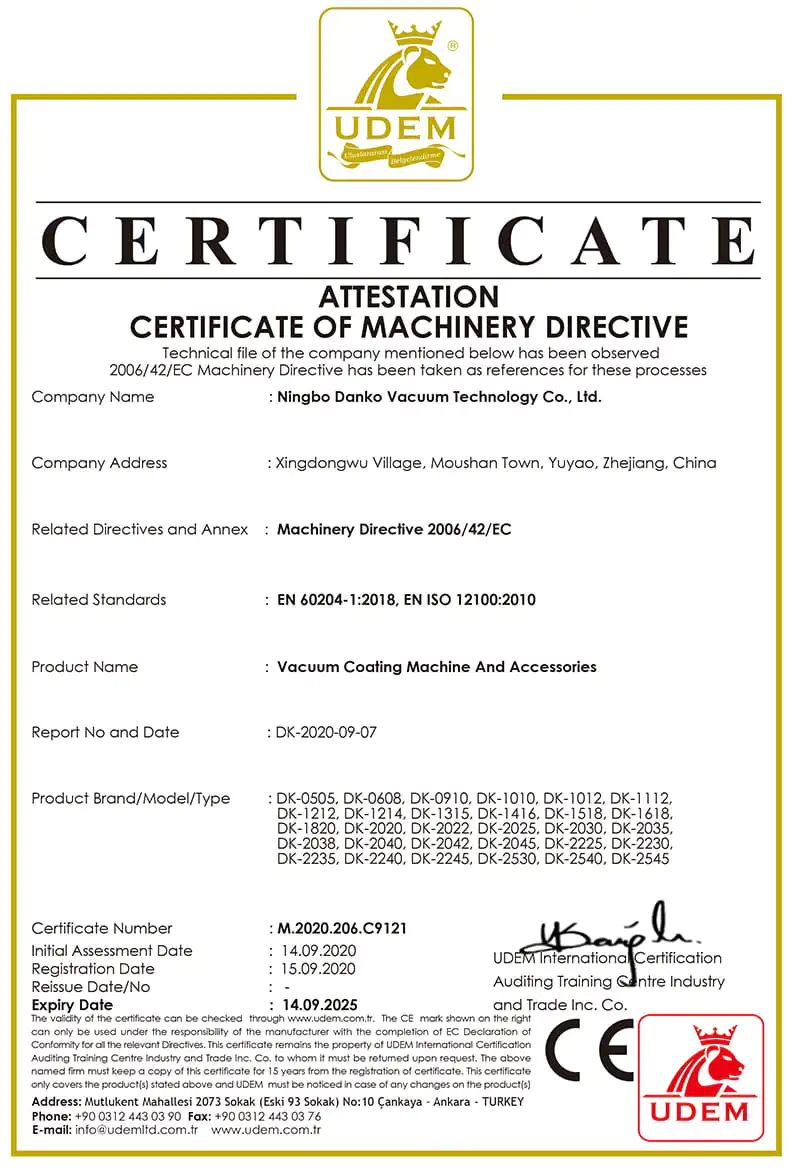
- CE certification evidence available for the equipment where applicable.
Maintenance, Spares and Serviceability
Arc sources, cathodes and chamber internals wear in normal production. We design access so that target changes, cathode cleaning and shield replacement can be carried out without dismantling the whole system.
Spare parts, targets, pump oil and power supplies are available through our vacuum accessories range. Our after-sales team supports domestic and international customers with part processing plans and technical solutions.
Where This Range Sits Alongside Other PVD Systems
Multi-arc ion coating is one route within our wider Decorative vacuum coating machines family. Where a project needs a different film structure or substrate, we can position the right platform from the start.
- Magnetron sputtering for smooth, dense films and oxide colours.
- Thermal evaporation for metallising and reflective coatings.
- Combined evaporation and sputtering lines for multi-layer decorative stacks.
- Hard and tribological systems for tools, moulds and wear parts.
Information We Use to Configure Your Solution
A proposal is prepared from the part and the production target, not from a catalogue number. The following inputs let us size the chamber, sources and pumping set correctly.
- Part drawings, maximum dimensions and loading weight.
- Substrate material and pre-treatment, including plating condition for plastics.
- Required film type, colour and target appearance standard.
- Batch size, cycle time and annual production target.
- Site utilities, floor space and available lifting height.
- Automation and line-interface requirements.
Frequently Asked Questions
What substrates can a multi-arc ion coating machine coat?
Our systems coat stainless steel, carbon steel, brass, zinc alloy, carbide and high-speed steel, plated ABS/PC/PVC/nylon, glass and ceramics. The substrate must be conductive or plated, heat-resistant above 70 °C and free of outgassing.
Which colours and films can the arc process produce?
TiN, CrN, ZrN, TiCN, TiCrN, TiNC, TiAlN and DLC films are available, with colours including titanium gold, rose gold, gun black, stainless steel and purple. Colour is set by the metal-to-gas ratio and deposition parameters.
How is the chamber size selected?
We size the chamber from the largest part envelope, the jig arrangement and the required batch weight. Vertical and horizontal structures are both available, and the layout is chosen to suit loading method and floor space.
Is the process controlled automatically?
Yes. Arc current, gas flow, bias and deposition time are monitored and controlled by an automatic computer control system, and recipes can be stored for repeat production.
What support is provided after delivery?
We provide installation and commissioning support, operator training, documentation and after-sales service. Targets, pump oil, power supplies and other spares are supplied through our vacuum accessories range.

 Email:
 Tel:+86-13486478562

 Language
 Español
 Português



 Tel: +86-13486478562
 FAX: +86-574-62496601
 Email:
 Address: No. 79 West Jinniu Road, Yuyao, Ningbo City, Zhejiang Provice, China
