
 Email:
 Tel:+86-13486478562

 Language
 Español
 Português
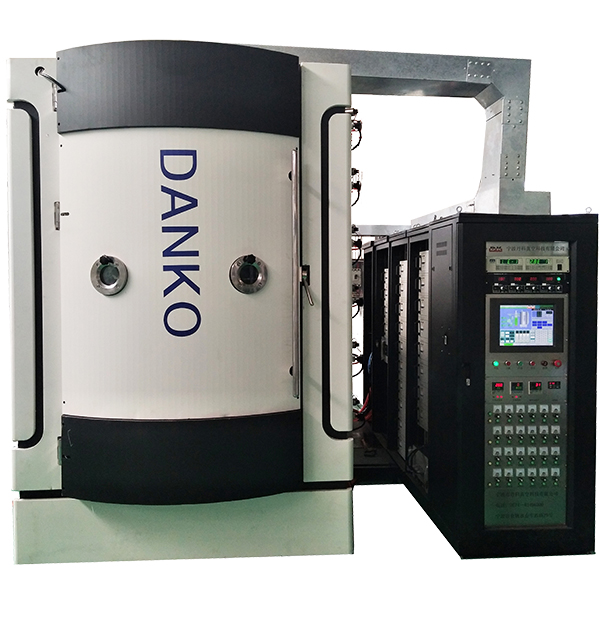

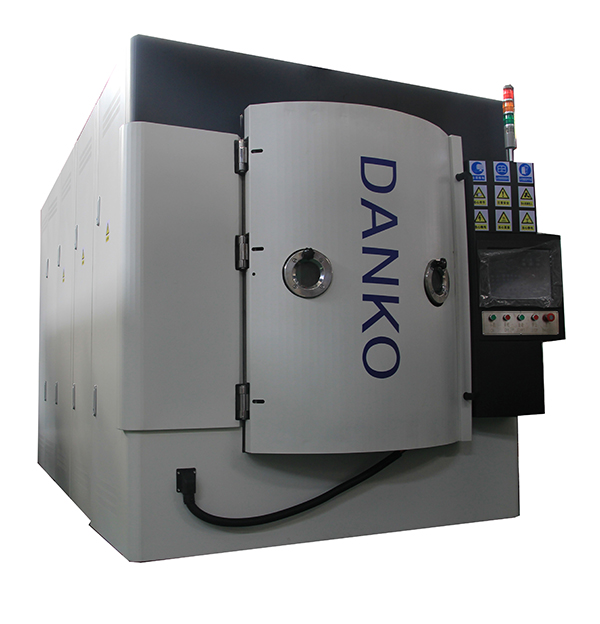

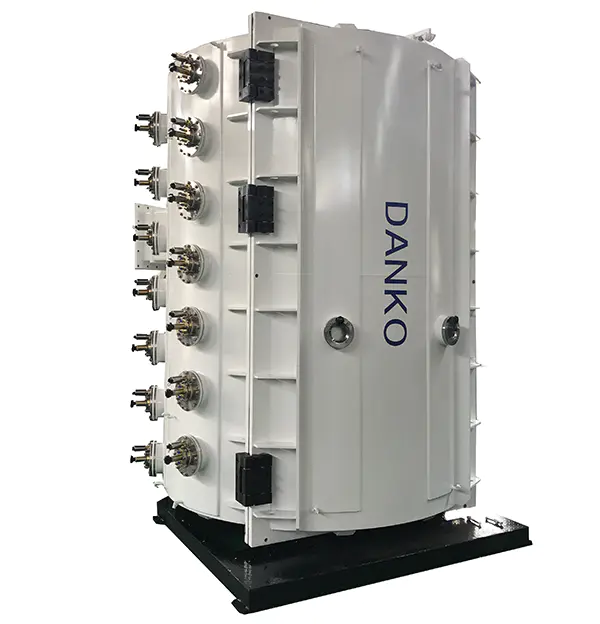




Specification
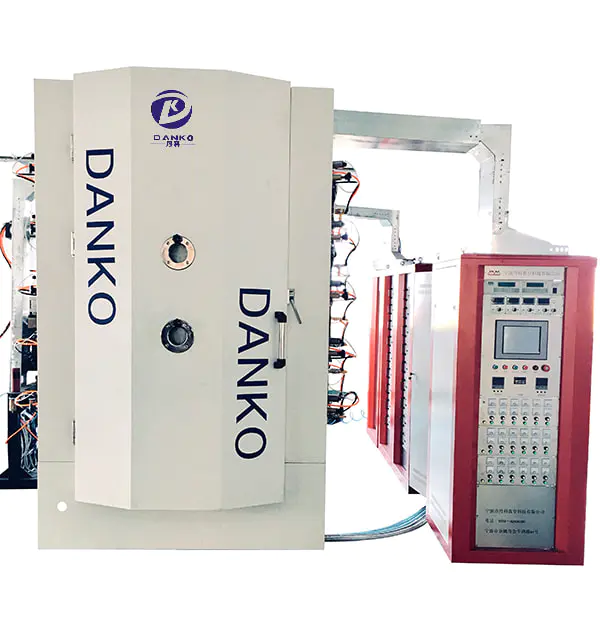
The table summarises the standard configuration of the sputtering machines manufactured by Ningbo Danko Vacuum Technology. Sputtering systems depend strongly on substrate type and output, so we treat each order as a custom build and confirm the details together with the buyer.
| Item | Typical Configuration | Notes |
|---|---|---|
| Deposition Method | Magnetron sputtering with DC, pulsed DC or medium frequency dual magnetron power | Medium frequency power is preferred for stable reactive sputtering of oxides and nitrides. |
| Chamber Type | Vertical or horizontal batch chamber, or roll-to-roll chamber for flexible film | The type is chosen according to part shape, batch size and output. |
| Chamber Material | Stainless steel with polished interior and water cooled double wall | Smooth walls shorten pump-down time and simplify cleaning. |
| Chamber Size | Typical working diameter from 600 mm to 1,400 mm, custom designs on request | Large flat parts and glass panels may need a dedicated frame. |
| Magnetron Cathodes | Two, four or six sources in planar, cylindrical, twin or opposite arrangements | Layout is optimised for coating uniformity and target utilisation. |
| Target Materials | Titanium, chromium, zirconium, iron alloy and other metals on request | Target thickness and size are matched to the cathode and power supply. |
| Power Supplies | DC, pulsed DC and medium frequency units with arc suppression | Arc suppression protects targets and keeps reactive processes smooth. |
| Vacuum System | Mechanical pump, Roots pump and holding pump with diffusion or molecular pump | A molecular pump suits clean, high-purity optical and functional films. |
| Base Pressure | Usually 5 x 10⁻³ Pa or better, with lower values available | Lower base pressure supports high-purity film growth. |
| Working Pressure | Typically in the 10⁻¹ Pa range during sputtering | Controlled by argon and reactive gas flow. |
| Process Gases | Mass flow controlled argon, nitrogen, oxygen and acetylene | Gas ratios define film composition and colour. |
| Heating | Radiant or low temperature heating, adjustable by recipe | Lower temperatures protect plastics and thin glass. |
| Substrate Motion | Planetary rotation for batch parts, drum or free-span transport for film | Free-span transport avoids wrinkles and light lines on thin film. |
| Film Range | Metals, nitrides, carbonitrides, oxides and DLC-type carbon films | Colour options include gold, rose gold, black, silver and multicolour. |
| Control System | PLC with touch screen, recipe storage and process alarms | Records support quality control and repeat orders. |
| Warranty | Free 12 month warranty on the complete equipment | Onsite installation, training and long-term accessories supply are available. |
Please share your substrate material, part dimensions, target colour or film function, and daily production volume. With this information our engineers will select the cathode layout and pumping group and provide a clear technical proposal.
Application
Magnetron sputtering is one of the most versatile thin film methods in modern manufacturing. The machines we build serve decorative, functional and optical markets, and the examples below show where buyers use them most.
-
Plastic parts. Housings, trim, caps and covers made from PC, ABS and PE can be coated at low temperature with metallic or coloured films that look like solid metal.
-
Glass products. Glass panels, bottles and decorative glass receive uniform metal or oxide layers for colour, reflectivity or semi-transparent effects.
-
Flexible film. Roll-to-roll sputtering coats PET and other films for packaging, decoration and functional use, with careful tension control to avoid wrinkles.
-
Decorative hardware. Faucets, handles and bathroom fittings gain a refined, scratch-resistant finish in gold, rose gold, black or chrome tones.
-
Watches and jewelry. Thin and even films give consistent colour on fine surfaces, and the smooth structure highlights polished details.
-
Medical components. Surgical instruments, dental parts and implant components can receive thin, hard and clean coatings under tightly controlled processes.
-
Precision functional parts. CrN, TiN and DLC-type films reduce friction and wear on bearings, valves and mechanical transmission components.
If your product is new or unusual, our application engineers can arrange sample coating trials and suggest the best target, gas and fixture combination.
Process preparation is especially important for sputtered films on plastics and glass. Surfaces must be clean, dry and free of oil, and many plastic parts benefit from a thin base coat before metallisation. Danko supplies guidance on cleaning, drying and fixture design, and our engineers can run sample parts so that you can judge adhesion, colour and appearance before placing an order.
The machine also suits contract coating plants that serve several industries. In a single week a plant may coat plastic cosmetic caps, glass decorations, stainless steel trim and thin film samples, and a flexible magnetron layout with quick-change targets and recipe storage makes that variety manageable.
Research and development teams at universities and companies can use smaller sputtering systems to study new film structures and colours before moving to production equipment, and we are glad to discuss a compact laboratory configuration for such projects.
Advantage
Magnetron sputtering stands out for film quality and process control. Combined with the way Danko designs its machines, buyers receive a system that is productive, repeatable and ready to grow with the business.
-
Smooth, uniform films. The mostly atomic vapour produces fine, dense layers with very few droplets, which helps decorative surfaces and precision parts.
-
Low thermal load. Controlled heating allows coating of plastics, thin glass and heat sensitive components that other methods may damage.
-
Precise thickness control. Stable power, gas flow and substrate motion give accurate and repeatable film thickness across large batches.
-
Wide material choice. Metals, nitrides, oxides and carbon-based films can be produced with different targets and reactive gases on the same platform.
-
Stable reactive process. Medium frequency dual magnetron power and arc suppression keep long reactive runs smooth, protecting targets and reducing rejects.
-
Flexible machine formats. Batch chambers and roll-to-roll machines are both available, so one supplier can serve rigid parts and flexible film lines.
-
Dependable support. A free twelve month warranty, onsite installation and training, and long-term supply of targets and accessories reduce risk after purchase.
About ninety engineers and technicians handle development, manufacturing, delivery and after-sales service under one roof, which keeps communication direct and response times short.
Sputtering also helps with consistency across large batches. Stable plasma, even target erosion and controlled substrate motion mean that the first and last parts in a load look the same, which lowers rejection rates and rework. Magnetic field design on our cathodes improves target utilisation, so expensive target material lasts longer and running cost per part stays predictable.
Environmental and safety performance is another strength. Sputtering is a dry vacuum process with no plating baths, no chemical wastewater and very little waste, which simplifies compliance for factories that sell to demanding export markets. The machine is fitted with interlocks, water flow monitoring and over-temperature protection to protect both operators and equipment.
Finally, the supplier matters as much as the technology. We keep drawings, electrical diagrams and software parameters for every machine we build, so repeat orders and upgrades are handled quickly and accurately.


 Tel: +86-13486478562
 FAX: +86-574-62496601
 Email:
 Address: No. 79 West Jinniu Road, Yuyao, Ningbo City, Zhejiang Provice, China
