
 Email:
 Tel:+86-13486478562

 Language
 Español
 Português

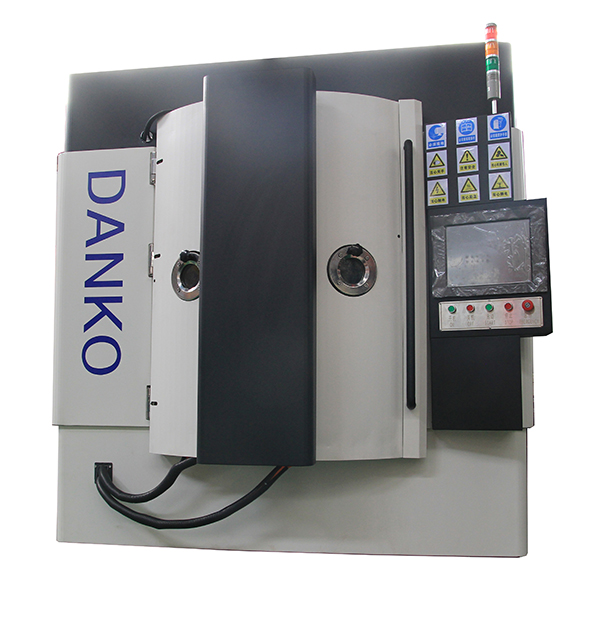
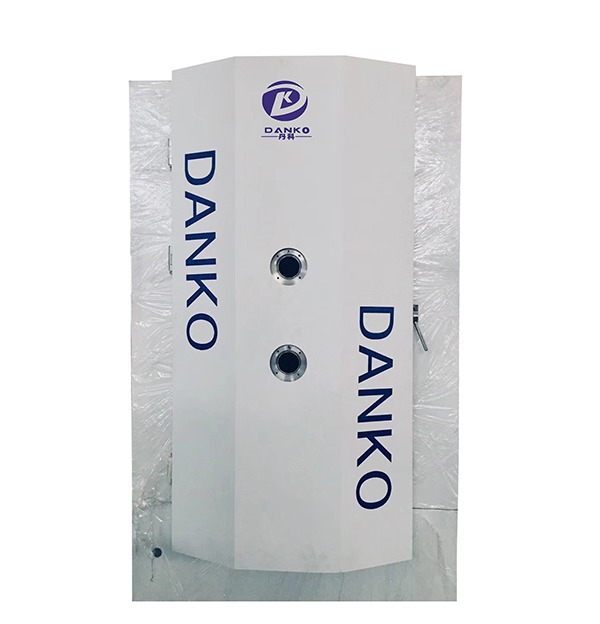
MF sputtering technique has become the mainstream technology of sputtering, what characteristics to the DOs puttering are:
1. Overcome the phenomenon of anode, disappearance.
2. Reduce ...
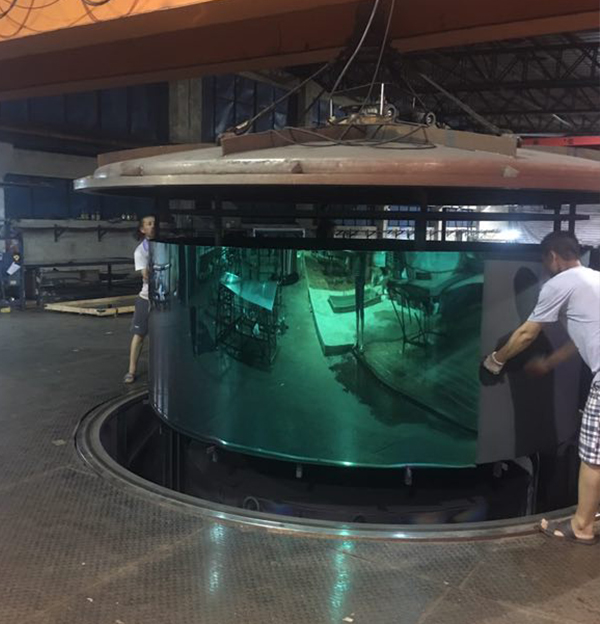
MF sputtering technique has become the mainstream technology of sputtering, what characteristics to the DOs puttering are:
1. Overcome the phenomenon of anode, disappearance.
2. Reduce ...
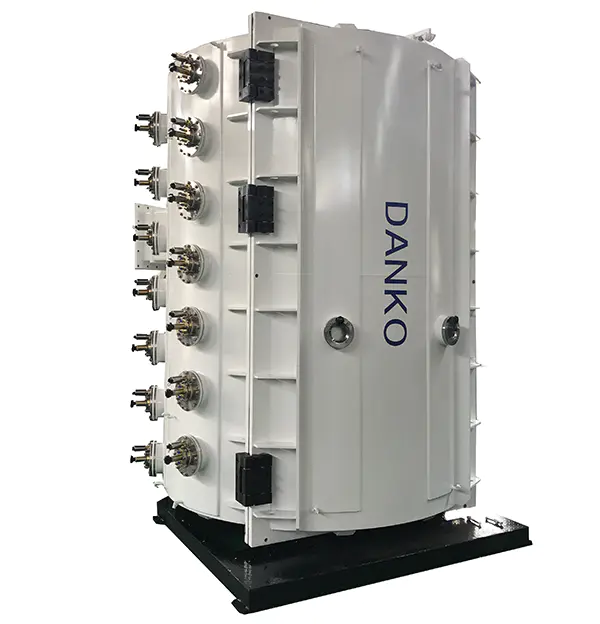
The horizontal design of the Horizontal big PVD Vacuum Coating Machine lays a solid foundation for its large-area coating capability. Compared with other types of coating machines, its vacuum chamb...

From modern minimalist living room sofas, to classic and luxurious bedroom wardrobes, to exquisite and elegant dining tables and chairs, Furniture Chrome PVD Vacuum Coating Machine System can be ap...

Ceramic Tile PVD Coating System is a precision equipment that provides high-quality coatings for ceramic tile surfaces. The working principle of this equipment is mainly based on physical vapor dep...
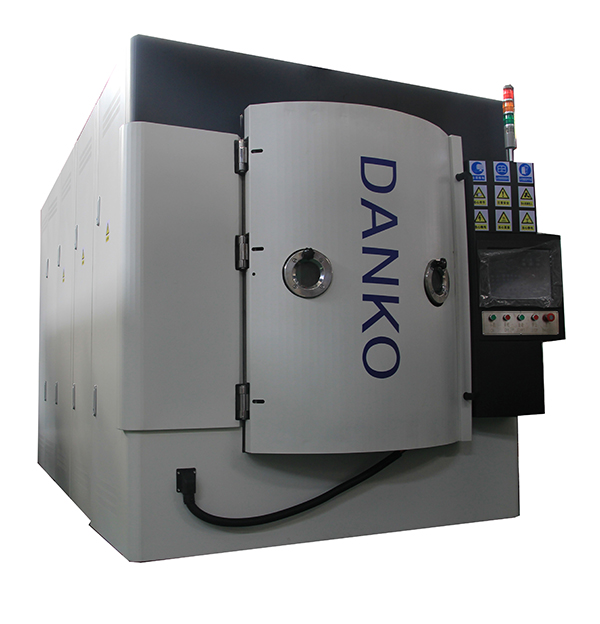
Dark Black PVD Coating Machine adopts advanced vacuum sputtering or vacuum ion plating technology. In a highly vacuum environment, high-energy particles bombard the target material, so that the bla...
Decorative film ion coating machine is an efficient and pollution-free ion coating equipment, which has the advantages of fast deposition speed, high ionization rate, large ion energy, simple equipment operation, low cost and large production.
The principle of vacuum arc ion coating is based on cold cathode self-supporting arc discharge plasma evaporation, and ionization plating material, combined with pulse bias technology, to improve the energy and activity of deposited particles, and enhance the performance of the film. It can not only be coated on the surface of metal products but also can be coated on the surface of non-metal products; Can be plated metal film, titanium nitride, titanium carbide, zirconium nitride, chromium nitride and nickel, chromium, copper, and other compound film, multi-layer superhard film, multi-compound film, can also be plated titanium nitride gold-doped film, etc. Arc ion coating is widely used in the superhard coating of tools and molds, automotive wheels, golf equipment, watches, hotel supplies, sanitary ware, lamps, glasses frames, hardware products, ceramics and glass and other decorative coating fields.
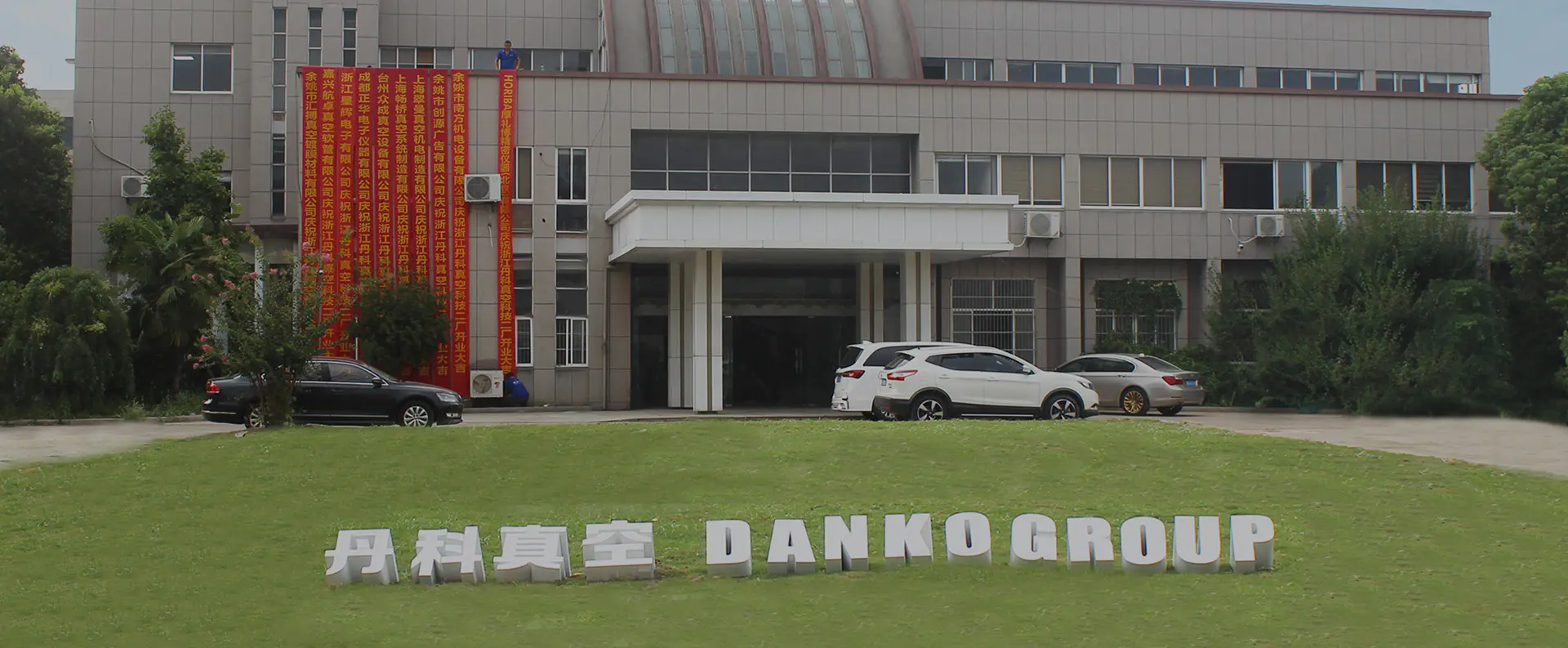

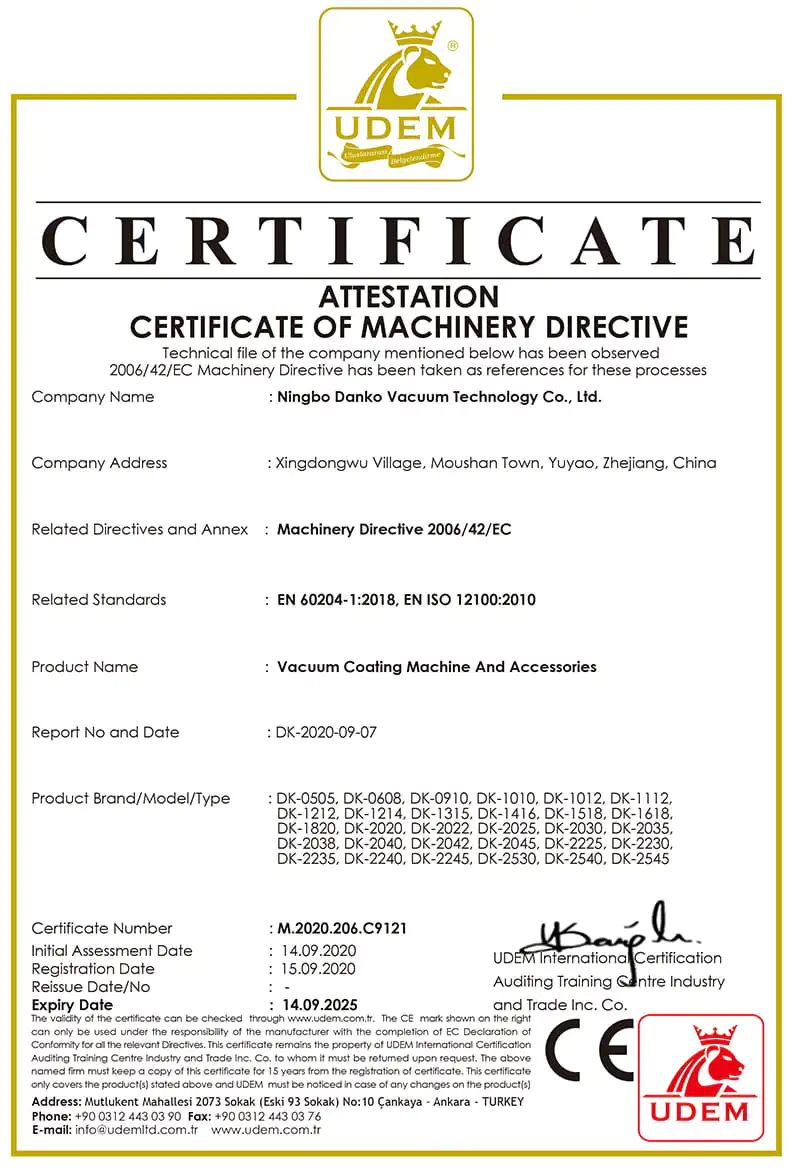
We focus on developing high-quality products for top-end markets. As Our products are in line with international standards and are mainly exported to Europe, America, Japan and other destinations around the world.


Surface engineering / Architectural hardware Door Handle PVD Coating Machine: Beauty That Survives the Hand A door handle is touched dozens of times...
READ MOREThe Large Area PVD Coater: Where Uniformity Meets Scale A practical, experience-led guide to chamber design, process routes, and the choices that de...
READ MOREPVD Coating Technology & Equipment Selection The Electron Beam Vacuum Coating Machine, Explained in Production Terms High-energy evaporation for...
READ MOREA cutting tool manufacturer and a maker of premium bathroom fittings may both request a plasma coating machine, yet hear descriptions so different t...
READ MORENingbo Danko Vacuum Technology Co., Ltd. designs and builds Decorative vacuum coating machines for manufacturers that need consistent colour, metallic lustre and wear-resistant finishes on metal, plastic, glass and ceramic parts. Founded in 2007 as Huahong Vacuum Technology and operating under the Danko name since 2020, we develop PVD systems, sputtering equipment, batch metallizers and roll-to-roll coaters from our base in Yuyao, Ningbo, China.
Our decorative range covers thermal evaporation, multi-arc ion, magnetron sputtering, combined evaporation-sputtering and large-format steel and furniture platforms. Each system is configured around the substrate, the required film stack and the production target rather than supplied as a fixed catalogue unit.
The five platform families below share vacuum architecture, controls and process know-how but differ in deposition source, chamber format and throughput. We select the platform first, then size the chamber, pumping set and source arrangement around the parts.
Resistance-heated evaporation of aluminium, chrome or copper for bright metallized finishes on plastics, glass and coated parts. Vertical and horizontal chamber formats, with UV lacquer line options for plastic substrates.
Cathodic arc deposition with pulse bias for TiN, TiC, ZrN, CrN and multi-layer decorative films. Suited to sanitary ware, door handles, watches, lamps, hardware and dark black finishes on high-quality parts.
Large-area platforms for stainless steel sheets, plates, pipes, tubes, furniture components and ceramic tiles, using multi-arc or MF sputtering sources in horizontal or vertical chambers.
MF and DC sputtering for smooth, dense decorative films with controlled colour and low droplet count, including stainless-steel-sheet and architectural panel applications.
Combined platforms that pair evaporation with sputtering in one cycle, allowing a bright base layer plus a sputtered colour or protective top layer without re-loading the chamber.
Decorative PVD is chosen where electroplating cannot deliver the colour stability, wear resistance or environmental profile required. The table below maps common part families to the platform we normally propose.
| Part / substrate | Typical finish | Recommended platform |
|---|---|---|
| ABS, PC, ABS+PC, PVC, nylon, acrylic after base coat | Bright chrome-like, silver, gold, coloured metallized | Thermal evaporation, vertical or horizontal |
| Stainless steel, brass, zinc alloy, electroplated parts | TiN gold, ZrN, CrN, black, multi-layer colour | Multi-arc ion coating |
| Stainless steel sheet, plate, pipe, furniture frames | Uniform metallic colour over large area | Large steel & furniture, MF sputtering |
| Glass, ceramic, mosaic tile | Reflective, coloured, decorative mirror | Multi-arc ion or sputtering |
| Watches, eyewear frames, jewellery, hotel supplies | Premium gold, rose gold, black, brushed effect | Multi-arc ion with fine fixturing |
Substrates must be electrically conductive or carry a conductive base coat, tolerate chamber temperatures above roughly 70 °C and be free of outgassing contamination. Plastics are normally base-coated and, where required, UV-cured before metallizing; metal parts are cleaned and, for arc processes, degreased and dried to avoid arc instability.
We build each machine around the customer's part family. Chamber orientation, jig design, source layout and load-lock arrangement are decided together, because a fixture that suits a door handle will not suit a 1.2 m stainless sheet. For large-format work we offer horizontal and vertical chamber designs; for high-volume small parts we favour batch carriers with planetary rotation.
Control systems are configured around the required line interface. Recipe management, PLC sequencing, interlocks and data logging are set to the plant's operating language, and where a customer needs the coater linked to an upstream lacquer line or downstream handling, we agree the signal list during engineering rather than after delivery.
Our engineering and production team works under one roof in Yuyao, roughly 100 km from Ningbo Port. Machines are assembled, wired and leak-checked before shipment, and we run deposition trials on sample parts supplied by the customer so that colour, adhesion and coverage are reviewed before the system leaves the works.
Acceptance is agreed per project. Typical checks include vacuum leak rate, pump-down curve, source performance, film thickness and colour against an approved sample, and a run of production parts on the customer's jigs. Documentation covers operating manuals, electrical drawings, spare-parts lists and training for operators and maintenance staff.
Decorative coaters are installed on a level floor with the utilities brought to the agreed positions. We provide layout drawings before shipment so that foundations, power, water and exhaust can be prepared in advance. Commissioning includes vacuum qualification, recipe set-up and operator training.
A workable proposal depends on a small set of project inputs. When these are clear, we can size the chamber, choose the deposition source and quote a realistic cycle time.
| Input | What we need |
|---|---|
| Parts | Drawings or samples, material, dimensions, surface condition |
| Finish | Target colour, gloss, film thickness, adhesion requirement |
| Output | Parts per batch, batches per shift, target cycle time |
| Site | Available floor space, ceiling height, power capacity, cooling water |
| Operation | Operator skill level, shift pattern, automation expectations |
Thermal evaporation is the usual choice for ABS, PC, ABS+PC, PVC, nylon and acrylic parts after base coating. It deposits aluminium, chrome or copper at high rate and can be combined with a UV lacquer line. Multi-arc ion is used where a harder, more wear-resistant decorative film is needed on a conductive or base-coated plastic.
Yes. Multi-arc and sputtering platforms can run TiN gold, ZrN, CrN, black and multi-layer stacks by changing targets, gas and recipe. Recipes are stored in the control system so operators can switch between approved finishes without re-engineering the process.
Parts must be clean, dry and free of outgassing contamination. Plastics normally need a base coat and, where specified, UV curing. Metals should be degreased and free of loose oxide. The chamber temperature must be compatible with the substrate, and for arc coating the surface should be conductive or carry a conductive layer.
Large-format work uses horizontal or vertical chambers with MF magnetron sputtering or multi-arc sources arranged to cover the sheet width. Substrate motion and source spacing are set during engineering, and uniformity is verified on sample sheets before acceptance.
We supply power supplies, vacuum pumps, pump oil and consumption materials including targets through our consumption materials & targets range, so a new line can be commissioned with matched consumables and a defined spare-parts list.
We review the part drawings and finish target, propose a platform and chamber size, agree the utility and site requirements, then build and trial the machine on customer samples. After shipment we support installation, commissioning and operator training, with after-sales service through our domestic and international teams.

 Tel: +86-13486478562
 FAX: +86-574-62496601
 Email: [email protected]
 Address: No. 79 West Jinniu Road, Yuyao, Ningbo City, Zhejiang Provice, China
 Custom Decorative Vacuum Coating Machine Manufacturers